
TL;DR
China has completed its first successful launch of a reusable rocket, a breakthrough for its space efforts. This development could lower costs and enhance China’s space capabilities.
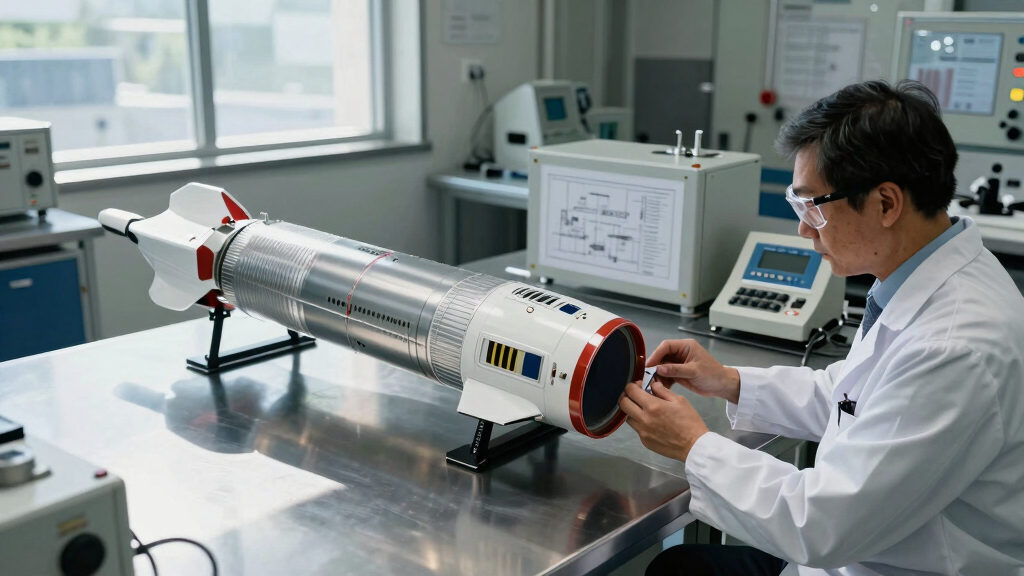
China has successfully launched and recovered a reusable rocket, marking a major milestone in its space program. The launch took place on March 25, 2026, at the Wenchang Satellite Launch Center, with authorities confirming the rocket’s successful flight and recovery. This achievement positions China among the few nations to develop reusable rocket technology, which has significant implications for reducing launch costs and increasing access to space.
The Chinese space agency, CNSA, confirmed that the reusable rocket, named ‘Long March 8 Reusable,’ was launched at 10:00 a.m. local time and successfully returned to a designated landing zone after completing its mission. The rocket’s first stage was recovered intact, demonstrating the effectiveness of China’s new reusability technology. This marks China’s first successful demonstration of a fully reusable rocket system, a feat previously achieved by only a handful of spacefaring nations, including the United States and some private companies.
Officials from CNSA stated that the technology tested includes advanced landing and recovery systems, which could significantly lower the cost of future space launches. The launch was part of China’s broader efforts to develop more sustainable and cost-efficient space transportation options, aiming to support both commercial and scientific missions. The rocket carried a payload into low Earth orbit, with no reports of anomalies during the mission.
Implications for China’s Space Ambitions and Global Launch Market
This success enhances China’s position in the global space industry, demonstrating technological prowess and potentially expanding its commercial launch capabilities. The development of reusable rockets is considered a game-changer, as it could reduce launch costs by up to 70%, making space access more affordable. For China, this achievement aligns with its strategic goals to become a major space power by 2030, supporting both scientific research and commercial satellite deployment.
Internationally, the milestone may intensify competition in the space launch market, which is increasingly dominated by private companies like SpaceX. China’s advancements could also influence global space policy, encouraging other nations to accelerate their reusable rocket programs.
As an affiliate, we earn on qualifying purchases.
China’s Reusable Rocket Development Timeline and Global Context
China’s space program has rapidly advanced over the past decade, with notable milestones including lunar landings and Mars exploration. The development of reusable rocket technology has been a key focus, driven by the need to reduce costs and improve sustainability. Prior to this launch, China had conducted several suborbital tests of reusable components but had not achieved a full mission success involving recovery.
Globally, reusable rockets have been pioneered by private firms like SpaceX, which successfully launched and recovered the Falcon 9 first stage in 2015. Other countries, including the United States and Russia, have been researching similar technologies, but China’s recent success marks a significant step forward. The Chinese government has emphasized technological self-reliance and innovation in its space policies, making this achievement a strategic priority.
“This successful launch and recovery demonstrate China’s growing capabilities in reusable rocket technology, paving the way for more sustainable space missions.”
— Li Wei, CNSA spokesperson
As an affiliate, we earn on qualifying purchases.
Details on Future Missions and Long-term Reusability Confirmations
While the launch was successful, it remains unclear how many times the rocket can be reused reliably or whether this technology will be scaled for regular commercial launches. Officials have not specified the number of reusability cycles planned or the long-term durability of the rocket components. Additionally, the cost savings and operational efficiency of this technology are still being evaluated through ongoing missions.
As an affiliate, we earn on qualifying purchases.
Next Steps for China’s Reusable Rocket Program and Industry Integration
China is expected to conduct further tests to evaluate the durability and reusability of the rocket over multiple missions. The CNSA and Chinese aerospace firms may also begin integrating this technology into commercial launch services, aiming for regular operational deployment within the next two years. International observers will be watching for additional launches and potential collaborations or competitions in reusable rocket development.
As an affiliate, we earn on qualifying purchases.
Key Questions
What is the significance of China’s reusable rocket success?
This milestone indicates China’s technological advancement in space transportation, with potential to lower launch costs and increase access to space, positioning China as a major player in the industry.
How does China’s reusable rocket compare to other nations’ technology?
While China has achieved a successful launch and recovery, comparable to SpaceX’s Falcon 9, it is still in early stages of operational deployment. Long-term reusability and cost-effectiveness are still under evaluation.
When will China start using reusable rockets regularly?
Officials have not announced a specific timetable, but further testing is expected over the next one to two years, with commercial deployment possibly within that period.
What challenges remain for China’s reusable rocket development?
Key challenges include ensuring multiple reflight durability, reducing manufacturing costs, and scaling up production for frequent launches.
Could this technology impact global space markets?
Yes, if China can reliably operate reusable rockets at scale, it could increase competition and influence global launch prices and availability.
Source: google-trends