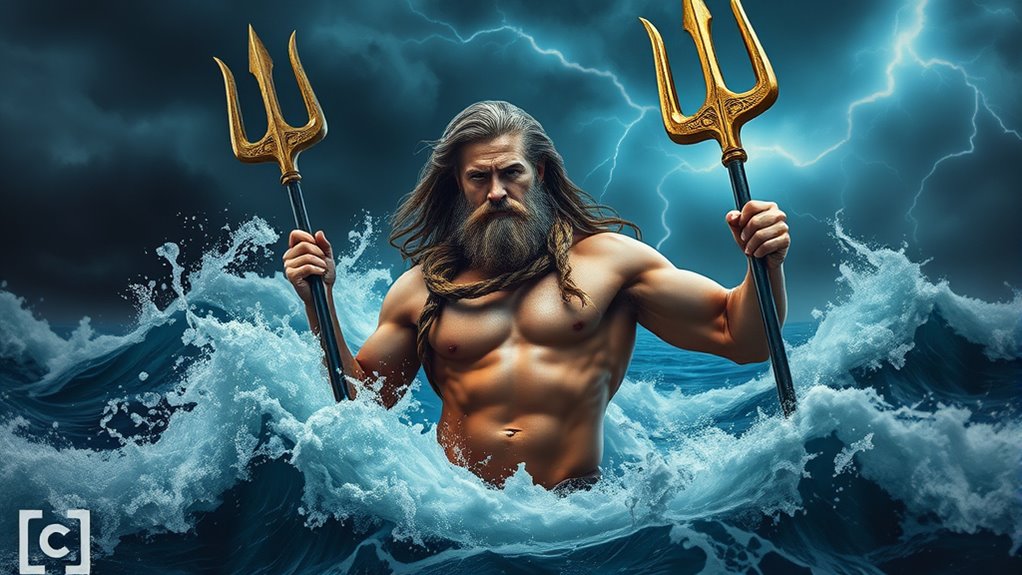

Poseidon, the Greek god of seas, storms, and horses, wields immense power over natural forces. He controls the ocean’s fury, conjures storms, and embodies both destructive and life-giving waters. His connection to horses symbolizes strength, speed, and freedom. His temper can turn calm waters into raging waves, revealing his unpredictable nature. To truly understand how he balances these incredible powers, keep exploring the stories and symbolism that define him.
Key Takeaways
- Poseidon rules over the sea, storms, and horses, embodying both destructive power and graceful strength.
- His tempers can unleash storms and upheave waters, symbolizing nature’s unpredictable and uncontrollable forces.
- Worship involved elaborate rituals and offerings, reflecting his vital role in sailors’ safety and ancient Greek spirituality.
- He is credited with creating horses from sea foam, representing strength, speed, and freedom beyond his control of water.
- Poseidon’s mythic legacy highlights his dual role as a creator and destroyer, symbolizing nature’s both life-giving and destructive aspects.

Poseidon, one of the most powerful gods of Greek mythology, rules over the seas, storms, and horses. His domain is vast and commanding, embodying both the unpredictable fury of the ocean and the graceful strength of horses. When you think of Poseidon, you’re tapping into a rich tapestry of mythical symbolism that has persisted through the ages, rooted in ancient worship practices. The Greeks saw him as an essential force, integral to their understanding of nature’s power and the importance of the sea for trade, exploration, and sustenance. His figure appears in countless myths, representing not just the physical might of water but also the chaos and creativity it embodies.
Poseidon embodies the raw power and mystique of the sea, storms, and noble horses in Greek mythology.
In ancient worship, Poseidon was revered with great reverence and elaborate rituals. Temples dedicated to him, like the famous one at Sounion, stood on rocky promontories overlooking the sea, emphasizing his dominion over water. Offerings and sacrifices were common, meant to appease him and guarantee safe voyages. Sailors, fishermen, and travelers invoked his favor, recognizing that angering this god could bring storms or shipwrecks. These practices highlight how deeply intertwined his mythic symbolism was with everyday life, making him a central figure in Greek spiritual and cultural identity. Additionally, many myths depict him as a temperamental deity, reflecting the unpredictable nature of the sea he governs.
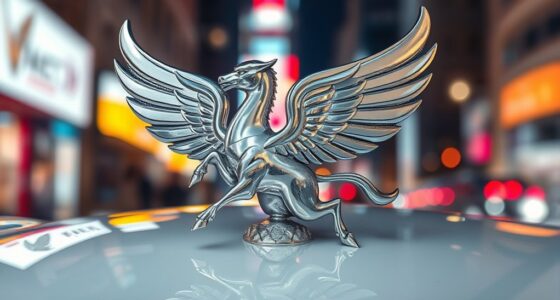
As the god of storms, Poseidon could release destructive tempests, shaking the seas with his trident. This power wasn’t merely destructive; it also symbolized the raw, uncontrollable forces of nature that humans could neither tame nor predict. His anger could turn calm waters into raging whirlpools, reminding sailors of the importance of respecting the sea’s might. Yet, his connection to horses reveals a different facet of his power. The Greeks believed he created horses from the sea foam, giving rise to magnificent beasts symbolizing strength, speed, and freedom. These mythical horses often appeared in art and stories, emphasizing his role as a creator and protector of these noble animals.
Understanding Poseidon’s multifaceted nature helps you appreciate why he remains a compelling figure in mythology. His mythical symbolism extends beyond mere control of water; he embodies the unpredictable, life-giving, and destructive aspects of nature itself. His ancient worship practices reflect a people’s attempt to honor these forces, seeking favor and protection from a god who commands both serenity and storm. Whether as a symbol of the sea’s danger or its bounty, Poseidon’s power resonates through stories, rituals, and cultural memory, making him a timeless figure of awe and reverence. Recognizing the role of attention in these practices shows how focused reverence can amplify the connection between humans and divine forces.

ULTNICE Vintage Brass Trident Ornament – Retro Decorative Poseidon Trident for Home, Office, Desk, Bookshelf, or Showcase Decor
Unique Trident Design: The distinctive trident modeling adds a touch of elegance and sophistication, making it a standout…
As an affiliate, we earn on qualifying purchases.
As an affiliate, we earn on qualifying purchases.
Frequently Asked Questions
How Did Poseidon Become the God of Horses?
You might find it fascinating that Poseidon became the god of horses through ancient myths, where his divine symbolism connects him to these creatures. According to legends, he created horses to impress humans and demonstrate his power. As a master of the sea and storms, his association with horses highlights his control over both land and water, emphasizing his importance in Greek mythology as a multifaceted deity.
What Symbols Are Associated With Poseidon?
You’ll notice mythological symbols associated with Poseidon include the trident, which represents his control over the sea, and horses, reflecting his connection to them. In ancient depictions, he’s often shown holding the trident or riding a chariot pulled by horses. Other symbols include dolphins and bulls, emphasizing his dominion over marine life and strength. These symbols highlight his powerful role in Greek mythology and his influence over water and horses.
How Does Poseidon Influence Modern Maritime Culture?
Your maritime culture is deeply influenced by Poseidon’s legacy, shaping modern traditions and nautical symbolism. His power over seas and storms inspires sailors’ rituals, safety practices, and navigational icons. From maritime flags to coastal festivals, his influence is as vast as the ocean itself, guiding sailors and adventurers alike. You can see his spirit in maritime folklore, emphasizing respect for the sea’s unpredictable might—truly a force that commands awe.
Are There Specific Rituals Dedicated to Poseidon Today?
Today, you can find specific rituals dedicated to Poseidon through modern prayer practices and contemporary offerings. People often pray to him for safe sea journeys or storm protection, using tokens like seashells or water. Some might light candles or perform small ceremonies at coastal sites or temples, blending ancient traditions with modern spirituality. These acts help honor Poseidon’s enduring influence in maritime culture and personal devotion.
What Are Poseidon’s Relationships With Other Gods?
You should know that Poseidon’s relationships with other gods are central to the Olympian hierarchy and divine family dynamics. As one of the Big Three, he’s brothers with Zeus and Hades, often partnering or clashing over domains and power. While he respects Zeus’s leadership, Poseidon maintains his own strong domain over the seas, sometimes competing with or aiding other gods based on the situation.
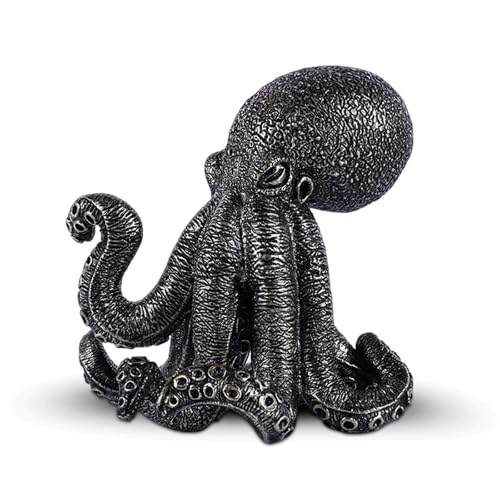
GrivSheen Octopus Statue Nautical Decor, Resin Kraken Sculpture for Home & Bathroom Shelf, Unique Sea Life Figurine Art Gifts for Ocean Lovers & Gothic Room Décor
Unique Sea-Life Art Décor – 6.1in Height This eye-catching octopus statue features graceful curling tentacles and textured detailing,…
As an affiliate, we earn on qualifying purchases.
As an affiliate, we earn on qualifying purchases.
Conclusion
As you imagine Poseidon’s mighty power over calm seas and raging storms, you realize his duality mirrors life’s unpredictable nature. His gentle touch can calm your fears, yet his wrath can threaten everything you hold dear. In his vastness, you find both awe and vulnerability, reminding you that strength and chaos often coexist. Embrace this complexity, for in understanding Poseidon’s many faces, you see the profound depth of nature’s power and your own resilience.

Veronese Design Poseidon God of The Sea Miniature Figurine
Made with quality designer resin and hand painted by expert artisans
As an affiliate, we earn on qualifying purchases.
As an affiliate, we earn on qualifying purchases.

EasyHome Sleep Sound Machine White Noise Machines with 30 Soothing Sounds 12 Adjustable Night Light 10 Adjustment Brightness 32 Levels of Volume 5 Timers and Memory Function Home Travel Office
❤30 Soothing Sounds: White noise*3, fan sound*2, rain*4(thunder rain*1), sea wave*3, water drop, river, singing birds, campfire, fireplace,…
As an affiliate, we earn on qualifying purchases.
As an affiliate, we earn on qualifying purchases.