

Medusa’s curse symbolizes more than a myth—it’s an allegory for facing internal fears, shame, and inner monsters that distort your self-view. Her transformation reflects your psychological growth, showing how confronting dark parts of yourself can lead to resilience and self-awareness. The petrifying gaze embodies those paralyzing fears that hold you back. If you keep exploring, you’ll uncover how embracing your inner demons can transform them into sources of strength and insight.
Key Takeaways
- Medusa’s curse symbolizes internal fears, shame, and emotional paralysis stemming from guilt or self-doubt.
- Her transformation reflects psychological growth through confronting and accepting inner darkness.
- The petrifying gaze represents how fears and shame can distort self-perception and hinder emotional progress.
- Facing Medusa’s myth encourages self-awareness and viewing internal demons as opportunities for resilience.
- External symbols like dog breeds can help understand and accept complex internal traits linked to personal growth.
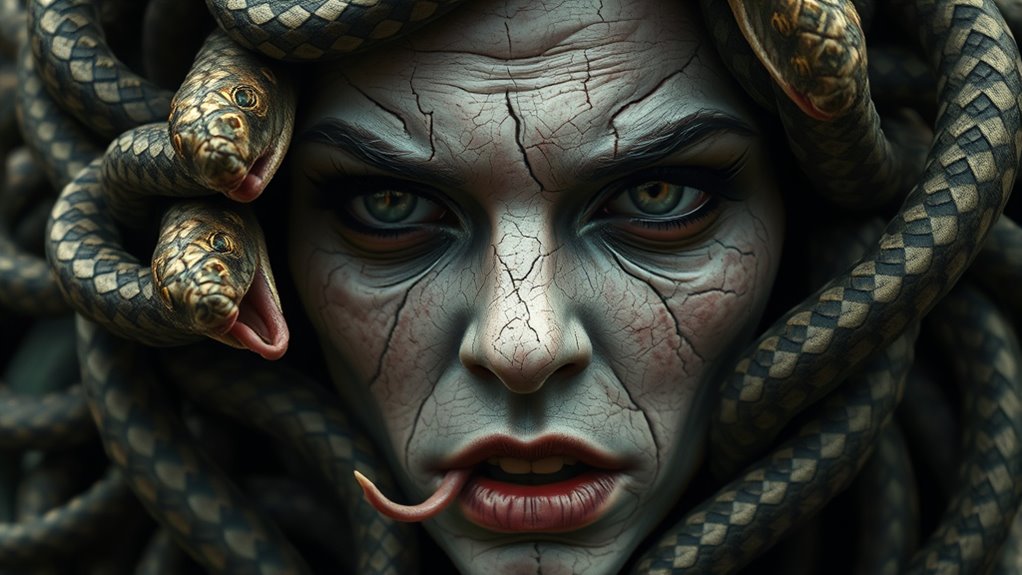
Medusa’s curse isn’t just a mythic punishment; it serves as a powerful psychological allegory for the fears, shame, and inner demons we all face. When you consider her story through the lens of mythological symbolism, you begin to see how her transformation reflects the tumultuous process of psychological change. Medusa’s petrifying gaze symbolizes the way your own fears and shame can paralyze you, trapping you in a state of emotional freeze. Her curse isn’t merely about her external appearance but about the internal chaos that can consume your mind when you’re overwhelmed by guilt or self-doubt. The myth invites you to explore how these feelings distort your perception of yourself and the world around you, turning internal struggles into a seemingly insurmountable obstacle.
Her transformation from a beautiful maiden to a terrifying Gorgon mirrors the psychological transformation you might undergo when confronting trauma or deep-seated shame. This change isn’t just external but deeply internal, illustrating how negative emotions can distort your sense of identity. Her monstrous visage becomes a symbol of how shame can turn your perception of yourself into something unrecognizable, unworthy of love or acceptance. Yet, beneath her cursed exterior, there’s a story of pain and loss—reminding you that even the most terrifying parts of yourself carry a narrative of suffering and resilience. Recognizing this can be the first step toward understanding and integrating your inner demons rather than letting them control you.
Medusa’s story also underscores the importance of confronting your fears head-on. Her curse, while seemingly permanent, is ultimately a reflection of her internal state—a projection of her shame and victimization. Your own psychological transformation begins when you acknowledge these dark aspects of yourself, rather than hiding or denying them. Facing your fears with honesty allows you to break the spell of paralysis and begin healing. The myth encourages you to see your inner monsters not as irredeemable but as parts of a larger narrative of growth. In this way, Medusa’s curse becomes a metaphor for your journey of self-awareness, where understanding and acceptance pave the way for genuine transformation. Her story, layered with mythological symbolism, reminds you that even the most frightening aspects of your psyche can be transformed into sources of strength and insight.
Additionally, understanding how Dog breeds can embody different personality traits may help you better recognize and accept your own inner qualities, including those you might see as frightening or shameful.

Fear: A Study of Fear Through Buddhist Mindfulness
As an affiliate, we earn on qualifying purchases.
As an affiliate, we earn on qualifying purchases.
Frequently Asked Questions
How Does Medusa Symbolize Internal Psychological Struggles?
You see, Medusa symbolizes internal psychological struggles by embodying identity transformation and trauma projection. Her petrifying gaze reflects how your inner fears and trauma can project onto others, causing emotional paralysis. Her cursed appearance signifies the struggle with self-identity and acceptance after trauma. Medusa’s story reminds you that confronting these internal conflicts can lead to growth, helping you transform pain into understanding and strength.
What Cultural Influences Shaped Medusa’S Myth as a Psychological Allegory?
You see, ancient symbolism and artistic interpretations deeply shaped Medusa’s myth as a psychological allegory. These cultural influences reflect fears of female power, societal shame, and internal chaos. Artists and storytellers transformed Medusa into a symbol of vulnerability and rage, reinforcing how cultural norms influence our understanding of inner struggles. By exploring these influences, you recognize how myths mirror collective anxieties, turning personal fears into universal stories of transformation and resilience.
Could Medusa Represent Societal Fears Rather Than Personal Trauma?
You might see Medusa as more than just a symbol of personal trauma; she could represent societal fears about feminine power and repression. Instead of individual suffering, Medusa embodies how society often suppresses women’s strength and autonomy, turning them into monsters to control or fear. Her curse reflects societal struggles with gender roles and societal repression, making her a powerful allegory for collective fears about female empowerment.
How Do Different Interpretations of Medusa Vary Across Cultures?
You’ll find that interpretations of Medusa vary widely across cultures, often reflecting different gender roles and spiritual symbolism. In some societies, she represents dangerous femininity or the consequences of violating gender norms. Others see her as a spiritual symbol of transformation or protection. These varied views show how Medusa’s image adapts, embodying societal fears, spiritual beliefs, and evolving ideas about power, gender, and morality across different cultural contexts.
What Modern Psychological Issues Can Medusa’S Story Help Us Understand?
You can see how Medusa’s story helps us understand modern psychological issues like fear of rejection and identity crisis. Her transformation symbolizes deep insecurities and societal rejection, which many people experience today. When you face fear of rejection, you might feel like you’re losing your true self, similar to Medusa’s loss of her original identity. Her story encourages you to explore these feelings and find ways to rebuild self-acceptance.

Switch Research Self-Love Journal – Self Care Journal for Women with Prompts – Mindfulness & Gratitude Journal, Therapist Recommended for Self Reflection & Personal Growth – Guided Writing Notebook A4
COMPLETE SELF-CARE SYSTEM: Discover your path to well-being with 91 days of thoughtfully curated prompts and bonus video…
As an affiliate, we earn on qualifying purchases.
As an affiliate, we earn on qualifying purchases.
Conclusion
Understanding Medusa’s story reveals more than myth; it’s a mirror to your own fears and inner struggles. Her curse isn’t just about transformation but symbolizes how unresolved trauma can turn inward, distorting perception. Remember, sometimes the biggest monsters are the ones lurking inside your mind, waiting to be faced. Don’t throw in the towel; confronting your demons head-on is the only way to break free from the chains of your own making.

Transforming The Living Legacy of Trauma: A Workbook for Survivors and Therapists
As an affiliate, we earn on qualifying purchases.
As an affiliate, we earn on qualifying purchases.

Why Do I Do That?: Psychological Defense Mechanisms and the Hidden Ways They Shape Our Lives
As an affiliate, we earn on qualifying purchases.
As an affiliate, we earn on qualifying purchases.