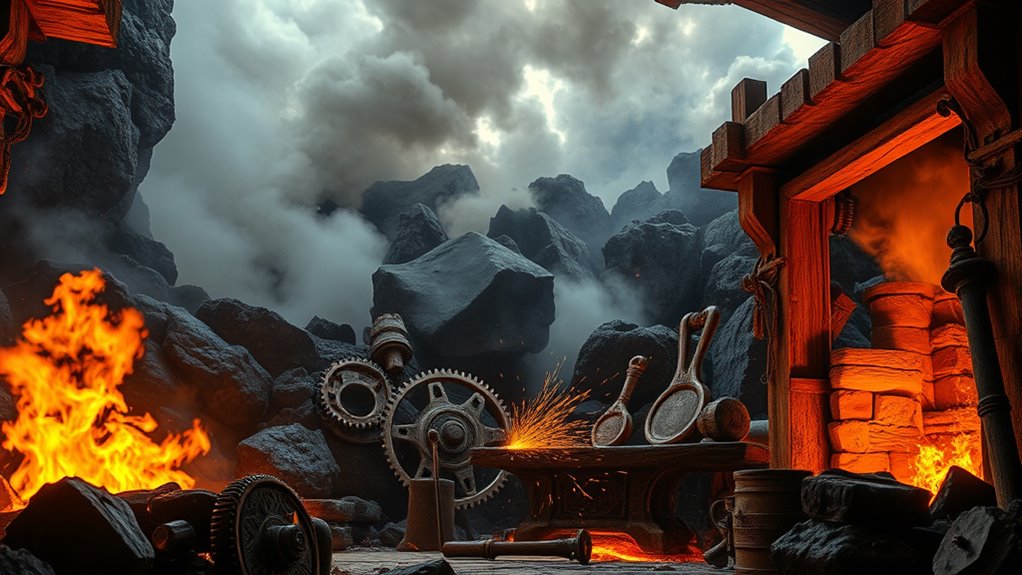

Hephaestus’s forge is a symbol of divine mastery over fire, metalworking, and volcanic power, embodying humanity’s ancient fascination with creation and destruction. Located in his mythic smithy, it represents a sacred space where gods and mythical craftsmen transform raw materials into mighty weapons and treasures. Volcanoes like Mount Etna echo this divine forge, symbolizing the fiery power and chaos that can give birth to beauty and innovation. Exploring this connection reveals the fascinating interplay between natural and divine forces.
Key Takeaways
- Hephaestus’s forge is a sacred mythological space symbolizing divine craftsmanship and transformation of raw materials into divine weapons and treasures.
- Volcanoes are mythologically linked to Hephaestus’s forge, representing divine fires and eruption myths that symbolize creation and chaos.
- The forge embodies human ingenuity, mastery over fire, and the transformation of chaos into order through metallurgy and craftsmanship.
- Myths depict volcanic eruptions as divine acts, reflecting the forge’s fiery power and its role as a sacred, divine domain.
- The mythological significance of Hephaestus’s forge influences ancient understanding of geology, volcanic activity, and the divine origins of natural phenomena.
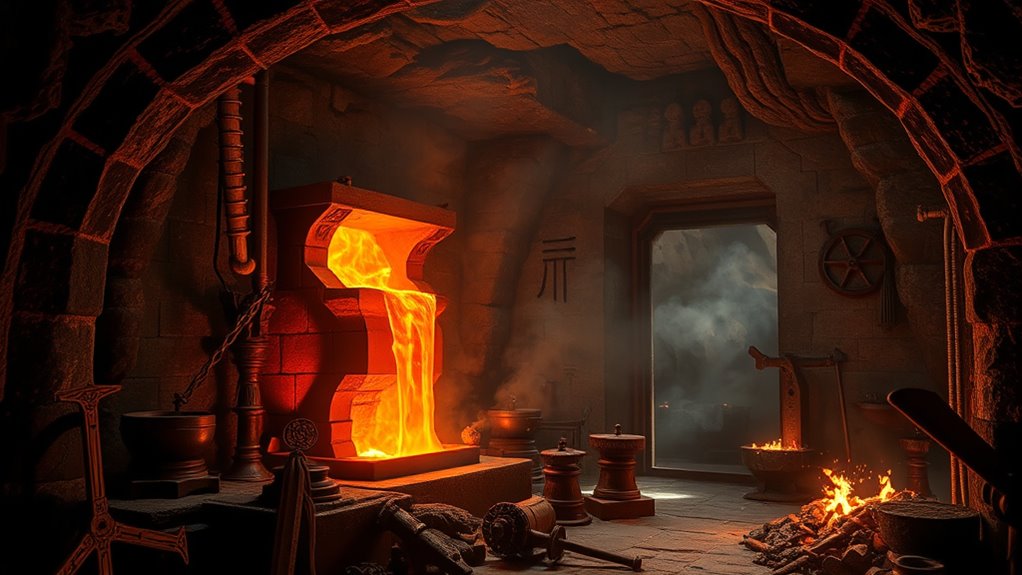
Have you ever wondered where the gods forge their most powerful weapons and intricate creations? It’s said to be Hephaestus’s smithy, a place of fire, metal, and myth. This divine workshop isn’t just a myth; it embodies the ancient human fascination with metalworking traditions that stretch back thousands of years. Across different cultures, stories tell of gods and legendary smiths working in fiery forges, shaping tools, armor, and artifacts that define civilizations. These traditions reveal a deep connection between fire, craftsmanship, and divine power. Many ancient societies believed that the gods themselves mastered the art of metalworking, transforming raw ore into divine weapons and treasures. They saw the forge as a sacred space, where the very essence of fire was harnessed to produce creations that could influence fate itself.
As you explore the myths surrounding Hephaestus, you’ll find that his forge is often linked to volcanic eruption myths. These stories depict volcanoes as the earthly manifestations of divine fires, spewing molten rock and ash just as Hephaestus’s flames blaze within his forge. In Greek mythology, volcanoes like Mount Etna or Mount Aetna are thought to be the earthly echoes of Hephaestus’s fiery work, the result of divine eruptions that mirror his forge’s intense heat. These myths emphasize the idea that volcanic activity was a divine process, a direct connection between the gods and the fiery earth. The molten lava and ash aren’t just natural disasters but symbols of divine craftsmanship—earth’s own version of the divine forge. You can see how ancient peoples saw volcanoes as sacred places, where the gods’ power was raw and uncontrolled, yet also the source of extraordinary craftsmanship and creation.
This connection between volcanic activity and divine metalworking isn’t just myth; it influenced ancient cultures’ understanding of geology and metallurgy. The eruption myths served as explanations for the fiery mountains, lending them divine significance. They reinforced the idea that from chaos and destruction, divine beauty and innovation could emerge—much like the smith’s fire transforms raw metal into something extraordinary. When you think about Hephaestus’s forge, you’re also contemplating a symbol of human ingenuity, of transforming chaos into order. It’s a reminder that fire, whether in myth or reality, has always been central to shaping the world around us. The divine smithy stands as a testament to humanity’s deep-seated desire to understand, master, and harness fire’s power—just as the gods did in their divine workshops. Understanding geology and metallurgy can deepen your appreciation for how ancient myths reflect natural phenomena and human technological progress.

MMasters 2 Burner Propane Forge 2600°F Gas Forge for Blacksmithing and Knife Making Kit – Dual Burner Set with Fast Heating for Bladesmithing and Metalworking Tools and Equipment
PORTABLE DOOR DESIGN: The propane forge features a single-door mode, allowing you to open or close it as…
As an affiliate, we earn on qualifying purchases.
As an affiliate, we earn on qualifying purchases.
Frequently Asked Questions
What Is Hephaestus’s Forge Made Of?
You’re curious about what Hephaestus’s forge is made of. It’s crafted from a mix of metal alloys and volcanic materials, making it incredibly durable and capable of withstanding intense heat. The forge’s structure harnesses the power of molten lava and cooled volcanic rocks, creating a perfect environment for forging divine weapons and armor. Its composition reflects the fiery, volcanic nature of Hephaestus himself, combining strength and elemental fire.
How Did Hephaestus Invent Ancient Tools?
Like a spark igniting a flame, you understand Hephaestus invented ancient tools through metalworking innovations. His mastery of fire and forge led to groundbreaking tool development origins, transforming raw materials into intricate weapons, jewelry, and machinery. He harnessed volcanic energy and his divine craftsmanship, shaping innovations that laid the foundation for civilization’s technological progress. His inventive spirit turned molten metal into the building blocks of human progress, forging a legacy that endures today.
Are There Any Modern Equivalents of Hephaestus’s Forge?
Modern equivalents of Hephaestus’s forge include industrial workshops and modern factories, where advanced machinery and technology automate metalworking and manufacturing. You work with high-tech tools, automated systems, and precise processes that mirror the ancient forge’s creativity and craftsmanship. These modern spaces allow you to produce complex components efficiently, just like Hephaestus’s legendary forge, but with contemporary innovation, safety standards, and efficiency.
What Myths Explain Hephaestus’s Relationship With Other Gods?
A proverb says, “Actions speak louder than words,” and in myth, Hephaestus’s divine craftsmanship shows his ties with gods like Zeus and Athena. Myths explain his relationships through stories of divine punishment—like his birth defect—and his role as the divine blacksmith. These tales reveal how gods respect his skills but sometimes challenge or punish him, highlighting the complex dynamics of divine relationships.
How Does Hephaestus’s Forge Influence Modern Technology?
Your understanding of Hephaestus’s forge reveals how it influences modern technology through metalworking innovations and technological symbolism. The ancient techniques of blacksmiths and engineers draw inspiration from his mastery of fire and metal, shaping tools and machinery today. His forge embodies the spirit of craftsmanship and invention, reminding you that progress often starts with fundamental skills like forging, which continue to inspire advancements in technology and innovation.
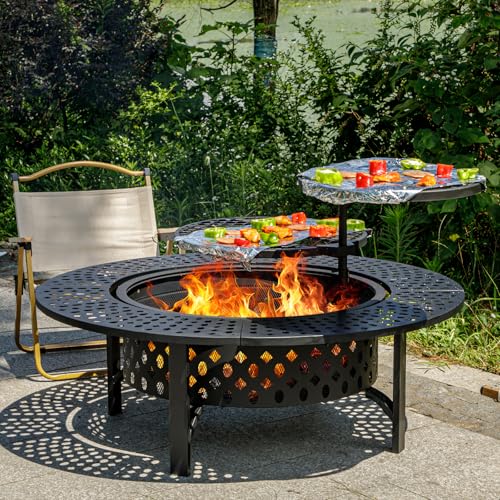
OutVue 47 Inch Fire Pit with 2 Grills, Wood Burning Fire Pits for Outside with Lid & Poker, BBQ& Outdoor Firepit & Round Metal Table 3 in 1 for Patio, Picnic, Party
[3 IN 1]: OutVue fire pit is equipped with 2 cooking grills, 1 lid and tabletop.[No waterproof cover]…
As an affiliate, we earn on qualifying purchases.
As an affiliate, we earn on qualifying purchases.
Conclusion
So, next time you marvel at a sleek gadget or a sturdy bridge, remember Hephaestus’s forge—where fire, chaos, and ancient tech collide. Who knew that the god of fire also masterminded modern marvels? Maybe it’s time to thank him for turning volcanic fury into your smartphone’s sleek design. After all, if you think tech comes from a lab, just remember it’s probably born from a divine tantrum in a fiery forge.

DINOBROS Volcano Toy for Kids 3-5, Mist-spouting Volcano Model with Dinosaur Sounds, Simulated Volcano Gifts for Boys and Girls
Batteries Included: Each volcano toy comes with three AA batteries,1 water container and a small screwdriver. Ready to…
As an affiliate, we earn on qualifying purchases.
As an affiliate, we earn on qualifying purchases.
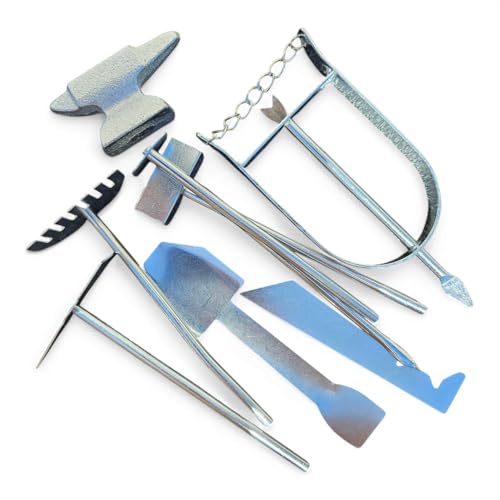
Herramientas de Ogun, Oggun Warrior Tools, Spiritual Metal Tools of Strength and Protection, Santeria, Orishas, Ifa
This tool symbolizes Ogun, the deity of iron, warriors, and strength, offering spiritual protection and empowerment.
As an affiliate, we earn on qualifying purchases.
As an affiliate, we earn on qualifying purchases.