Arachne’s web teaches you that weaving symbolizes both skill and humility. Spiders craft intricate patterns with purpose, echoing lessons about resilience and balance. The myth shows that arrogance can lead to downfall, as Arachne’s pride angered the gods and turned her into a spider. By understanding their natural mastery, you see how humility and awareness are essential. Keep exploring to uncover the deeper lessons woven into these ancient symbols.
Key Takeaways
- Arachne’s myth symbolizes the dangers of hubris and overconfidence in human pursuits, leading to divine punishment.
- Spiders’ web-building demonstrates precision, purpose, and resilience, reflecting the importance of humility and adaptability.
- The intricate web patterns symbolize interconnectedness and the balance between chaos and order in life.
- Arachne’s transformation into a spider serves as a moral lesson on the consequences of arrogance and disrespect for divine power.
- Spiders’ methodical weaving mirrors human creativity and storytelling, emphasizing humility and awareness of one’s limits.
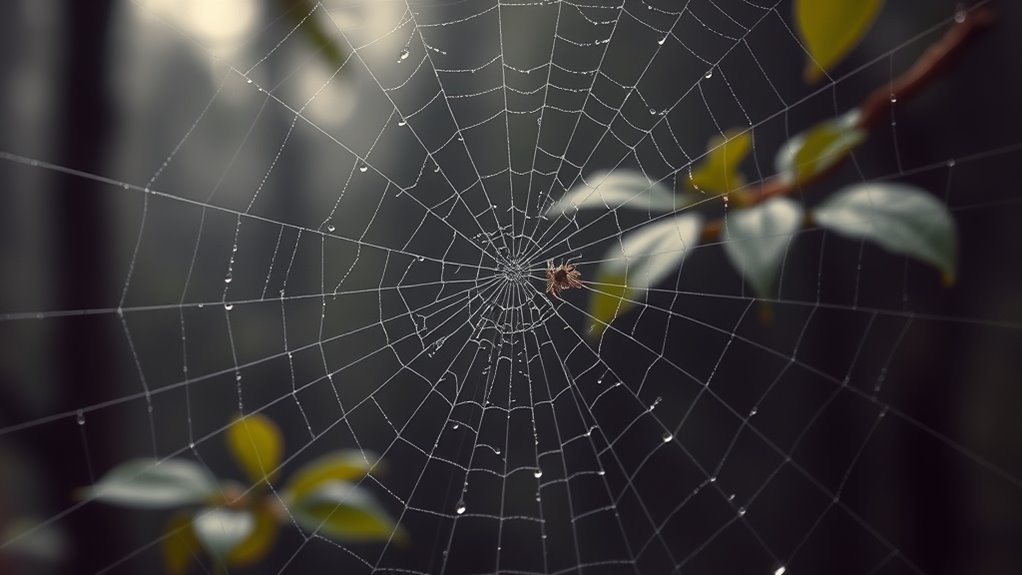
Have you ever wondered how intricate webs are spun with such precision and purpose? When you observe a spider weaving its delicate silk, you’re witnessing more than just a creature at work—you’re seeing a symbol deeply rooted in mythological symbolism and ancient stories. Spiders have long been associated with creativity, patience, and even fate. Their web, with its complex pattern, represents the interconnectedness of life and the delicate balance between chaos and order. As you watch a spider move, you notice its methodical behavior: releasing silk, anchoring threads, and adjusting as it constructs its masterpiece. This spider behavior isn’t random; it’s driven by instinct and purpose, reflecting a natural mastery that has fascinated humans for centuries.
In mythology, spiders often symbolize wisdom and cunning, but they also serve as warnings against arrogance. For instance, in Greek mythology, Arachne was a talented mortal weaver who challenged the goddess Athena. Her hubris led her to boast about her skills, dismissing the divine. As punishment, Athena transformed her into a spider, condemning her to weave forever. This story highlights the mythological symbolism of spiders as reminders that pride can have dire consequences. It’s a cautionary tale about the price of arrogance, warning you that overconfidence can lead to downfall. When you think about Arachne’s fate, it’s clear that her story is entwined with lessons on humility and respect for the divine.
Spider behavior, then, isn’t just about survival; it embodies a deeper message. The way spiders meticulously spin their webs, repairing and reweaving them when needed, mirrors the human tendency to create and recreate our own lives and stories. Their persistence and adaptability serve as metaphors for resilience. Yet, their web-building also teaches humility—recognizing that even the most intricate designs can be fragile and easily broken if arrogance clouds your judgment. The mythological symbolism embedded in their actions reminds you that humility and awareness are essential virtues. Additionally, understanding the assessing needs and planning involved in a spider’s web construction can deepen your appreciation for their skills and purpose.

Ultra Stretchy Halloween Spider Web Decoration with Creepy Plastic Spiders, Indoor Outdoor Garden, (200 Sq. Ft Version)
As an affiliate, we earn on qualifying purchases.
As an affiliate, we earn on qualifying purchases.
Frequently Asked Questions
How Do Spiders Produce Their Silk?
You might wonder how spiders produce their silk. It all starts with silk protein synthesis, where they create proteins in specialized cells. These proteins are then transported to the spinning gland, where spinning gland mechanics come into play. As the silk liquid moves through the gland, it’s spun into fibers, stretching and solidifying into strong, flexible silk. This intricate process allows spiders to craft their webs and capture prey efficiently.
What Is the Symbolism Behind Arachne in Different Cultures?
You see, the mythological symbolism of Arachne varies across cultures, reflecting different interpretations. In Greek mythology, she embodies hubris and the danger of arrogance, warning against challenging the gods. Other cultures see her as a symbol of creative skill and resilience. These cultural interpretations highlight her complex role—sometimes as a cautionary tale, sometimes as an emblem of craftsmanship and perseverance—making her a powerful figure in mythological symbolism worldwide.
Are There Any Real-Life Lessons From Arachne’S Story?
Think of life as a delicate web—you’re responsible for how it’s spun. From Arachne’s story, you learn that hubris consequences can be severe; arrogance often leads to downfall. The humility lessons remind you to stay grounded and respect others’ talents. By avoiding pride and embracing humility, you protect your reputation and relationships, ensuring your web remains strong rather than torn apart by reckless arrogance.
How Do Spiders’ Weaving Techniques Vary Across Species?
You’ll notice that spiders’ weaving techniques vary widely across species, leading to incredible web pattern diversity. Some create orb webs, while others build sheet or cobwebs. This variation is driven by differences in silk composition, which affects strength, elasticity, and stickiness. You can observe that each species adapts its web-building style to its environment and prey, showcasing how evolution shapes silk use and web design for ideal survival.
Can Humans Learn From Spiders’ Web-Building Skills?
Imagine it’s the 21st century, and you’re learning from spiders’ web-building skills. You can harness biomimicry innovations to improve materials, making them stronger and more flexible. Spiders’ precise, energy-efficient weaving offers architectural inspirations for sustainable design. By studying their techniques, you’ll develop smarter, more resilient structures, reducing waste and costs. Emulating nature’s engineers helps you create innovative solutions that blend beauty, function, and environmental harmony.

Jumping Spider Hammock Hideout with Rope Bridge & 3 Silk Cocoon Huts, Tarantula Hide & Climbing Accessory for Arboreal Enclosures (Silk Cocoon)
Create a Calm, Natural Hideout for Arboreal Spiders – This jumping spider hideout combines silk cocoon nests with…
As an affiliate, we earn on qualifying purchases.
As an affiliate, we earn on qualifying purchases.
Conclusion
As you watch the spider weave its web, remember the balance between skill and arrogance. You can create beauty, but you must also stay humble. You can spin your ideas, but never forget the cost of pride. You can build your future, but beware of the web of arrogance that may trap you. In weaving, in learning, in living—balance is the key, for both spiders and humans.

Made By Me Ultimate Weaving Loom, Includes 378 Craft Loops & 1 Weaving Loom with Tool, Makes 25 Projects, 9 Rainbow Colors of Weaving Loops, Hook & Loop Potholder Kit, DIY Weaving Kit
MAKES 25 PROJECTS: With super soft polyester loops, a reusable plastic weaving loom, and an easy-to-use hook tool,…
As an affiliate, we earn on qualifying purchases.
As an affiliate, we earn on qualifying purchases.
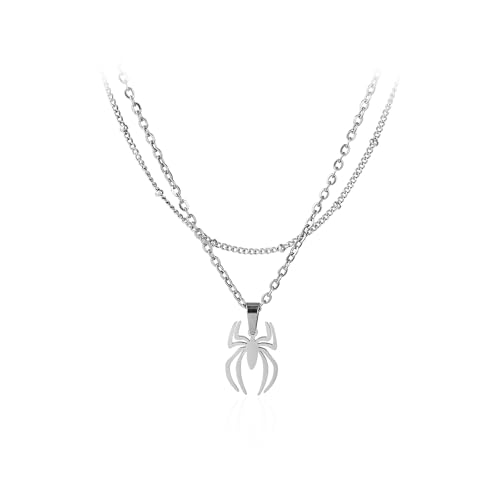
tenghong2021 Spider Pendant Necklace Stainless Steel Lightweight Spiderman Charm Jewelry for Women (Silver (Layered, Smaller Pendent))
The spider symbolizes magic, power and great vitality. The unique design of the spider pendant necklace symbolizes people's…
As an affiliate, we earn on qualifying purchases.
As an affiliate, we earn on qualifying purchases.