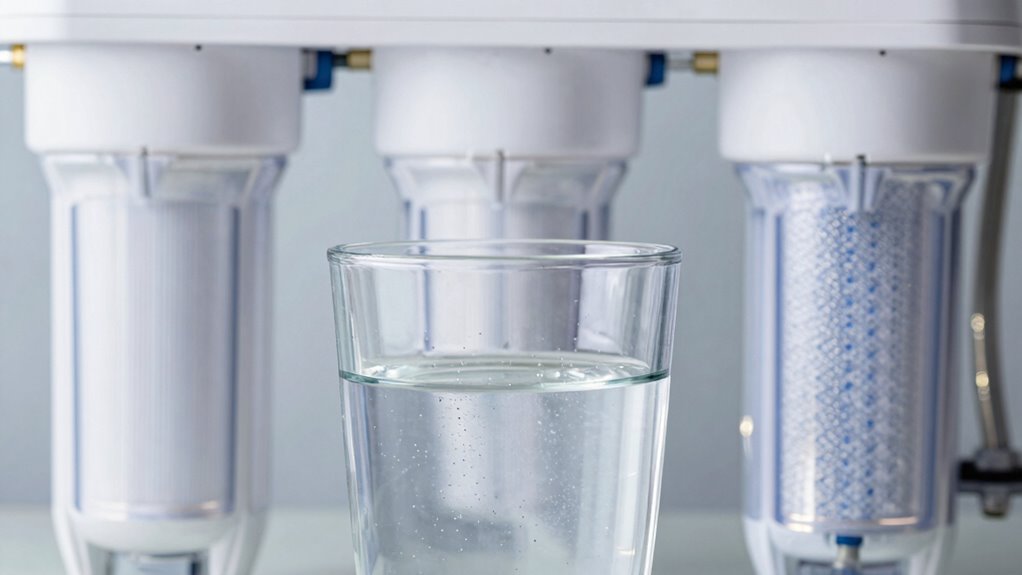

Reverse osmosis effectively removes dissolved solids like salts, minerals, heavy metals such as lead and arsenic, and harmful chemicals like nitrates and organic pollutants. It also filters out bacteria, viruses, and other microorganisms, making your water safer to drink. The process uses a semi-permeable membrane to target these contaminants, often reducing them to undetectable levels. To understand how this system balances mineral retention and improves taste, keep exploring these important details.
Key Takeaways
- Removes dissolved solids like salts, minerals, and heavy metals such as lead and arsenic.
- Eliminates organic pollutants, pesticides, nitrates, and other harmful chemicals.
- Filters out bacteria, viruses, and microorganisms, ensuring microbiological safety.
- Strips out contaminants that affect taste and odor, improving water flavor.
- May also remove beneficial minerals, which can influence taste and nutritional content.
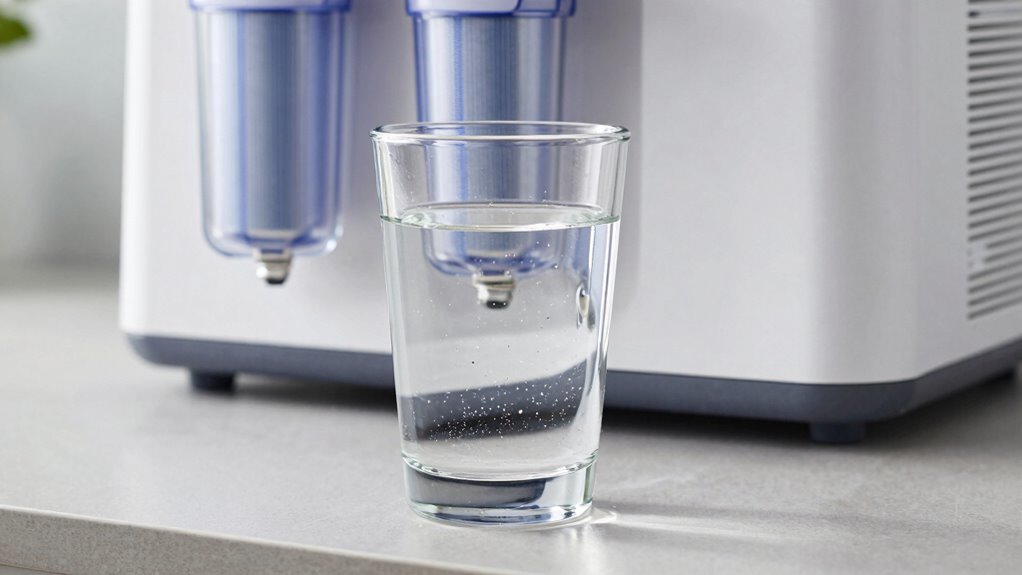
Have you ever wondered how your tap water gets so clean and pure? It’s thanks to advanced filtration systems like reverse osmosis, which uses a process called membrane filtration to remove contaminants. When you turn on your faucet, the water passes through a semi-permeable membrane that acts like a highly selective barrier. This membrane allows water molecules to flow through while blocking a wide range of impurities. The result is water that’s markedly purer, free from many pollutants and unwanted substances.
One of the main things reverse osmosis removes from your drinking water is dissolved solids. These include salts, heavy metals, nitrates, and other minerals that can affect taste and safety. The membrane filtration process effectively reduces these substances to very low levels, often below detectable limits. This means your water not only tastes better but is also safer to drink, especially in areas with contaminated water sources. Reverse osmosis is especially effective at removing lead, arsenic, and fluoride, which are common concerns in tap water.
Beyond removing harmful chemicals and metals, reverse osmosis also tackles organic compounds and microorganisms. It filters out bacteria, viruses, and other pathogens, providing an extra layer of protection. Although the membrane isn’t always 100% effective against all microorganisms, most systems include additional filters like UV sterilizers or carbon pre-filters to guarantee water safety. Proper maintenance of these systems ensures their contaminant removal remains highly effective over time. The system’s ability to filter out microorganisms is a crucial aspect of ensuring safe drinking water, especially in areas with questionable water quality. Additionally, some systems incorporate advanced filtration techniques to further improve water safety and quality.
A vital aspect of reverse osmosis is mineral removal. While it’s excellent at removing unwanted substances, it also strips out beneficial minerals like calcium and magnesium. These minerals are essential for your health, but their removal can make the water taste flat or bland. Some systems allow you to add back these minerals post-filtration or incorporate mineral cartridges to enhance flavor and nutritional value. Additionally, understanding the specific capabilities of the membrane can help you choose a system that balances contaminant removal with mineral retention. This balance is important because, in addition to contaminant removal, maintaining a certain mineral content can improve the overall taste and health benefits of your drinking water. Furthermore, awareness of membrane selectivity can help you select a system optimized for your specific water quality needs.
reverse osmosis water filter system
As an affiliate, we earn on qualifying purchases.
As an affiliate, we earn on qualifying purchases.
Frequently Asked Questions
Does Reverse Osmosis Remove Beneficial Minerals From Water?
Reverse osmosis does remove beneficial minerals from water, which can affect mineral preservation. While it’s effective at eliminating contaminants, it also strips away essential minerals like calcium and magnesium. To maintain healthy mineral levels, you might consider water remineralization, adding back minerals after filtration. This process guarantees your water remains flavorful and nutritious, balancing purification with mineral preservation for ideal health benefits.
How Often Should I Replace the Reverse Osmosis Filter?
You should replace your reverse osmosis filter every 6 to 12 months, depending on your water quality and usage. Check the filter’s lifespan and follow the recommended replacement schedule provided by your system’s manufacturer. Regularly changing the filter guarantees peak performance, maintains water quality, and prevents bacteria buildup. Keep an eye on your system’s indicator lights or monitor water flow rates to determine when it’s time for a replacement.
Can Reverse Osmosis Eliminate Viruses From Water?
Yes, reverse osmosis can eliminate viruses from water, improving water purity and safety. The process filters out viruses through its fine membrane, which has tiny pores that block harmful microorganisms. By using reverse osmosis, you guarantee that your drinking water is free from most viruses, providing peace of mind and a higher standard of water quality. Regular system maintenance and filter replacement help maintain maximum virus removal effectiveness.
Is Reverse Osmosis Effective Against Pesticides and Herbicides?
You might be surprised to learn that reverse osmosis effectively removes up to 99% of pesticides and herbicides from your water. It achieves this through pesticide breakdown and herbicide filtration, making your water safer. This process filters out chemicals like atrazine and glyphosate, which are common herbicides and pesticides. So, if you’re concerned about chemical contaminants, reverse osmosis provides a reliable way to improve your water quality considerably.
Does Reverse Osmosis Waste a Lot of Water During Operation?
Reverse osmosis systems do waste a notable amount of water during operation, typically about 3 to 4 gallons for every gallon of purified water. This affects water efficiency and means you’re using more water than you actually consume. However, many systems include waste management features or options to recycle wastewater, reducing overall waste. Being aware of this helps you choose a system that balances purification needs with water conservation.
best reverse osmosis under sink filter
As an affiliate, we earn on qualifying purchases.
As an affiliate, we earn on qualifying purchases.
Conclusion
Now that you know what reverse osmosis removes from your drinking water, you can make better decisions about your water source. Did you know that RO systems can eliminate up to 99% of contaminants? That’s a significant reduction that can improve your health and taste. So, whether you’re concerned about pollutants or just want cleaner water, understanding how reverse osmosis works helps you stay informed and confident in your choice to drink safe, purified water every day.
reverse osmosis water purifier with mineral cartridge
As an affiliate, we earn on qualifying purchases.
As an affiliate, we earn on qualifying purchases.
RO system for removing lead and arsenic
As an affiliate, we earn on qualifying purchases.
As an affiliate, we earn on qualifying purchases.