🔍 Read the full analysis: How To Make An AI Horror-Comedy In One Night: Hollow House on ThorstenMeyerAI.com

Prime made for students and young adults
- Fast, free delivery for dorm and study essentials
- Prime Video and Amazon Music included
- Member-only deals
TL;DR
Hollow House, a 97-second AI-generated horror-comedy, was made in three versions between the evening of Oct. 27 and about 1:30 a.m. Oct. 28, according to its creator, Thorsten Meyer. His account says the first two cuts were discarded and that the successful version used three segments generated with one model and references for the full cast. The production account is a creator’s report, not an independently verified production record.
Creator Thorsten Meyer says he made Hollow House, a 97-second AI-generated horror-comedy, in three versions during one night, finishing at about 1:30 a.m. on Oct. 28. His account, published Oct. 28 on ThorstenMeyerAI.com, describes how he discarded two cuts before finding a faster, more coherent approach—making the short a practical account of the role editing and human judgment played in an AI-assisted production.
Meyer says every character, voice and set in the film was AI-generated. The premise is a haunted attraction where a real ghost joins the scare crew, but the staff respond as if they are dealing with an ordinary workplace problem. A guest’s safe word does not stop the supernatural threat; a shift lead, rather than taking immediate action, asks whether the ghost signed a waiver. The source includes a link to the finished short, titled Hollow House | A Halloween Horror-Comedy Short.
According to Meyer, the first cut used 20 shots and ran 2 minutes 15 seconds. He judged it visually effective but boring, then compared its pacing with the short that had inspired the project. His count put that reference film at about 74 cuts over 2:14, or an average of roughly 1.8 seconds per cut; Hollow House’s first version averaged 5.6 seconds. Meyer says the comparison led him to prioritize quicker cuts and comedic rhythm.
The second version ran 2 minutes 21 seconds and used 66 fast cuts, but Meyer says it was also replaced. For the final 1:37 version, he generated three 30-second segments using one model that had reference images for the full cast. The production account says all three versions together used 2,220 Higgsfield credits, valued by Meyer at about $95 at his plan’s price, plus roughly 2,100 ElevenLabs characters for music and sound effects.
Why the First Cut Was Replaced
Meyer’s account points to a distinction often obscured in demonstrations of generative video: producing attractive images did not produce a working comedy short. In his description, the first version held together visually, but its long shots and limited sound design left the jokes without enough pace. The production’s key change was not simply generating more footage; it was revising the structure and cutting more quickly.
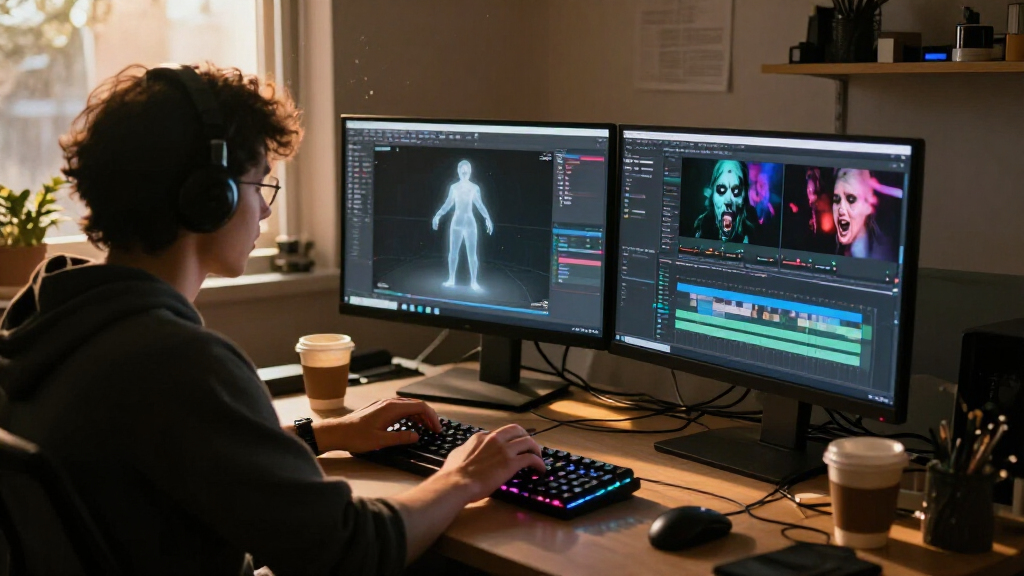
The case is useful to readers following AI filmmaking because it gives concrete, creator-reported details about both workflow and failure. Meyer says he prepared character references before making video, checked generated dialogue against the script with speech recognition, and changed prompts when particular actions or pronunciations failed. Those steps show where human decisions remained central: choosing the concept, diagnosing problems, revising scenes and judging whether the edit worked.
The figures also offer a limited view of production cost, not a general price estimate for AI film. The about $95 figure applies to Meyer’s three attempts and his stated subscription price; it does not include a full accounting of labor or establish what another creator would pay. The short matters as a documented experiment in a specific workflow, rather than evidence that AI production is automatically cheap or easy.
Popular right now

Bose QuietComfort Wireless Bluetooth Headphones with Active Noise Cancellation, Mic, USB‑C Charging, Deep Bass, 24‑Hour Battery – White Smok

Dreame L50 Ultra Robot Vacuum and Mop

Philips 3300 Series Fully Automatic Espresso Machine with LatteGo Milk System
As an affiliate, we earn on qualifying purchases.
From Character Sheets to Final Cut
Meyer says work began with eight full-length character reference images made in Nano Banana 2 through the Higgsfield platform. He used those sheets to keep features such as hairstyles and costumes consistent across later images and clips. The account describes each 2K reference image as costing two credits and says all eight were made in under two minutes. These are figures from the creator’s own production notes.
For the first cut, Meyer generated a start frame for each of 20 planned shots, using the character images as references, then animated the frames with Google’s Veo 3.1 in fast mode. He says the system generated speech and sound alongside the video. The resulting clips still needed checking: a shouted “HEY!” was spoken as the letters “H-E-Y,” and a line from the ghost returned with extra, garbled syllables. Meyer says he used OpenAI’s Whisper speech-recognition model to compare the audio with the script and identify errors.
Other attempts did not match the planned action. Meyer reports that a requested full head turn caused the character’s body to turn as well, and that a backward-bending stunt produced a different movement. An attempt to show a guest being lifted was blocked; after Meyer rephrased the action as floating, he says, the character barely left the ground. The account describes one workaround for the head turn: generate a still image with the head already reversed, then add a bone-crack sound effect.
“terribly boring and amateurish”
— Thorsten Meyer, creator of Hollow House
Limits of the Production Account
The account is Meyer’s own description of his production. The source material does not provide independent confirmation of the timeline, credit use, software settings or edit counts, and it does not include a separate account from the platforms or model providers. The reported costs reflect his plan price and should not be read as a complete budget.
Some technical details also remain unspecified. Meyer identifies the tools used for character images, video, speech checks and sound effects, but does not provide a full shot-by-shot breakdown of the final cut or clarify every tool used in each of the three versions. The source says the final generation used one model with cast references, but does not name that model in the supplied account. It is also unclear how much manual editing, compositing or other post-production was involved beyond the described cut and colour grade.
Meyer says the story structure was inspired by an AI horror-comedy short shared on X, while stating that Hollow House’s script, characters and jokes are original. The supplied material does not identify the earlier short, so the nature of that influence cannot be independently assessed from the account alone.
The Finished Short and Its Method
The finished 97-second film is available at the YouTube link included in Meyer’s Oct. 28 post. The article also presents behind-the-scenes material, including character sheets, starting frames, failed attempts and a contact sheet of the final cut. Readers can compare the creator’s account of the revisions with the released short, though the supplied material does not describe any planned sequel, further production or independent technical review.
Meyer’s next public step, according to the source, is the publication of this production account and its supporting images; no additional release date or follow-up project is given. Any broader conclusions about how well the method works across other stories would require more examples. For this short, the documented takeaway is narrower: the creator says establishing consistent character references and rejecting a slow first edit mattered more than simply generating polished individual shots.
Key Questions
What is Hollow House?
Hollow House is a 97-second horror-comedy short about a real ghost joining the staff of an extreme haunted attraction. Its creator says the characters, voices and set were AI-generated.
How long did it take to make?
Thorsten Meyer says production began in the early evening on Oct. 27, 2026, and finished at about 1:30 a.m. the following morning. The account describes three versions made during that period.
Why were the first two versions rejected?
Meyer says the first version looked good but felt slow and boring, with 20 shots averaging 5.6 seconds each. He says the second used 66 cuts but was also replaced; the final version used three roughly 30-second segments and ran 1:37.
How much did the production cost?
Meyer reports using 2,220 Higgsfield credits across the three versions, which he valued at about $95 at his plan price. He also reports about 2,100 ElevenLabs characters for music and sound effects. This is his stated tool cost, not a complete production budget.
Is the reported process independently verified?
The supplied source is Meyer’s own behind-the-scenes account. It includes images and a link to the film, but provides no independent verification of the timeline, credit totals or detailed workflow.
Source: ThorstenMeyerAI.com