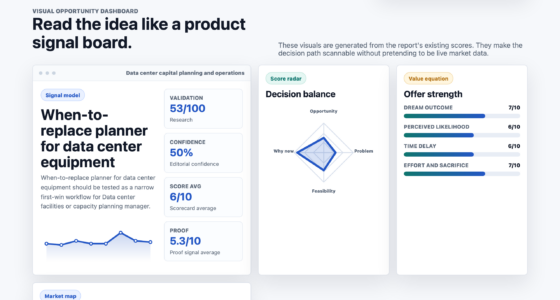
📊 Full opportunity report: The $60 Billion Bargain: Why Cursor Could Be a Steal for SpaceX on ThorstenMeyerAI.com — validation score, market gap, and execution plan.

Get school and study supplies delivered free — and shop member deals
- Fast, free delivery on millions of items
- Access to Prime Big Deal Days deals on October 6–7
- Prime Video, Amazon Music and more included
TL;DR
SpaceX acquired AI coding tool Cursor for $60 billion in stock, valuing the company at a steep discount due to its rapid growth and strategic assets. The deal enhances SpaceX’s AI capabilities and market position, with details still unfolding.
SpaceX has acquired Cursor, an AI coding toolmaker, for $60 billion in all-stock. The deal, announced on June 16, is the largest venture-backed startup acquisition in history and signals a strategic move to bolster SpaceX’s AI and software capabilities amid rapid growth.
The acquisition was executed entirely in SpaceX stock, representing only 3.4% dilution at the company’s IPO valuation, and caused SpaceX’s market cap to briefly surpass $2.94 trillion, making it the fourth most-valuable US company. Cursor’s revenue has surged from $2 billion in February to an expected $6 billion by the end of 2026, with a rapid growth rate that has halved its valuation multiple in recent months. The deal grants SpaceX access to Cursor’s profitable enterprise AI subscription business, with over 50,000 enterprise customers, including half of the Fortune 500, and a proven in-house coding model, Composer.
The $60B bargain: why Cursor could be a steal
$60 billion for a code editor sounds like a bubble. Look past the headline and the price isn’t the scandal — it’s the discount. Here’s the case that SpaceX got Cursor cheap.
A melting multiple, paid in appreciating paper that cost almost nothing, for the profitable leader of the only AI category reliably making money — plus the missing app layer and an escape from the margin trap. If the growth holds and integration doesn’t break the product, $60B will read like a down payment. The risk isn’t overpaying for what Cursor is — it’s breaking what made it worth buying.
Strategic Impact of the Cursor Acquisition for SpaceX
This acquisition positions SpaceX to accelerate its AI integration, reduce reliance on third-party models, and improve profit margins by internalizing key AI infrastructure. It also blocks competitors like OpenAI and Microsoft from gaining access to Cursor’s developer ecosystem, strengthening SpaceX’s competitive edge in enterprise AI workflows. The move exemplifies Elon Musk’s pattern of vertical integration, aiming to turn high-growth AI into a profitable, self-sufficient segment.
As an affiliate, we earn on qualifying purchases.
Background on Cursor and SpaceX’s AI Strategy
Cursor, developed by Anysphere, has rapidly scaled its revenue through a growing user base of over a million paying customers and a significant enterprise footprint. Its success stems from a unique position in the AI coding market, with a proprietary in-house model, Composer, and a proven monetization model. Prior to the acquisition, Cursor faced rising costs due to reliance on external AI providers like Anthropic, which limited margins. SpaceX’s interest aligns with Musk’s broader AI ambitions, including the in-house development of frontier models through xAI and the integration of AI across its aerospace and infrastructure projects.
“Acquiring Cursor accelerates our AI capabilities and secures a critical distribution point in developer workflows.”
— Elon Musk, via company statement
As an affiliate, we earn on qualifying purchases.
Unresolved Questions About the Deal’s Long-Term Impact
It remains unclear how Cursor’s integration will affect SpaceX’s overall profitability, given the company’s past cash-intensive projects. The exact strategic plans for Cursor’s existing products and team post-acquisition are still developing. Additionally, the full impact on the competitive landscape, especially regarding rival AI firms and their access to developer tools, has yet to be seen.
AI programming tools for businesses
As an affiliate, we earn on qualifying purchases.
As an affiliate, we earn on qualifying purchases.
Next Steps for SpaceX and Cursor Post-Acquisition
SpaceX is expected to integrate Cursor’s technology into its AI stack and expand its enterprise offerings. The company may also accelerate the development of its proprietary models, leveraging in-house compute resources. Observers will watch for official statements on how the Cursor team will be incorporated and how the deal influences SpaceX’s broader AI strategy, including potential new products and partnerships.
enterprise AI subscription services
As an affiliate, we earn on qualifying purchases.
As an affiliate, we earn on qualifying purchases.
Key Questions
Why did SpaceX pay such a high valuation for Cursor?
Although the headline price was $60 billion, the rapid revenue growth, strategic assets, and the potential to internalize AI costs justified the valuation, especially given the company’s profitable enterprise segment and in-house models.
How does this acquisition benefit SpaceX’s core business?
It enhances SpaceX’s AI capabilities, reduces reliance on external providers, and blocks competitors from gaining access to Cursor’s developer ecosystem, potentially leading to higher margins and a competitive edge.
What are the risks associated with this deal?
Potential integration challenges, uncertain profitability post-integration, and the evolving AI competitive landscape could impact the long-term success of the acquisition.
Will Cursor’s existing customers and products continue unchanged?
Details are still emerging, but it’s likely that SpaceX will integrate Cursor’s products into its ecosystem, potentially leading to new offerings and strategic shifts.
Is this a typical acquisition size for SpaceX?
No, this is unprecedented in scale for a venture-backed startup acquisition, but it aligns with Musk’s history of strategic, high-impact investments in AI and infrastructure.
Source: ThorstenMeyerAI.com
Halloween Picks
halloween
As an affiliate, we earn on qualifying purchases.