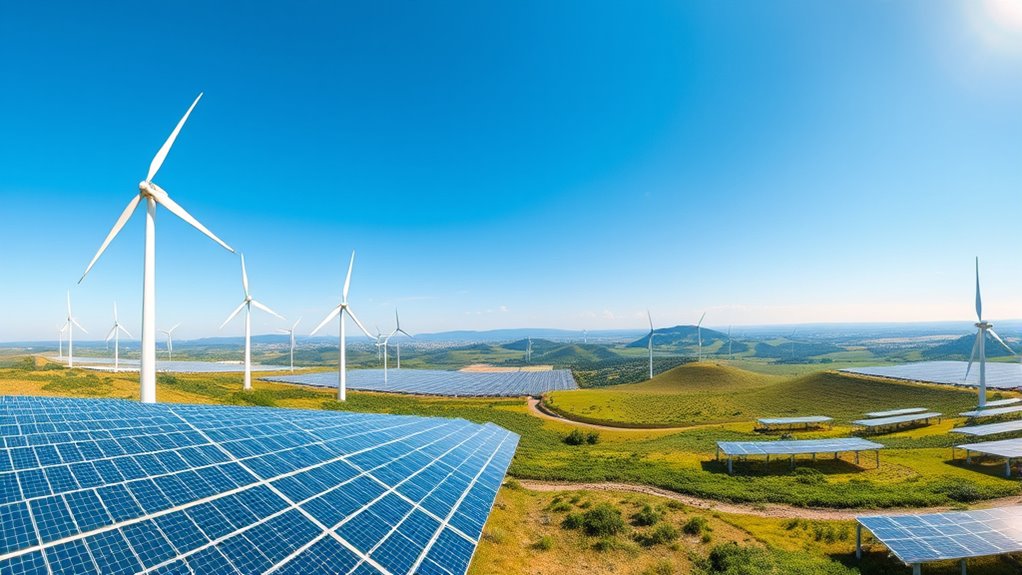

By 2025, solar and wind power will lead the global shift toward renewable energy, with technological advances and falling costs making them more accessible. Strong government incentives and policies will accelerate adoption, while innovations in energy storage ensure reliable supply even when the sun isn’t shining or wind isn’t blowing. This progression supports efforts to reach net-zero emissions. Keep exploring how these changes are shaping a cleaner, more sustainable energy future for everyone.
Key Takeaways
- Solar and wind power will dominate new energy projects globally due to technological advances and decreasing costs.
- Energy storage solutions will be critical, enabling reliable, flexible renewable energy use and grid stability.
- Governments will continue offering incentives, subsidies, and streamlined policies to accelerate renewable adoption.
- Integration of storage with renewables will improve efficiency, making clean energy more accessible and affordable.
- Increased renewable deployment will significantly reduce carbon emissions, advancing global efforts toward net-zero emissions by 2025.
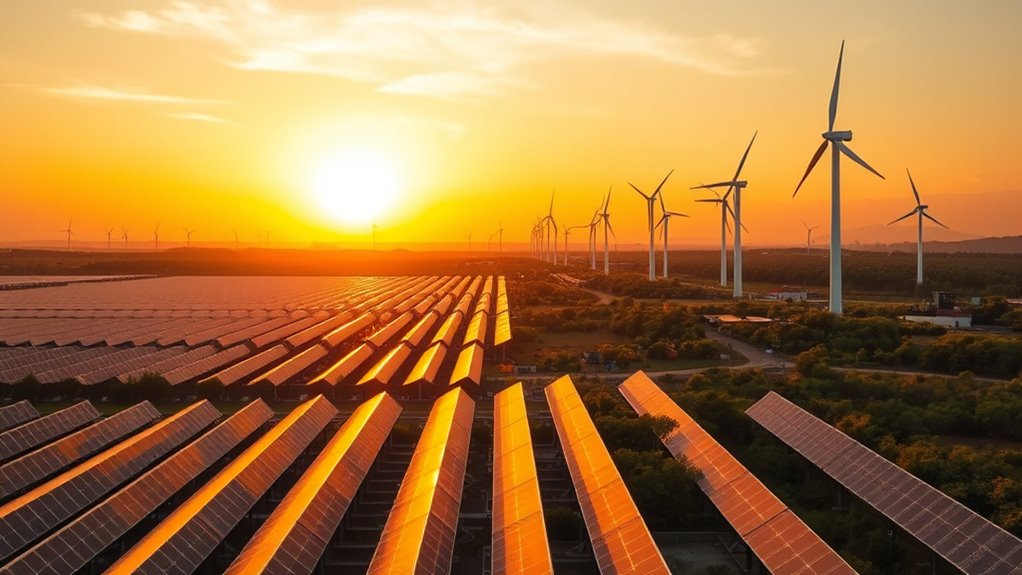
What will the landscape of renewable energy look like in 2025? If current trends continue, you’ll see a marked shift toward cleaner, more efficient sources like solar and wind power becoming central to the global energy mix. As technology advances and costs drop, renewables will dominate new energy projects, helping you and communities reduce reliance on fossil fuels. But to truly harness their potential, energy storage will play a pivotal role. Expect to see significant investments in batteries and other storage solutions that allow you to store excess energy generated during peak times and use it when demand is high or supply dips. This will make renewable energy more reliable and flexible, smoothing out the intermittent nature of solar and wind. Improvements in energy storage technology will further enhance the efficiency and affordability of these systems, making them accessible to more users. Policy incentives will continue to accelerate this shift. Governments around the world are offering rebates, tax credits, and subsidies that make adopting renewables more affordable for you. These policy incentives lower the barriers for homeowners, businesses, and utilities to invest in solar panels or wind turbines, fostering widespread adoption. For instance, many countries are extending or expanding incentives that reduce upfront costs, making clean energy accessible to more people. Additionally, regulations are increasingly favoring renewable projects by streamlining permits and setting renewable energy targets, pushing you to participate in the move toward sustainability. You’ll notice that energy storage solutions are becoming more integrated with renewable projects, enabling you to maximize the value of your investments. As storage technology improves, costs will continue to fall, making it easier for you to incorporate batteries into your energy systems. This means you can store surplus solar energy during sunny days and use it during cloudy periods or at night, ensuring a steady power supply that isn’t dependent on weather conditions. Combined with policy incentives, this will empower you to generate, store, and use renewable energy more efficiently, supporting your efforts to lower your carbon footprint.

ECO-WORTHY 4.68KWH Solar Power Complete Kit 1200W 48V with Lithium Battery and Inverter for Home: 6pcs 195W N-Type Bifacial Solar Panels + 1pc 48V 50Ah Li-Battery + 3500W Solar Charger Inverter
[Ideal Output Power-4.68Wh/day]: This 1200W solar panel complete system generates about 4.68KWh per day under 4 hours full…
As an affiliate, we earn on qualifying purchases.
As an affiliate, we earn on qualifying purchases.
Frequently Asked Questions
How Will Renewable Energy Impact Global Economies by 2025?
By 2025, renewable energy will boost your economy through significant growth and job creation. As investments pour into solar and wind projects, you’ll see new industries emerge, providing employment opportunities. This shift will enhance economic resilience, reduce reliance on fossil fuels, and foster innovation. Your country will benefit from cleaner energy, attracting global investments and strengthening local communities, ultimately driving sustainable economic development.
What Technological Advancements Are Expected to Dominate Renewable Energy in 2025?
In 2025, you’ll find advanced photovoltaics leading the charge, transforming rooftops into power plants faster than you can say “solar panel.” Wind turbine innovations will also dominate, with sleeker blades and smarter controls making wind farms more efficient and less annoying to look at. These technological marvels will make renewable energy cheaper, cleaner, and more reliable, so you can finally enjoy guilt-free Netflix marathons powered by the wind and sun.
How Will Energy Storage Solutions Evolve to Support Renewable Integration?
You’ll see energy storage solutions evolve to enhance grid resilience and support renewable integration, with scalable technologies like advanced batteries and pumped hydro. These innovations will allow you to store excess energy during peak production and release it when demand rises, making the grid more reliable. Expect investments in storage scalability to improve efficiency and reduce costs, enabling you to rely more on renewables while maintaining a stable, resilient power supply.
What Policies Are Most Effective in Accelerating Renewable Energy Adoption?
You can accelerate renewable energy adoption most effectively through strong policy incentives like tax credits and subsidies, which encourage investments. Additionally, establishing clear regulatory frameworks simplifies project development and reduces risks. By combining financial incentives with streamlined policies, you create an environment where renewable energy becomes more accessible and attractive, helping to meet climate goals faster and ensuring a smoother progression to a sustainable energy future.
How Will Renewable Energy Influence Global Climate Change Mitigation Efforts?
Renewable energy will substantially boost your climate change mitigation efforts by reducing your carbon footprint and increasing climate resilience. As you adopt solar and wind solutions, you directly cut emissions, helping slow global warming. This shift not only benefits the environment but also strengthens communities against climate impacts. By investing in renewables, you support a sustainable future, making meaningful progress in the fight against climate change.

VEVOR 500W Wind Turbine Generator, 12V Wind Turbine Kit, 5-Blade Wind Power Generator with MPPT Controller, Adjustable Windward Direction & 2.5m/s Start Wind Speed, Suitable for Home, Farm, RVs, Boats
500W High-Efficiency Output: VEVOR 500W high-power wind turbine generator delivers exceptional wind energy utilization and efficiency, making it…
As an affiliate, we earn on qualifying purchases.
As an affiliate, we earn on qualifying purchases.
Conclusion
By 2025, your dedication can drive decisive change. Embrace the excitement of evolving energies—solar, wind, and beyond—and become a bold beacon for a brighter, greener globe. Every effort you make, every choice you champion, propels us closer to a sustainable, shining future. Don’t delay—dare to dream, decide, and deliver a decisive difference. Together, through passion and perseverance, we’ll power the planet toward a promising, pollution-free future.

ECO-WORTHY (Cubix 100) 48V 100Ah LiFePO4 Lithium Battery w/Bluetooth | UL1973 & UL9540A & CEC Listed | 5120Wh Server Rack Battery for Solar Energy Storage, Home Backup Power
Upgraded to Cubix 100 (Feb 5, 2026) – The ECO-WORTHY 48V 100Ah Server Rack LiFePO₄ Battery V3 is…
As an affiliate, we earn on qualifying purchases.
As an affiliate, we earn on qualifying purchases.

15000W Wind Solar Hybrid Charge Controller 12V 24V MPPT Boost Charge Regulator with LCD Display and Dump Load,12V/24V
【HYBRID CHARGE CONTROLLER APPLICATION RANGE】: wind charge controller fits all 12/24V batteries, including lithium battery. Fits max wind…
As an affiliate, we earn on qualifying purchases.
As an affiliate, we earn on qualifying purchases.