
Mesh Wi-Fi feels magical because it provides seamless coverage and easy setup, making your devices stream smoothly and smart home gadgets operate effortlessly. But as your home’s layout gets complex with thick walls or unusual shapes, signals can weaken or bounce around, causing dead spots and more disconnections. The more your setup expands, the more these issues can surface. Keep exploring to discover how to maintain that flawless connection even in tricky spaces.

Get school and study supplies delivered free — and shop member deals
- Fast, free delivery on millions of items
- Access to Prime Big Deal Days deals on October 6–7
- Prime Video, Amazon Music and more included
Key Takeaways
- Mesh Wi-Fi provides seamless coverage initially, but complex layouts and structural obstacles disrupt signals over time.
- Increasing smart device density causes congestion, leading to slower speeds and frequent disconnections.
- Thick walls and multi-floor designs create coverage gaps and interfere with signal bounce and absorption.
- Signal interference from home fixtures and device interactions reduces network reliability as complexity grows.
- Proper node placement and network adjustments are essential to maintain performance in unusual or challenging home layouts.
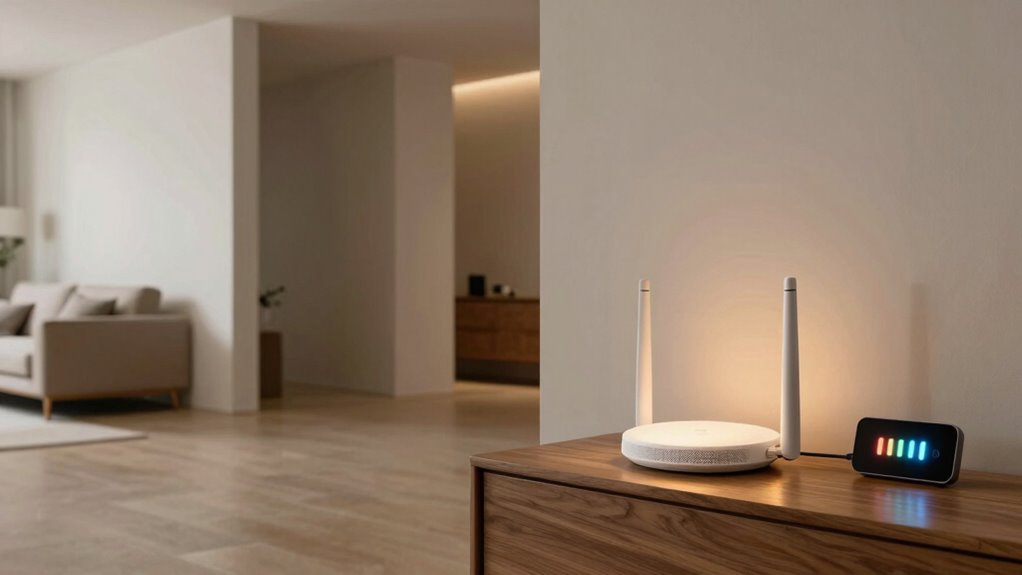
Mesh Wi-Fi promises seamless coverage and easy setup, making it feel almost magical when you first install it in your home. You’re likely impressed by how quickly your devices connect, how smoothly your streaming runs, and how your smart home devices seem to work effortlessly without constant buffering or dead zones. For a while, it’s like your Wi-Fi network is a perfectly orchestrated symphony—simple, dependable, and efficient. But as your home’s layout becomes more complex or your smart home setup grows, that magic can start to fade. Suddenly, you notice dead spots, slower speeds, or devices that seem disconnected more often. That’s because, despite the promise of seamless coverage, certain home layouts and device interactions can introduce signal interference, which hampers your network’s performance.
One key reason your mesh Wi-Fi might start to feel less trustworthy is the challenge of smart home integration. When you add more smart devices—security cameras, smart thermostats, voice assistants—you introduce new points of potential signal interference. These devices often operate on the same frequency bands as your Wi-Fi, causing congestion. If your mesh system isn’t optimized for this level of smart home integration, the interference can lead to dropped connections or sluggish responses. It’s frustrating because, initially, everything seemed so straightforward, but as you expand your network, the complexity increases, revealing weaknesses you didn’t notice before.
Your home’s layout plays a vital role in this. Thick walls, metal fixtures, or multiple floors can create physical barriers that disrupt Wi-Fi signals. Mesh systems are designed to distribute Wi-Fi across your space, but they aren’t immune to structural obstacles. When the signals bounce or are absorbed by certain materials, coverage gaps appear, especially in corners or basements. In homes with unusual layouts—open floor plans with many rooms or irregular shapes—the mesh nodes might not provide uniform coverage, leading to performance inconsistencies. While the system initially seemed almost magical, these structural quirks expose its limitations, reducing the dependability you once enjoyed. Understanding home structures can be key to optimizing your network setup and minimizing dead zones. Additionally, considering home layout and how it impacts signal propagation can be crucial for maintaining optimal coverage.
To maintain that seamless experience, you might need to adjust your setup—adding more nodes, repositioning existing ones, or changing the placement of smart devices. Upgrading your mesh firmware or switching to a system that better handles smart home integration and signal interference can also help. Additionally, understanding how signal interference impacts your network can guide you in optimizing your setup. Ultimately, your mesh Wi-Fi’s magic relies on understanding your home’s unique design and the increasing complexity of your connected devices. Without careful management, that initial enchantment can fade, revealing the real challenges of keeping a complex home network running smoothly.
mesh Wi-Fi extender for thick walls
As an affiliate, we earn on qualifying purchases.
As an affiliate, we earn on qualifying purchases.
Frequently Asked Questions
Can Mesh Wi-Fi Improve Coverage Outside My Home?
Yes, mesh Wi-Fi can improve outdoor coverage by extending your signal penetration beyond your home. By placing mesh nodes outside, you create a seamless network that boosts outdoor signal strength, allowing you to enjoy reliable internet in your yard or garden. This setup helps eliminate dead zones outdoors, ensuring you stay connected whether you’re relaxing outside or using outdoor devices, thanks to the enhanced outdoor coverage provided by mesh technology.
How Do I Upgrade My Mesh Wi-Fi System?
Imagine your Wi-Fi as a garden needing fresh seeds; upgrading is like planting new, stronger routers. Start by replacing your old router with a more powerful mesh node, ensuring they support the latest standards for router security. To combat signal interference, position your mesh units away from electronics and thick walls. Regular firmware updates also keep your system resilient, turning your network into a well-tended, high-yield digital orchard.
Is Mesh Wi-Fi Compatible With All Internet Providers?
Mesh Wi-Fi generally works with most internet providers, but you should check compatibility first. You’ll want to guarantee your provider’s modem supports your mesh system. Also, keep your wireless security settings updated and install firmware updates regularly to protect your network. If your provider uses a special configuration or has restrictions, contact them to confirm compatibility. This way, you’ll enjoy seamless connectivity and secure your home network effectively.
What’s the Best Placement for Mesh Nodes?
You should place your mesh nodes in central locations, ideally at a similar height, to optimize router placement and guarantee strong signal strength. Avoid placing nodes near thick walls, metal objects, or appliances that can interfere with signals. Keep them a few feet apart, but not too close, to maintain seamless coverage. Proper placement helps your mesh network perform at its best, reducing dead zones and buffering issues.
Do Mesh Networks Support Smart Home Devices Reliably?
Surprisingly, mesh networks support smart home devices reliably—most of the time. You might think the magic of seamless connectivity would be perfect, but complex layouts can cause issues. Thankfully, many mesh systems offer smart home compatibility and device prioritization features, ensuring your devices stay connected when you need them most. Just remember, even the best mesh network can struggle if your home’s layout is truly bizarre.
As an affiliate, we earn on qualifying purchases.
Conclusion
At first, mesh Wi-Fi feels like magic—seamless coverage, no dead zones, just effortless browsing. But when your home layout gets quirky, thick walls, or multiple floors, that magic starts to fade. Suddenly, your smooth streaming turns into buffering, and your connected devices feel more like distant relatives than close friends. It’s a reminder that even the best tech has limits—your home’s unique design can turn a miracle network into a frustrating puzzle.
mesh Wi-Fi nodes for multi-floor homes
As an affiliate, we earn on qualifying purchases.
As an affiliate, we earn on qualifying purchases.
Wi-Fi interference blocker for smart devices
As an affiliate, we earn on qualifying purchases.
As an affiliate, we earn on qualifying purchases.
Halloween Picks
halloween
As an affiliate, we earn on qualifying purchases.