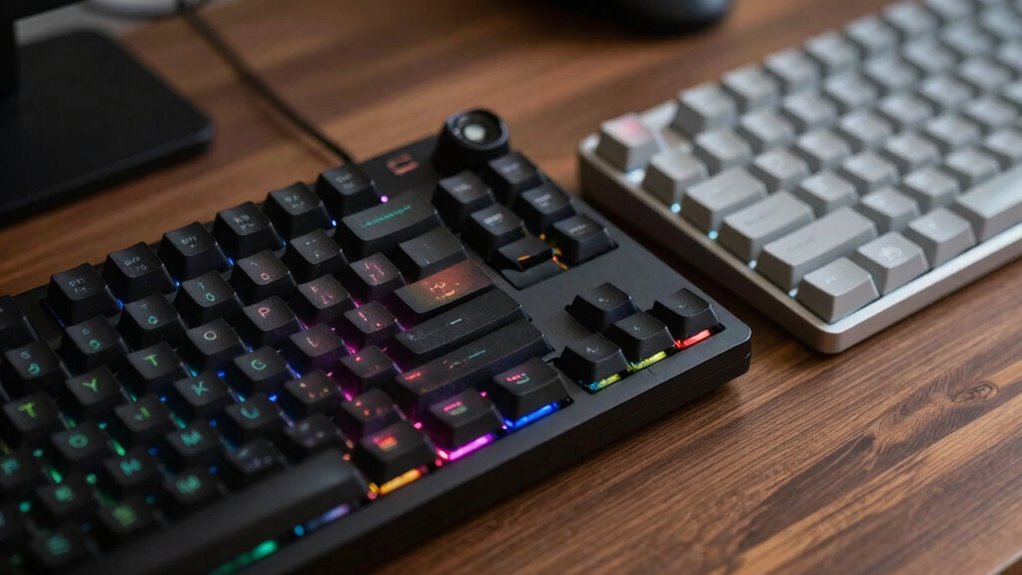
If you’re choosing between a mechanical and quiet keyboard, consider your work environment and comfort needs. Mechanical keyboards give you tactile feedback and are more durable, but they can be noisy, which might bother colleagues or disrupt focus. Quiet keyboards reduce noise and suit shared spaces, but they often lack ergonomic features for long-term comfort. If you’re curious about how to balance these factors or want tips for your ideal setup, keep exploring these options.

Prime made for students and young adults
- Fast, free delivery for dorm and study essentials
- Prime Video and Amazon Music included
- Member-only deals
Key Takeaways
- Writers prioritize tactile feedback and customization offered by mechanical keyboards for a better typing experience.
- Teams often prefer quiet membrane keyboards to minimize noise and distraction in shared work environments.
- Mechanical keyboards can cause noise disruptions, making them less suitable for quiet office or late-night work settings.
- Ergonomic features in mechanical keyboards help reduce fatigue during long writing sessions, but may lack in membrane options.
- Overall workspace harmony depends on balancing typing comfort with noise levels and team collaboration needs.
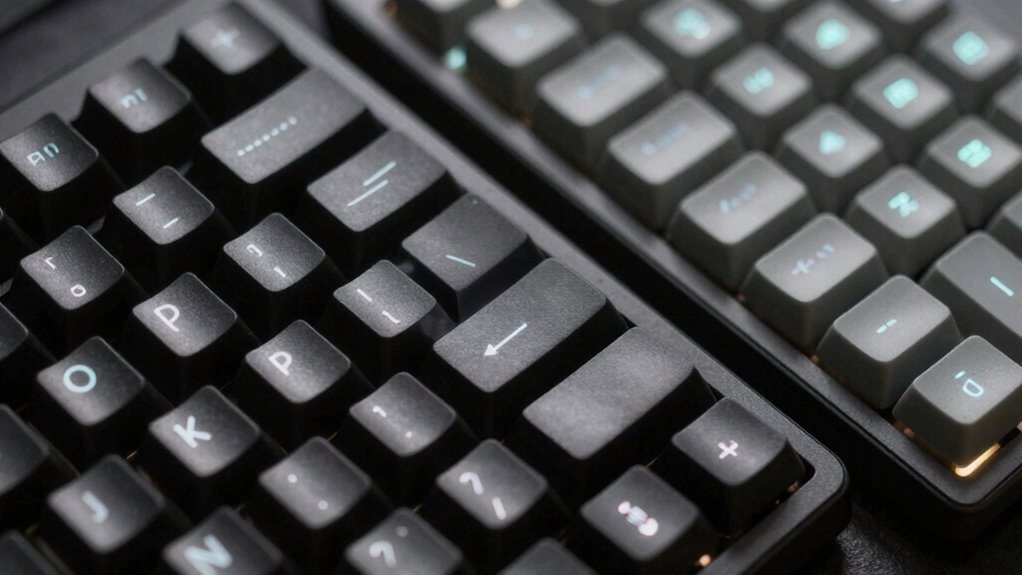
Have you ever wondered whether a mechanical keyboard or a quieter, membrane-style keyboard is better for writing and collaboration? The choice isn’t just about personal preference—it can influence your comfort, productivity, and team dynamics. Mechanical keyboards are celebrated for their tactile feedback and durability, but some argue they can be noisy, which might disrupt focus or bother colleagues. Conversely, membrane keyboards tend to produce less noise, making them appealing for shared workspaces, but some users find them less satisfying to type on and potentially less ergonomic over long periods.
Choosing between mechanical and membrane keyboards impacts comfort, noise, and teamwork in your workspace.
When considering ergonomic benefits, mechanical keyboards often come out ahead. They typically feature individual switches that provide better key stability and more precise feedback, which can reduce finger fatigue and improve typing posture. Many mechanical models offer adjustable tilt angles and wrist support options, helping you maintain a natural hand position during long writing sessions. This can decrease strain on your wrists and hands, especially if you’re typing for hours daily. Additionally, keyboard switch types influence both the tactile feel and noise level, making the choice of switch crucial for your preferences. On the other hand, membrane keyboards generally lack these ergonomic adjustments, which might lead to discomfort over time, especially if you’re prone to repetitive strain. Selecting the right keyboard also involves considering keyboard customization options, which are more abundant in mechanical models and can enhance your overall typing experience. Understanding these features can help you make a more informed decision based on your specific needs. Moreover, the cost difference between the two types can also be a deciding factor for many users.
Noise levels are a significant factor when choosing between these two types of keyboards. Mechanical keyboards, especially those with clicky switches, produce a distinct sound with each keystroke. This noise can be distracting in a quiet office or when working late at night. However, many mechanical models now come with quieter switch options, designed to minimize sound while retaining tactile feedback. Membrane keyboards, by design, generate less noise because their rubber domes absorb the keystroke impact, making them more discreet in shared environments. If silence is a priority for your work or your team, a membrane keyboard might be the better choice, though some find the typing experience less satisfying. Team collaboration can also be affected by the noise level, especially in open-office setups or during late-night work sessions.
Ultimately, your decision hinges on how you prioritize ergonomic benefits and noise levels. If you want a keyboard that promotes comfort during long writing sessions and are willing to accept some noise, a mechanical keyboard can be a game-changer. If working quietly is more critical and you prefer a softer, less intrusive typing sound, then a membrane keyboard might suit your needs better. Your choice impacts not only your comfort and efficiency but also the overall harmony within your team or workspace.
mechanical keyboard with quiet switches
As an affiliate, we earn on qualifying purchases.
As an affiliate, we earn on qualifying purchases.
Frequently Asked Questions
Which Keyboard Type Is Better for Gaming Performance?
For gaming performance, a mechanical keyboard usually outperforms quiet keyboards thanks to its tactile feedback and faster response times. You benefit from ergonomic design that reduces fatigue during long sessions, and its aesthetic appeal adds a stylish touch to your setup. Mechanical keyboards allow precise key presses, giving you an edge in competitive gaming. So, if performance matters most, a mechanical keyboard is the better choice for your gaming experience.
How Do Keyboard Types Affect Long-Term Hand Health?
Choosing the right keyboard affects your hand health by reducing hand fatigue through ergonomic design. Mechanical keyboards often have better tactile feedback, encouraging proper typing posture and decreasing strain over time. Quiet keyboards may lack this, leading to increased fatigue if you type for long periods. Prioritize an ergonomic design that supports your natural hand position, and take regular breaks to protect your long-term hand health.
Are Quiet Keyboards as Durable as Mechanical Ones?
Quiet keyboards can be quite durable, but they often rely on membrane switches that may wear out faster than mechanical switches. However, they excel in noise reduction benefits, making them ideal for shared workspaces. When considering ergonomics, durability is key, so look for models with high-quality materials. Ultimately, if noise reduction is your priority and you choose a well-built quiet keyboard, it can serve you well over the long term.
What Is the Cost Difference Between Mechanical and Quiet Keyboards?
You’ll find mechanical keyboards generally cost more than quiet keyboards, mainly due to their durable, high-quality switches and ergonomic design. Mechanical options often feature a more striking aesthetic appeal, which can justify the higher price for those seeking a premium look and feel. Quiet keyboards tend to be more budget-friendly, making them ideal if you want a functional, less noisy typing experience without the extra expense.
Can a Quiet Keyboard Improve Focus in Noisy Workplaces?
Think of a quiet keyboard as a soft pillow in a noisy room; it can definitely help you focus better. Its ergonomic design reduces strain, and noise reduction features cut down on distracting sounds. When your environment is loud, this calm, silent tool creates a peaceful workspace, helping you concentrate on your tasks without interruption. So, yes, a quiet keyboard can considerably improve your focus in bustling workplaces.
ergonomic membrane keyboard for office
As an affiliate, we earn on qualifying purchases.
As an affiliate, we earn on qualifying purchases.
Conclusion
Ultimately, whether you choose a mechanical marvel or a whisper-quiet wonder depends on your priorities. If performance and tactile thrill top your list, the mechanical marvel might be your match. But if peace and productivity take precedence, the quiet wonder could be your best bet. Remember, your perfect keyboard’s power lies in personal preference. So, weigh your needs wisely, and let your choice champion your creative and collaborative endeavors. Your ideal keyboard awaits to elevate every keystroke.
customizable mechanical keyboard
As an affiliate, we earn on qualifying purchases.
As an affiliate, we earn on qualifying purchases.
As an affiliate, we earn on qualifying purchases.
Fall Picks
fall essentials
As an affiliate, we earn on qualifying purchases.