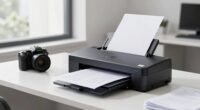
If you’re choosing between a laser and inkjet printer for work, consider long-term costs. Laser printers usually have a higher initial price but are more economical over time due to their lower per-page costs and longer-lasting toner cartridges. Inkjet printers are cheaper upfront but incur higher expenses with frequent ink replacements and maintenance, especially for high-volume tasks. Want to discover how the real costs stack up over years? Keep going to find out more.

Prime made for students and young adults
- Fast, free delivery for dorm and study essentials
- Prime Video and Amazon Music included
- Member-only deals
Key Takeaways
- Laser printers have higher initial costs but lower long-term expenses due to toner longevity and reduced maintenance.
- Inkjet cartridges are cheaper upfront but require frequent replacements, increasing ongoing costs.
- Laser printers excel in high-volume, text-heavy printing, making them more cost-effective over time.
- Inkjet printers are better for occasional color image printing but incur higher per-page costs.
- Total cost savings favor laser printers for busy work environments with consistent, high-volume output.
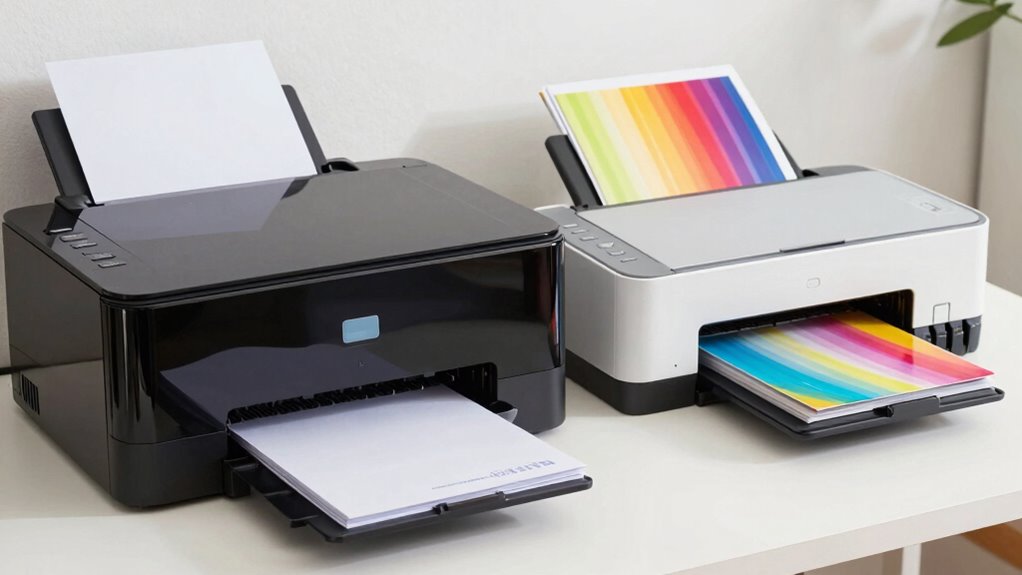
Print speed is another critical aspect that can influence your decision. Laser printers generally boast faster print speeds, making them ideal for high-volume work environments. They can churn out dozens of pages per minute, helping you meet tight deadlines without waiting. Inkjet printers tend to be slower, especially when printing larger documents or images with high detail. If your workload involves frequent, bulk printing, the speed advantage of a laser model becomes clear, saving you time and reducing bottlenecks. Additionally, laser printers often incorporate advanced wireless connectivity features that facilitate seamless printing from multiple devices, enhancing overall efficiency. However, the initial purchase price often seems more affordable with inkjet printers, leading many to assume they are the more cost-effective choice. But when you look at the long-term costs, the picture shifts dramatically. Laser printers typically have a higher upfront cost, but their toner cartridges last much longer than inkjet cartridges, which need frequent replacements, especially when printing high volumes. Inks in inkjet printers tend to dry out or clog if left unused for a while, leading to additional maintenance costs and delays. Regular maintenance and cleaning can help mitigate these issues, but they add to the overall expense over time. In fact, cartridge life span plays a crucial role in determining the ongoing costs of each printer type. Proper storage and handling of inkjet cartridges can also impact their longevity and performance, further influencing long-term expenses. Also, print quality is an important consideration, especially for professional or marketing materials. Over time, these recurring expenses and maintenance issues can greatly inflate the total cost of ownership for inkjet models. Another cost factor is the quality of the print output. Laser printers excel at producing sharp, clean text documents, making them perfect for professional reports and business correspondence. In contrast, inkjet printers are better suited for printing high-quality images or color-heavy graphics, which might be necessary for marketing materials or presentations. If your work involves frequent document printing with little need for color images, a laser printer’s lower per-page cost and superior text quality make it a smarter investment over the long haul.
As an affiliate, we earn on qualifying purchases.
Frequently Asked Questions
How Do Laser and Inkjet Printers Compare in Printing Speed?
You’ll find laser printers generally print faster than inkjets, especially for large volumes, making them ideal for busy work environments. They excel in print quality for sharp text and handle various paper types well, thanks to broad paper compatibility. Inkjet printers may be slower but produce superior photo quality. Your choice depends on your volume needs, print quality preferences, and the types of paper you use regularly.
Are Laser Printers More Environmentally Friendly Than Inkjets?
Laser printers tend to be more eco-friendly than inkjets because they generally consume less energy over time, especially during standby modes. They also produce less waste with toner cartridges that last longer and generate fewer emissions during printing. If you’re focused on eco-friendly printing, laser printers are a better choice for reducing your environmental impact, though initial costs are higher. Consider your volume and printing needs for the best decision.
Which Printer Type Offers Better Color Accuracy for Professional Work?
You’ll find inkjet printers generally offer better color accuracy for professional work, thanks to precise color calibration and higher ink modulation. They produce more vibrant and nuanced hues, ideal for detailed images. However, keep in mind that ink longevity is shorter, so you might need to replace cartridges more often. Laser printers excel in sharp text, but for detailed color work, inkjets often deliver superior results.
What Maintenance Routines Are Required for Long-Term Printer Health?
You should perform regular maintenance routines like printhead cleaning and toner replacement to guarantee long-term printer health. Did you know that neglecting these tasks can reduce print quality by up to 30%? To keep your printer in top shape, clean the printhead every few months and replace toner cartridges when they’re nearly empty. This proactive approach minimizes downtime and preserves print quality over time.
How Do Refill or Replacement Costs Impact Overall Expenses?
Refill costs and maintenance expenses considerably impact your overall printer expenses. Inkjet printers often have lower initial costs but higher refill costs, which can add up quickly if you print frequently. Laser printers typically have higher upfront costs but lower refill costs over time. Regular maintenance routines help prevent costly repairs, ultimately reducing your long-term expenses. Consider your printing volume to choose the most cost-effective option for your needs.
As an affiliate, we earn on qualifying purchases.
Conclusion
So, after all the numbers and surprises, it’s ironic that what seems cheaper upfront—an inkjet—can cost you more in the long run, while that sleek laser might save you money and headaches. You might think you’re choosing based on initial cost, but it’s the ongoing expenses that really matter. Sometimes, the most obvious choice isn’t so obvious after all. Who knew that saving today could cost you more tomorrow?
As an affiliate, we earn on qualifying purchases.
color inkjet printers for photos
As an affiliate, we earn on qualifying purchases.
As an affiliate, we earn on qualifying purchases.
Halloween Picks
halloween
As an affiliate, we earn on qualifying purchases.