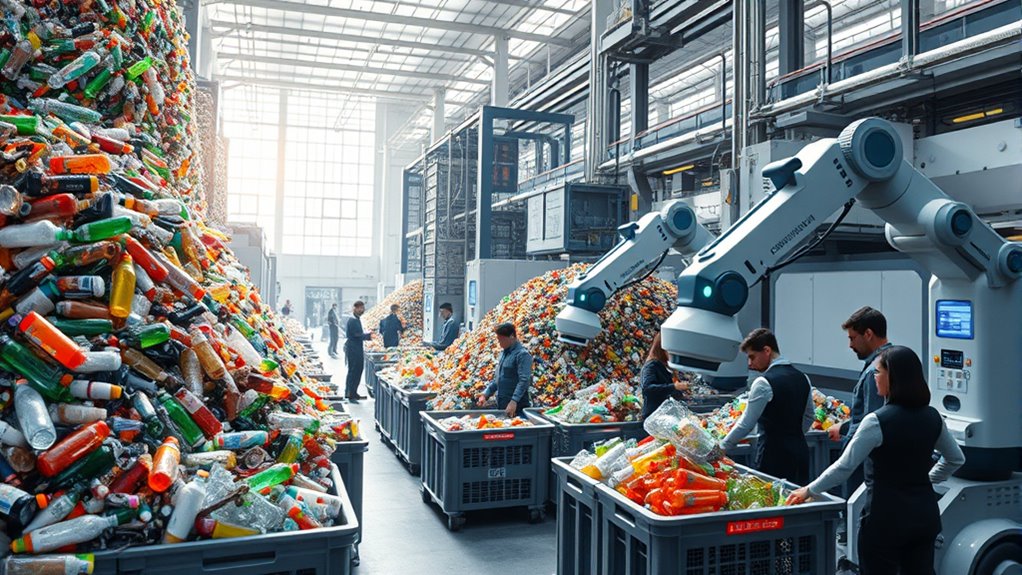

By 2025, the circular economy has turned recycling and reuse into thriving industries, thanks to innovative product designs, smarter resource management, and rising customer demand for sustainable goods. Companies now focus on creating products for easy refurbishment or recycling, while high-tech recycling centers turn waste into valuable raw materials. Consumers prefer durable, eco-friendly items, fueling market shifts. Keep exploring to discover how these changes are shaping a more sustainable and profitable future for everyone.
Key Takeaways
- Technological advancements have made recycling and reuse more efficient, transforming waste management into high-tech, profitable industries.
- Consumer demand for sustainable, repairable, and recyclable products has driven market growth in circular economy sectors.
- Governments and industries invested heavily in infrastructure and policies, enabling large-scale resource recovery and reuse.
- Innovative product designs, like modular electronics and recycled building materials, have expanded reuse and recycling markets.
- Data-driven resource management optimized material flows, reducing waste and creating new economic opportunities within the circular economy.

Have you ever wondered how our economy can grow without depleting natural resources? The secret lies in the rise of the circular economy, where recycling and reuse become big business. This shift isn’t just about managing waste better; it’s about transforming how industries operate with sustainable innovation at the core. Instead of extracting new materials endlessly, companies now focus on designing products that can be reused, refurbished, or recycled, creating a closed-loop system that reduces environmental impact. This approach hinges on effective resource management, ensuring that every material is kept in use for as long as possible, minimizing waste and conserving natural resources.
You’ll find that sustainable innovation fuels this new economy, encouraging businesses to rethink product design, manufacturing processes, and supply chains. For example, manufacturers now incorporate modular components that can be easily replaced or upgraded, extending the product’s lifespan and reducing the need for raw material extraction. These innovations aren’t just environmentally friendly; they’re economically advantageous, lowering costs and opening new markets centered around refurbishing, remanufacturing, and recycling. As a result, recycling centers have transformed into hubs of high-tech operations, turning waste into valuable raw materials that feed into new production cycles. Moreover, recycling infrastructure has become increasingly sophisticated, supporting the efficient recovery and processing of materials at scale.
Resource management plays a pivotal role in this shift. Companies that excel at tracking and controlling their material flows can better optimize their use of resources, making sure nothing goes to waste. Advanced data analytics and digital tools help monitor product lifecycle stages, enabling timely maintenance, refurbishing, or recycling. This proactive approach not only reduces environmental harm but also creates a resilient supply chain less vulnerable to disruptions caused by resource shortages. Governments and industries are investing heavily in infrastructure and policies that support these practices, accelerating the move toward a sustainable economy rooted in reuse and recycling.
In this new landscape, consumers also become active participants, demanding products that are durable, repairable, and recyclable. This mindset shift pushes companies to innovate further, creating a cycle where sustainability and profitability go hand in hand. By 2025, you’ll see countless examples of this transformation—buildings made from recycled materials, electronics designed for easy disassembly, and packaging that’s entirely compostable. These innovations make it clear that the circular economy isn’t a passing trend but a fundamental change in how we view growth and resource use. It’s a future where economic development doesn’t come at the expense of the planet, but instead, works in harmony with it through smarter resource management and continuous innovation.
Top picks for "circular economy recycl"
Open Amazon search results for this keyword.
As an affiliate, we earn on qualifying purchases.
Frequently Asked Questions
How Will Circular Economy Policies Impact Small Businesses?
Circular economy policies will shape your small business by encouraging better supply chain practices and resource management. You’ll need to adopt sustainable materials and optimize reuse to stay compliant and competitive. These policies can open new markets and reduce costs, but they also require adjustments in sourcing and waste handling. Embracing these changes helps you contribute to environmental goals while boosting efficiency and resilience in your operations.
What New Technologies Are Driving Recycling Innovation?
You’ll see AI-driven sorting technology transforming recycling processes by quickly identifying and separating materials with high precision. Blockchain tracking guarantees transparency and accountability, allowing you to trace recyclables from collection to reuse, reducing fraud and inefficiencies. These innovations help streamline recycling operations, cut costs, and boost sustainability efforts. Embracing AI and blockchain will keep your business competitive as the circular economy expands, making recycling smarter, faster, and more reliable.
How Can Consumers Contribute More Effectively?
Think of yourself as the key to a greener future. By boosting your consumer awareness, you can make smarter choices and support sustainable brands. Cultivate reuse habits—bring your own bags, bottles, and containers. Every small action adds up, turning you into an active part of the circular economy. Your conscious decisions can spark change, transforming waste into opportunity and making reuse habits a natural part of your life.
What Are the Biggest Challenges for Global Implementation?
You face major challenges in global implementation, especially with international cooperation and resource scarcity. You need countries to work together and set consistent standards, which isn’t easy. Additionally, limited resources push industries to maximize reuse and recycling, but uneven development and policies complicate this. Overcoming these hurdles requires strong global partnerships, shared goals, and innovative solutions to guarantee a circular economy benefits everyone.
How Will Circular Economy Practices Influence Job Markets?
Think of the circular economy as a vibrant garden, where each new growth opens opportunities. As it blooms, you’ll see green job creation surge, offering fresh roles in recycling, reuse, and sustainable innovation. You’ll need to develop new skills to thrive in this evolving landscape, transforming traditional work into eco-conscious careers. This shift not only boosts employment but also fosters a resilient, environmentally friendly job market that benefits everyone.
Conclusion
By 2025, you’ve seen recycling and reuse turn into thriving businesses, proving that sustainability isn’t just a buzzword but a smart economic move. As you embrace this circular economy, remember that even in a world racing toward the future, the past’s wisdom—like reuse—remains invaluable. Just like the internet revolutionized connectivity, adopting these practices today guarantees you’re not left behind in a wasteland of missed opportunities. Keep moving forward—tomorrow’s success depends on today’s choices.