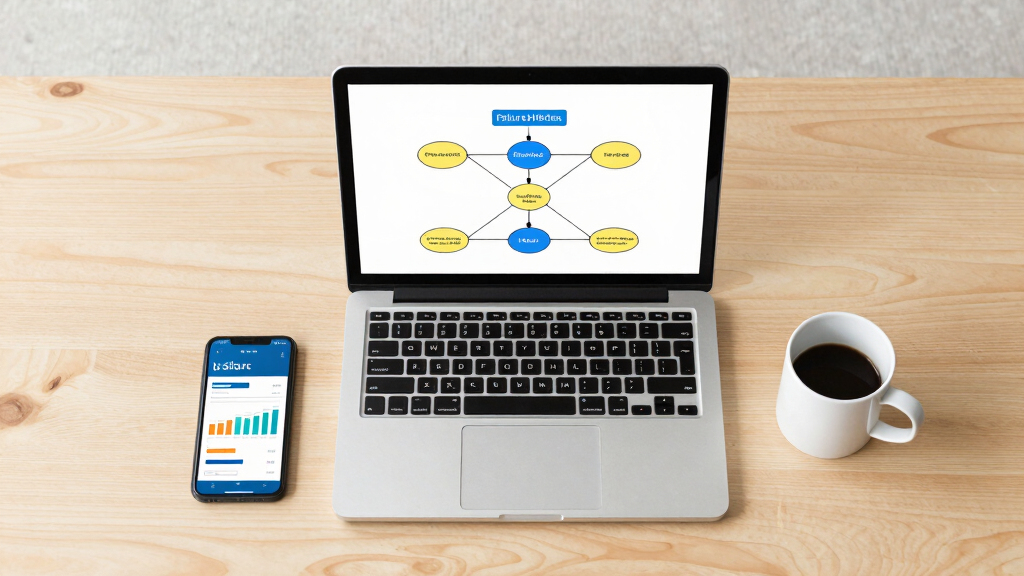

📊 Full opportunity report: Agentic Loop Failure Modes: A Production Taxonomy at the End of Year One on ThorstenMeyerAI.com — validation score, market gap, and execution plan.

Prime made for students and young adults
- Fast, free delivery for dorm and study essentials
- Prime Video and Amazon Music included
- Member-only deals
TL;DR
After one year of deploying agentic AI systems, researchers have developed a detailed taxonomy of failure modes. This categorization helps engineers identify, evaluate, and mitigate issues more effectively, marking a significant step in operational AI safety.
After one year of deploying agentic AI systems in production, researchers have established a structured taxonomy of failure modes, categorizing 15 specific failure types across six main categories. This development provides engineers with a vocabulary and framework to better diagnose and address system failures, a critical step in operational AI safety and reliability.
The taxonomy was compiled from production reports, academic workshops at ICML 2026, and real-world failure data from systems running 20-100 step workflows. It identifies six main failure categories: drift, reasoning, coordination, behavioral, termination, and adversarial/specification failures, each containing specific modes such as semantic drift, sub-agent loss, race conditions, infinite loops, prompt injection, and reward hacking.
Detection difficulty varies across categories, with drift and coordination failures being the hardest to identify, while tool interface failures are easier but more frequent. The taxonomy aims to guide engineering efforts by highlighting which failure modes are most common, costly, and in need of mature mitigation strategies. It emphasizes that understanding these modes can improve debugging, evaluation, and architectural design for production systems.
Fifteen named failure modes.
First year of production agentic deployment is over. Year two is the structured-mitigation phase.
ICML 2026 has two dedicated workshops on the topic. Academic frameworks have arrived (Shahnovsky-Dror POMDP drift, Agent Drift study, AgentRx). Production reports have arrived (Agents of Chaos at OpenClaw, METR Task Complexity). The data is enough. The taxonomy is overdue. Six categories. Fifteen modes. Mapped to detection difficulty, production cost, mitigation maturity.
Six categories. Fifteen modes. Year one’s debugging vocabulary.
More granular taxonomies exist in the academic literature; they are useful for specific subdomains. For production engineering, the right granularity is the one a team can hold in working memory while debugging. Six categories is approximately that.
A bad assumption at step 3 contaminates step 50. Surfaces at step 200.
Failures rarely break at the obvious moment. The agent demonstrates plausible behavior at every individual step — but the trajectory has drifted. By the time anyone notices, the originating cause is hundreds of steps in the past.
Six categories. Six different priorities.
Production agentic systems should optimize their engineering investment in order of return-on-engineering, not moral hierarchy. Tool interface first (high frequency, easy fix). Adversarial last (catastrophic but rare).
The teams that adopt the taxonomy, invest in the eval harness, and implement the architectural patterns will capture the reliability gap and the customer trust that comes with it. Year two is the structured-mitigation phase.
Four assignments. By role.
Build targeted probes for each named mode.
The eval-harness gap is the single largest unsolved problem for production agentic deployments. Build the targeting probes. Publish evaluation methodologies. The lab that produces a credible end-to-end agentic eval harness for the failure modes in this taxonomy captures durable strategic position. Current state of the art is fragmented; consolidation overdue.
Audit production systems against six categories.
For each: confirm whether targeted detection exists, whether the team can identify the originating step of a failure, whether mitigation patterns are in place. Most production systems have substantial gaps in state management, coordination, adversarial modes. Cost of remediation is high but lower than catastrophic incident cost.
Adopt the taxonomy as debugging vocabulary.
Library the failure-mode patterns. Implement at least the easy mitigations (tool interface, termination) before deploying. Invest in trajectory replay tooling early — debugging time savings alone justify engineering cost. Teams that systematically debug against the taxonomy ship more reliable agents than teams that don’t.
Submit to FMAI and FAGEN.
The field needs negative results, minimal reproductions, falsifiable mechanistic hypotheses. Current academic literature is heavy on framework proposals and light on operational definitions and minimal reproductions. The ICML 2026 workshops are explicitly soliciting both. Best Paper Awards available; non-archival venue allows dual submission.
Operational Impact of Failure Mode Categorization
This taxonomy matters because it provides a practical vocabulary for engineers working on production agentic AI systems, enabling targeted debugging and architectural improvements. By understanding specific failure modes, teams can prioritize mitigation strategies, reduce downtime, and improve system safety. It also offers a foundation for developing better evaluation benchmarks that focus on failure detection rather than just end-task success, advancing the field toward more reliable AI deployment.
As an affiliate, we earn on qualifying purchases.
One Year of Data and Academic Focus on Failures
Over the past year, industry reports and academic research have accumulated enough failure data from production agentic systems to formalize a taxonomy. Workshops at ICML 2026, such as FMAI and FAGEN, have highlighted the need for organized failure classification, with contributions from studies like Shahnovsky and Dror’s POMDP drift formalization and the AgentRx trajectory analysis. These efforts reflect a growing recognition that failure modes are diverse and require structured understanding to improve system robustness.
“The failure taxonomy is a critical step toward operational reliability, giving engineers a language to describe and address failures systematically.”
— Thorsten Meyer, ICML 2026 workshop participant
AI debugging and troubleshooting software
As an affiliate, we earn on qualifying purchases.
As an affiliate, we earn on qualifying purchases.
Remaining Challenges in Failure Detection and Mitigation
It is not yet clear how comprehensive the current taxonomy is across all deployment contexts, or how quickly mitigation strategies will mature for the most complex failure modes like drift and coordination failures. The effectiveness of architectural responses in real-world settings remains under evaluation, and ongoing research continues to refine detection techniques.
As an affiliate, we earn on qualifying purchases.
Next Steps in Failure Mode Research and Engineering
Researchers and engineers will focus on developing more precise detection tools for the most challenging failure modes, such as drift and coordination issues. Further validation of the taxonomy through large-scale deployment and incident analysis is expected. Additionally, efforts will aim to integrate failure mode insights into system design frameworks and evaluation benchmarks, fostering more robust and transparent agentic AI systems.
agentic AI system diagnostic tools
As an affiliate, we earn on qualifying purchases.
As an affiliate, we earn on qualifying purchases.
Key Questions
How will this taxonomy improve AI system reliability?
It provides engineers with a clear vocabulary and framework to identify, diagnose, and mitigate specific failure modes, reducing downtime and improving safety.
Are all failure modes equally likely or dangerous?
No, some failure modes like prompt injection are more catastrophic but less frequent, while others like tool interface failures are common but easier to fix.
Will this taxonomy evolve with new failure data?
Yes, ongoing research and deployment will refine and expand the taxonomy to cover emerging failure modes and improve detection methods.
How does this development affect AI deployment in industry?
It helps engineering teams implement targeted mitigation strategies, reducing operational risks and increasing confidence in deploying agentic AI systems.
Source: ThorstenMeyerAI.com
Columbus Day / Indigenous Peoples' Day Picks
long weekend sales
As an affiliate, we earn on qualifying purchases.