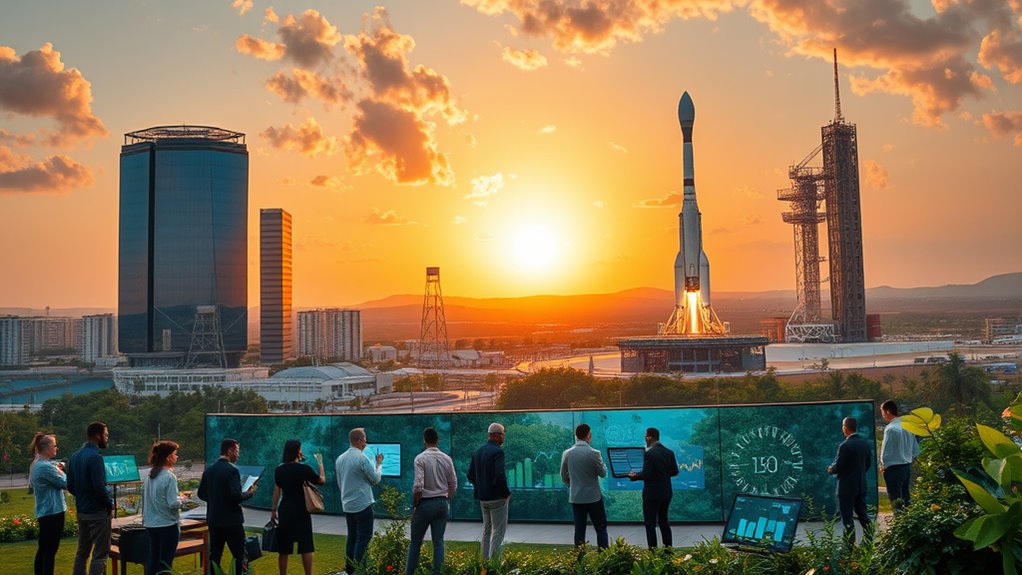

In 2025, you’ll see Africa rapidly transforming through its expanding tech hubs, innovative space programs, and strong economic growth. Countries are investing in smart city infrastructure and renewable energy, creating opportunities for startups and entrepreneurs. Space initiatives are positioning the continent as a new frontier for science and exploration. This growth is reshaping Africa’s future, offering exciting prospects for development and collaboration—if you keep exploring, you’ll discover even more about this remarkable rise.
Key Takeaways
- Africa is expanding its technology hubs to foster innovation and support startups, boosting economic diversification.
- The continent is investing in space programs to enhance satellite technology, communications, and Earth observation.
- Renewable energy projects are powering urban development, attracting international investments and supporting sustainable growth.
- Rapid urbanization is integrating smart city infrastructure, improving energy efficiency and quality of life across major cities.
- These developments collectively position Africa for significant economic growth and technological advancement by 2025.

As Africa continues to harness its vast natural resources and youthful population, the continent is poised for remarkable growth in 2025. One of the key drivers of this progress is the surge in renewable energy projects across the region. Countries are investing heavily in solar, wind, and hydroelectric power, reducing reliance on fossil fuels and cutting emissions. This shift not only addresses energy shortages but also creates new opportunities for industries and communities. You’ll notice that many African nations are becoming leaders in clean energy innovation, attracting international investment and fostering local entrepreneurship. As renewable energy infrastructure expands, it paves the way for more sustainable urban development, supporting the rapid urbanization trends sweeping through the continent.
Africa’s renewable energy boom drives sustainable growth and urban transformation in 2025
Urbanization in Africa is happening at an unprecedented pace, with cities expanding quickly to accommodate growing populations. You’ll see new mega-cities rising, equipped with modern infrastructure and smart city technology, designed to improve living standards and economic productivity. This urban shift is fueling demand for energy, transportation, and housing, prompting governments and private sectors to develop innovative solutions. As more people move to urban areas, there’s a heightened focus on integrating renewable energy into city planning. Solar-powered streetlights, green buildings, and decentralized energy systems become common features, helping cities become more resilient and environmentally friendly. Urbanization trends are also encouraging the development of technology hubs within these burgeoning cities, where startups and established companies collaborate to create innovative solutions tailored to local needs.
The combination of renewable energy and urbanization creates a positive feedback loop, boosting economic growth across the continent. Reliable, affordable clean energy attracts foreign investment and stimulates local industries, from manufacturing to tech. You’ll find that many African nations are leveraging their natural resources to build sustainable energy sectors that power their urban centers, reducing energy costs and increasing access. This, in turn, energizes small businesses and entrepreneurs, who are vital for job creation and economic diversification. Meanwhile, large-scale infrastructure projects are transforming cities into modern hubs that attract talent and international partners. Additionally, advancements in high-efficiency projectors and other technological tools are supporting the development of smart city infrastructure, further accelerating growth.
In this landscape, Africa’s future looks increasingly bright. The push toward renewable energy and the rapid pace of urbanization are reshaping the continent’s economic trajectory. Together, they lay a strong foundation for technological innovation, improved quality of life, and long-term sustainable growth. As you observe these developments, it’s clear that Africa isn’t just keeping pace with global trends — it’s actively shaping its own path forward in 2025.

4 Pack 16" Large Solar Street Lights Outdoor Waterproof – Solar Powered Security Parking Lot Light Dusk to Dawn 60000LM,Motion Sensor Commercial LED Solar Flood Lights Remote Control for Outside Yard
【ULTRA-BRIGHT & WIDE COVERAGE】Equipped with 480 high-intensity 5730 LED beads,JWT solar lights outdoor deliver an impressive 60,000 LM…
As an affiliate, we earn on qualifying purchases.
As an affiliate, we earn on qualifying purchases.
Frequently Asked Questions
How Will Africa’s Political Stability Impact Its Growth?
Your growth depends heavily on political stability, as it fosters investor confidence and smooths governance reforms. When stability is maintained, you see better policy implementation, infrastructure development, and economic diversification. Conversely, political unrest can hinder progress, scare off investments, and delay reforms. Hence, if Africa sustains political stability, it will accelerate its economic growth and technological advancements, making the continent a more attractive destination for innovation and development.
What Are the Environmental Challenges Facing Africa’s Expanding Tech Hubs?
You might think Africa’s expanding tech hubs face few hurdles, but environmental challenges are real. E-waste management struggles threaten to pollute communities, while the lack of sustainable energy limits growth. If these issues aren’t addressed, the continent risks harming its environment and future tech innovation. To truly thrive, Africa must prioritize eco-friendly solutions, like investing in sustainable energy and proper e-waste disposal, ensuring growth doesn’t come at the environment’s expense.
How Will Foreign Investment Influence Africa’s Space Programs?
Foreign direct investment will considerably boost Africa’s space technology programs by providing essential funding, expertise, and access to advanced resources. As an investor, your support accelerates the development of satellite technology, space research, and infrastructure. This influx of capital fosters innovation, attracts skilled professionals, and enhances regional capabilities. Your investment helps Africa establish a competitive presence in space exploration, ultimately driving economic growth and technological progress on the continent.
What Specific Industries Will Benefit Most From Economic Growth?
You’ll see agricultural innovation and healthcare advancements benefit most from Africa’s economic growth. As the economy expands, investments flow into smart farming technologies that improve crop yields and sustainability. Healthcare systems also get a boost, enabling you to access better medical services, remote diagnostics, and innovative treatments. These industries drive progress, improve quality of life, and create new opportunities for you and your community in Africa’s evolving landscape.
How Are African Countries Addressing Digital Infrastructure Disparities?
You might be amazed at how African countries are tackling digital infrastructure disparities—it’s like a revolution! They’re investing heavily in rural connectivity, ensuring even the most remote villages get internet access. Simultaneously, they’re boosting digital literacy programs to empower citizens with essential skills. This massive push is bridging gaps fast, transforming lives and opening opportunities across the continent, making Africa’s digital future brighter than ever before.

Solar Power for Beginners Bible 2024: 10 Books in 1 Your Comprehensive Guide to Mastering Solar Energy from Basics to Off-grid Living, Urban Solutions, and Tomorrow's Policies
As an affiliate, we earn on qualifying purchases.
As an affiliate, we earn on qualifying purchases.
Conclusion
As you witness Africa’s rise in 2025, think of it as a seed sprouting into a mighty tree—full of potential and promise. With innovative tech hubs, ambitious space programs, and steady economic growth, the continent is transforming rapidly. Just like a young sapling breaking through the soil, Africa’s future is bright, full of resilience and opportunity. Keep watching, because this is only the beginning of a remarkable journey.

BlueCosmo Iridium Extreme Satellite Phone & Middle East Africa 500 Minute 1 Year Prepaid SIM Card – Voice, SMS Text Messaging, GPS Tracking, Emergency SOS – Online Activation – 24/7
BLUECOSMO Middle East Africa (MEA) 500 TALK MINUTES INCLUDED: Get 500 minutes, valid for 365 days 1 Year)…
As an affiliate, we earn on qualifying purchases.
As an affiliate, we earn on qualifying purchases.
Challenges for Smart City Infrastructure, Technologies, and Their Future
As an affiliate, we earn on qualifying purchases.
As an affiliate, we earn on qualifying purchases.