
📊 Full opportunity report: Why Energy Limitations Could Halt AI Progress on ThorstenMeyerAI.com — validation score, market gap, and execution plan.

Prime made for students and young adults
- Fast, free delivery for dorm and study essentials
- Prime Video and Amazon Music included
- Member-only deals
TL;DR
Global data-center energy capacity is nearing a critical bottleneck, with infrastructure development lagging behind AI demand. This could significantly slow AI progress, especially in the US and China, due to physical power supply limitations.
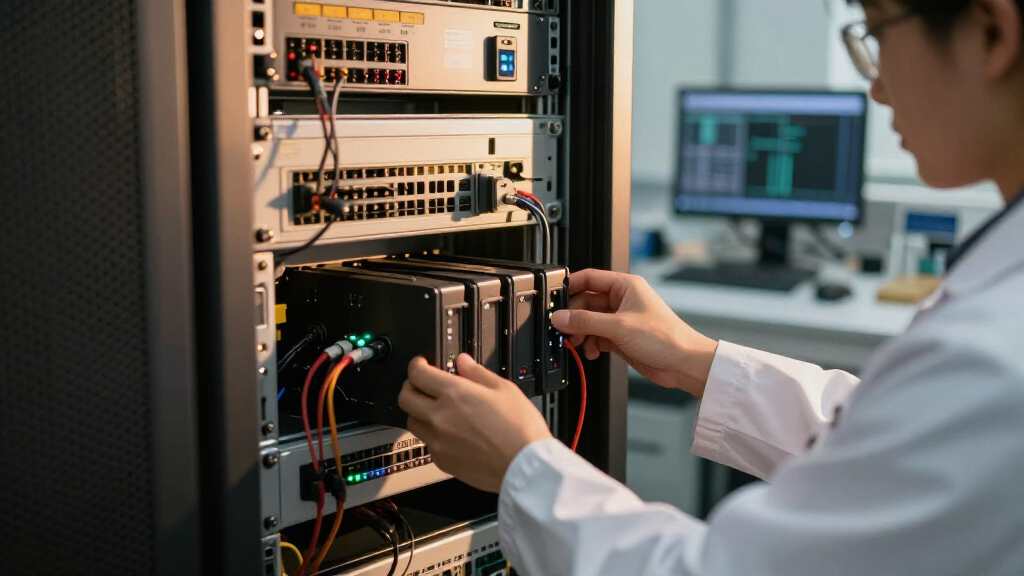
Global data-center capacity is rapidly approaching a critical bottleneck, with infrastructure constraints threatening to slow the expansion of AI technologies. Despite substantial investments by major tech companies, the physical ability to generate and transmit enough electricity remains a limiting factor, especially in the United States and China. This development is crucial because AI growth depends heavily on the availability of reliable, high-capacity power sources.
According to recent analyses, global data-center capacity is expected to increase from approximately 132 GW in 2026 to nearly 290 GW by 2030. However, the physical infrastructure needed to support this growth — transformers, transmission lines, and interconnection permits — is lagging behind. In the US, the interconnection queue alone contains about 2,300 GW of projects awaiting connection, with wait times extending to around five years. This mismatch between demand and capacity is creating a bottleneck that could slow AI deployment.
While tech giants have committed over $650 billion toward AI infrastructure, the challenge is not funding but physical infrastructure. Many US power plants are outdated, and new transmission lines face long permitting delays. Simultaneously, China is rapidly expanding its energy capacity, deploying nearly ten times more new generation capacity than the US in 2025, giving it a significant advantage in powering AI infrastructure.
For three years AI was a chip story. It quietly stopped being the binding constraint — the way it always does in a physical build-out, from the clever thing to the boring thing underneath.
When someone says AI is “only 3% of electricity,” they’re quoting consumption to make it sound modest. Capacity is where the bottleneck bites.
Implications of Infrastructure Bottlenecks on AI Advancement
This capacity constraint could slow the pace of AI innovation by limiting the physical power supply needed for large-scale data centers. It also introduces geopolitical risks, as competition between the US and China intensifies over energy and chip manufacturing. The inability to quickly expand power infrastructure may force AI developers to delay projects or reduce scale, impacting technological progress and economic growth.
high capacity data center power supply
As an affiliate, we earn on qualifying purchases.
As an affiliate, we earn on qualifying purchases.
Rising Energy Demands and Infrastructure Challenges
Over the next five years, AI-focused data centers are projected to grow about four times faster than overall electricity demand, emphasizing the strain on energy infrastructure. The IEA estimates global data-center electricity consumption will nearly double from 485 TWh in 2025 to about 950 TWh by 2030. However, the critical bottleneck lies in capacity — the peak power the grid must supply at specific locations — which is constrained by aging infrastructure and slow permitting processes.
In the US, the power shortfall is estimated to reach up to 45 GW by 2028, with grid operators advising developers to reduce peak load or delay connections. Meanwhile, China is expanding its energy capacity at a much faster rate, giving it an edge in supporting AI infrastructure. This divergence highlights the geopolitical dimension of the energy challenge.
"The bottleneck isn’t money or ambition — it’s the physical capacity to generate and transmit electricity."
— Thorsten Meyer
industrial transformers for data centers
As an affiliate, we earn on qualifying purchases.
As an affiliate, we earn on qualifying purchases.
Unresolved Aspects of Infrastructure Expansion
It remains unclear how quickly governments and utilities can overcome permitting delays, upgrade aging infrastructure, and expand capacity at the required scale. The timeline for significant capacity additions, especially in the US, is uncertain, and geopolitical tensions could further complicate infrastructure development and cross-border energy cooperation.
power transmission line components
As an affiliate, we earn on qualifying purchases.
As an affiliate, we earn on qualifying purchases.
Next Steps in Infrastructure and Energy Policy
Monitoring government commitments and infrastructure projects will be crucial. Efforts to streamline permitting, invest in renewable energy, and upgrade existing grids could mitigate some bottlenecks. Additionally, the US and China are likely to compete fiercely over expanding their respective energy capacities, influencing global AI development trajectories.
energy-efficient data center cooling systems
As an affiliate, we earn on qualifying purchases.
As an affiliate, we earn on qualifying purchases.
Key Questions
How does energy capacity limit AI progress?
AI requires large-scale, reliable power for data centers. Limited capacity can delay or reduce the scale of AI deployment, slowing technological progress.
Why is infrastructure a bigger issue than funding?
While investment is substantial, physical infrastructure such as transformers and transmission lines is aging and slow to expand due to permitting and construction delays, creating a bottleneck.
What is the geopolitical significance of energy limitations?
Energy capacity disparities between the US and China influence AI competitiveness, with each country leading in different aspects—power generation versus chip manufacturing—potentially shaping global technological leadership.
Could renewable energy help solve the capacity issue?
Yes, expanding renewable energy sources could increase capacity, but current infrastructure and permitting processes are slow, and large-scale deployment takes years.
When might these infrastructure bottlenecks be resolved?
It is uncertain; overcoming permitting delays and aging infrastructure could take several years, depending on policy, investment, and technological advancements.
Source: ThorstenMeyerAI.com
Halloween Picks
halloween
As an affiliate, we earn on qualifying purchases.