
TL;DR

Prime made for students and young adults
- Fast, free delivery for dorm and study essentials
- Prime Video and Amazon Music included
- Member-only deals
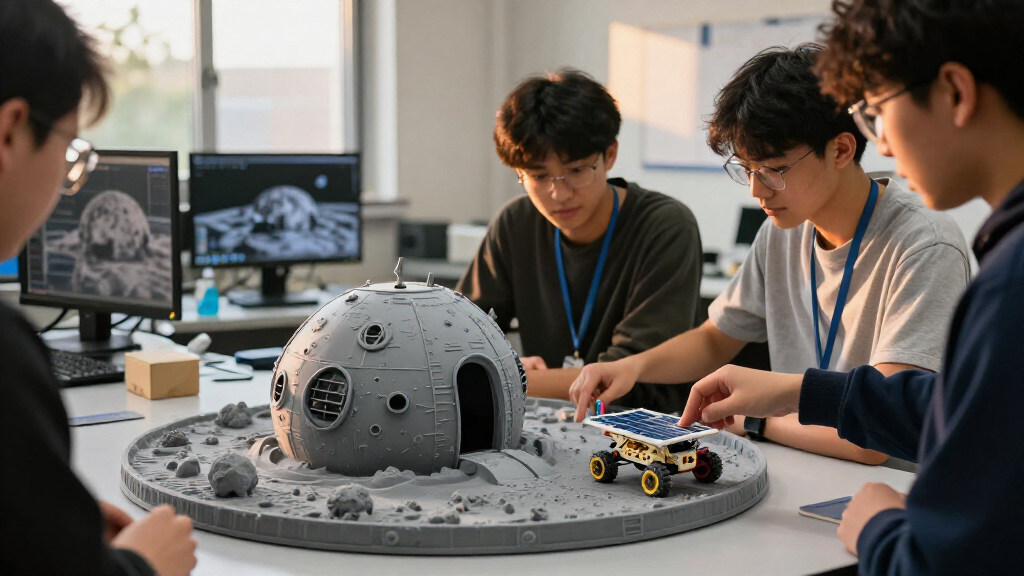
NASA has opened a $1 million student competition for U.S. high school and post-secondary teams to develop concepts for a future Moon Base. Teams can work across six areas, from power and life support to astronaut safety, and must register by Jan. 25, 2027.
NASA has opened a $1 million Moon Base Student Challenge inviting teams from U.S. high schools and post-secondary schools to design solutions for living and working on the lunar surface. Announced Sunday at a MAX POWER event at Kennedy Space Center Visitor Complex in Florida, the competition offers students a way to contribute ideas to NASA’s planned Moon Base while developing skills relevant to space careers.
Teams will develop concepts in six challenge categories: power generation and storage, construction, life-support systems, surface mobility, communications networks, and astronaut safety. NASA says the challenge uses authentic environmental and mission-design parameters related to operations on the Moon. The agency has not described the student proposals as selected designs for construction; the announcement frames the work as a source of concepts and learning opportunities.
Registration is required through NASA STEM Gateway and is open until Jan. 25, 2027. NASA’s announcement says the multiphase competition is open to teams at U.S. high schools and post-secondary schools. Participants may come from technical, vocational, and other academic tracks, and the challenge does not require prior specialized engineering or technical experience.
Project deliverables are intended to resemble work used in industry, including trade studies, concept proposals, and stakeholder briefings. NASA says these activities are designed to help participants build career-relevant skills while exploring technologies that could support a lunar base. Full eligibility terms, official rules, and competition details are available through the challenge website.
A Student Path Into Lunar Design
The competition connects NASA’s long-term lunar plans with workforce development, opening a structured route for students to tackle problems associated with future surface operations. Its range of categories also makes the challenge broader than a contest limited to spacecraft engineering: power, construction, communications, mobility, and safety all require different expertise.
NASA says a sustained human presence on the Moon could help prepare for future crewed missions to Mars. The student challenge is not itself a mission milestone, and its announcement does not establish that any entry will be adopted. Its immediate significance is that NASA is inviting teams to practice solving mission-related problems and contribute concepts while the agency develops its Moon Base plans.
For students, the format may provide experience with collaborative design and technical communication through the expected proposals and briefings. For NASA, participation could bring perspectives from a range of academic and vocational backgrounds. The agency has not yet reported how many teams it expects or how the total prize money will be distributed.
Popular right now

KitchenAid Artisan 5-Quart Tilt-Head Stand Mixer, Almond Cream

De'Longhi Magnifica Duo Automatic Espresso Machine with Milk Frother – Silver

Apple AirPods Pro 3 Wireless Earbuds with Active Noise Cancellation
As an affiliate, we earn on qualifying purchases.
How the Challenge Fits Moon Base Plans
NASA describes Moon Base as a place where astronauts would live, work, and explore in the lunar South Pole region. The agency says establishing a permanent human presence there would support later crewed exploration of Mars. The announcement provides no construction schedule or detailed design for the base, so the student competition should be understood as one part of ongoing concept development rather than confirmation of a completed plan.
The challenge was designed by NASA’s Office of STEM Engagement in collaboration with the Moon Base Program. The Institute of Competition Sciences is administering it under a contract with NASA’s Center of Excellence for Collaborative Innovation, which is within the agency’s Research and Technology Mission Directorate. NASA says the multiphase structure is intended to cultivate technical skills among future aerospace workers.
Prize Terms and Design Decisions
NASA’s announcement sets the total award value at $1 million, but the source material does not specify the number of awards, the amount available to each team, or the judging criteria. Those details, along with complete eligibility requirements and rules, are to be provided through the official competition information.
It is also unclear how NASA will evaluate entries for possible use in Moon Base planning, whether any concepts will be tested or developed further, and what schedule applies to the competition’s later phases. The announcement does not say that student work will be incorporated into the base’s eventual design. NASA’s plans for the base itself—including its timeline and the specific systems to be built—remain outside the details given about this challenge.
Registration and Competition Details
Interested teams must register through NASA STEM Gateway by Jan. 25, 2027. NASA directs participants to moonbasechallenge.org for the full competition details, eligibility requirements, and official rules. Those materials are the next place to check for the prize structure, judging process, and phase-by-phase deadlines.
After registration, teams can develop proposals within the six listed categories under the challenge’s rules. NASA has not announced a date for final submissions, judging, or award decisions in the supplied announcement. Further milestones will depend on the official competition schedule.
Key Questions
Who can enter NASA’s Moon Base Student Challenge?
The announcement invites student teams at U.S. high schools and post-secondary schools. Teams should check the official rules for full eligibility requirements.
What can teams design?
Entries can address power generation and storage, construction, life support, surface mobility, communications networks, or astronaut safety.
When is the registration deadline?
Teams must register through NASA STEM Gateway by Jan. 25, 2027.
How will the $1 million be awarded?
NASA announced a total of $1 million, but the supplied announcement does not state how many awards will be made or how funds will be divided. The official competition rules may provide those terms.
Will NASA use the student designs to build its Moon Base?
NASA says the challenge seeks concepts related to future lunar operations, but it has not said that entries will be adopted or built. The announcement describes the competition as both a design challenge and a way for students to gain career-relevant skills.
Source: nasa.gov