
Throughout history, skepticism has meant questioning authority and seeking proof, from Socrates challenging assumptions in ancient Athens to today’s efforts to spot misinformation online. Ancient skeptics used logic and evidence to uncover truths, while modern skeptics must navigate a flood of digital lies and biases. Developing digital literacy and critical thinking skills is essential now, just as questioning dogmas was then. If you look deeper, you’ll discover timeless lessons that help you better distinguish truth from falsehood in any era.
Key Takeaways
- Ancient skeptics emphasized questioning authority and seeking evidence, a practice vital for navigating today’s digital misinformation.
- Critical thinking and logical analysis used historically can help discern truth amid online falsehoods.
- Misinformation exploits trust and biases, requiring modern skepticism to verify sources and recognize manipulation.
- Both eras highlight the importance of doubt as a tool to uncover deeper truths and prevent manipulation.
- Developing digital literacy skills is essential today, building on the skeptical principles rooted in ancient inquiry.

Throughout history, doubt has served as a vital tool for questioning authority and uncovering truth, yet the methods and stakes have evolved dramatically. In ancient times, skepticism was often rooted in philosophical inquiry and personal judgment. Thinkers like Socrates encouraged questioning assumptions, urging their followers to seek knowledge through relentless inquiry. This form of historical skepticism helped challenge dogmas held by rulers, priests, and societal norms, paving the way for new ideas and critical thinking. Back then, skepticism was a deliberate act—an intellectual stance that relied on reason, debate, and evidence, often in contrast to accepted beliefs. It was about scrutinizing claims, whether from rulers or religious authorities, to discern what was true and what was merely accepted without question.
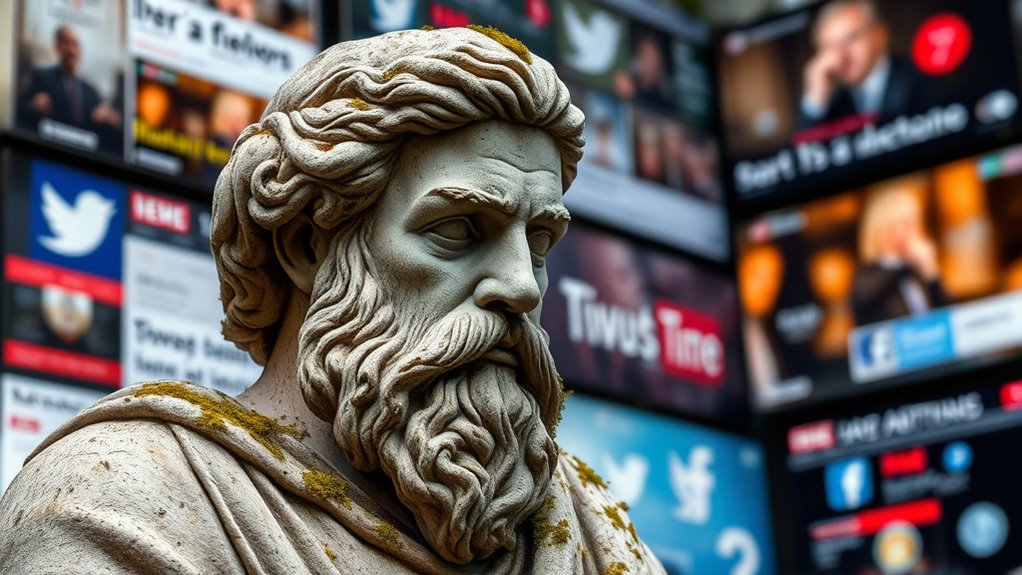
Fast forward to today, and skepticism takes on a different shape. Instead of questioning through philosophical debate alone, you now face the pervasive challenge of digital deception. The internet has transformed how misinformation spreads, making it easier than ever for falsehoods to circulate rapidly and widely. You’re bombarded with headlines, social media posts, and videos that often blur the line between fact and fiction. Digital deception exploits your trust and cognitive biases, making it harder to discern truth from falsehood. Unlike ancient skeptics who relied on logic and personal judgment, today’s skeptics must develop digital literacy skills—learning how to verify sources, identify bias, and recognize manipulated content. The stakes are higher because misinformation can influence public opinion, sway elections, or even endanger public health.
Understanding the contrast between historical skepticism and modern digital deception offers you valuable lessons. Skeptics of the past understood the importance of questioning authority and seeking evidence. They knew that truth was often hidden behind layers of misinformation or dogma, and their skepticism was a safeguard against manipulation. Today, you must adapt that same questioning spirit to the digital landscape. That means not taking information at face value, checking multiple sources, and being aware of how digital deception operates. The core principle remains the same: doubt, when wielded wisely, is a tool for uncovering truth. But now, you need to be more vigilant, equipped with digital critical thinking skills to navigate the complex web of misinformation. In essence, the lessons from ancient skeptics remind you that skepticism is timeless—an essential defense against falsehoods in every era.
Frequently Asked Questions
How Did Ancient Skeptics Verify Their Claims Without Modern Technology?
When you wonder how ancient skeptics verified their claims without modern tech, remember they relied on empirical observation and logical reasoning. They carefully examined evidence, tested ideas through direct experience, and used rational debate to challenge assumptions. By observing nature and applying critical thinking, they could assess the validity of claims. Their methods show that careful observation and reasoning remain powerful tools for verification, even without today’s technological aids.
What Role Did Religious Beliefs Play in Ancient Doubts?
You see, religious beliefs profoundly shaped ancient doubts by influencing your faith influence and challenging doctrinal authority. When you question religious claims, you’re engaging with the core of doctrinal authority, which guided many doubts. Faith influence played a vital role, as believers relied on their spiritual convictions rather than empirical evidence. This dynamic created a complex landscape where doubts were often rooted in theological debates and the authority of religious teachings.
How Does the Spread of Misinformation Today Compare to Ancient Rumors?
Today, you see misinformation spreading rapidly through social media, often fueled by misinformation campaigns. Unlike ancient rumors, which traveled slowly and relied on word of mouth, digital platforms enable instant sharing and wide reach. This accelerates the spread of false info, making it harder to discern truth. You must stay skeptical, verify sources, and question sensational claims to avoid falling victim to modern misinformation.
Are There Historical Examples Where Doubt Led to Scientific Breakthroughs?
You should recognize that doubt has historically driven scientific breakthroughs through empirical observation and logical reasoning. For example, Galileo challenged accepted views with his telescopic observations, revolutionizing astronomy. Similarly, Alfred Wegener’s skepticism about continental drift led him to gather evidence, eventually transforming geology. Your critical questioning and reliance on evidence have long been essential for advancing knowledge, showing that doubt can be a powerful catalyst for discovery.
What Techniques Do Modern Skeptics Use That Ancient Skeptics Did Not?
You might think skeptics just ask questions, but modern ones use digital literacy and social media to challenge misinformation effectively. Unlike ancient skeptics, they analyze data online, identify falsehoods quickly, and spread accurate info widely. This active engagement allows them to combat misinformation in real time, making their techniques more dynamic and accessible than ever before. So, your ability to evaluate sources online is now a vital tool in fostering truth.
Conclusion
By questioning what you believe, by challenging what you’re told, and by seeking evidence before accepting claims, you embrace wisdom. Just as ancient skeptics questioned their world, you stand guard against modern misinformation. Doubt keeps you curious, critical, and aware. Doubt fuels understanding, deepens insight, and sharpens judgment. In embracing doubt, you don’t weaken your knowledge—you strengthen your mind. So, question boldly, think deeply, and trust yourself to see through the noise.