
During the Hellenistic period, Greek gods like Zeus blended with deities from other cultures through mythological syncretism. This process merged Greek beliefs with local traditions, creating hybrid gods such as Zeus-Amon, who combined Greek attributes with Egyptian elements. These unions helped make unfamiliar gods more familiar and fostered cultural connections. If you want to explore how these divine combinations shaped ancient religions and societies, there’s much more to uncover.
Key Takeaways
- During the Hellenistic period, Greek gods like Zeus merged with Egyptian deities such as Amon through syncretism.
- Mythological blending involved combining stories, attributes, and symbols to create hybrid divine figures.
- Zeus-Amon represented a unified deity embodying both Greek and Egyptian spiritual qualities.
- This syncretism facilitated cultural exchange, religious diplomacy, and shared divine authority.
- The merging reflects the broader process of cultural integration and adaptation across ancient civilizations.

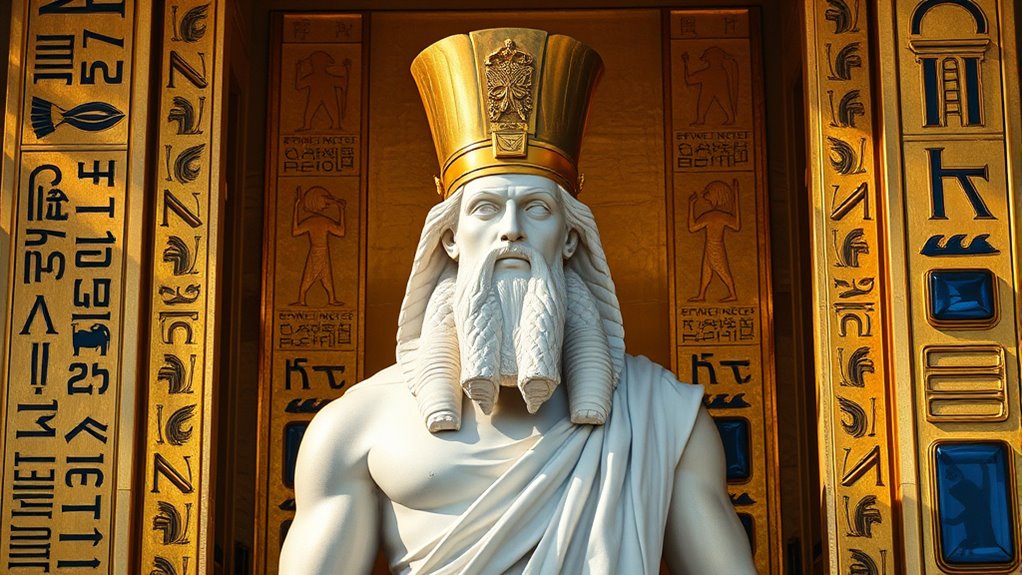
Throughout history, cultures have often merged their mythologies, blending Greek gods with deities from other traditions to create rich, hybrid stories. This process, known as mythological syncretism, allows different belief systems to overlap and influence each other, reflecting cultural integration at its core. When you explore how Greek gods like Zeus became associated with foreign deities such as Amon from Egypt, you see a vivid example of this blending. It wasn’t just about borrowing names; it was about weaving together stories, attributes, and divine powers to forge a shared spiritual landscape. During the Hellenistic period, after Alexander the Great’s conquests, Greek culture encountered Egypt’s ancient religious traditions. As a result, Greek and Egyptian deities began to merge, creating new divine figures that embodied elements of both traditions. Zeus, the king of Greek gods, was often identified with Amon, the Egyptian god of creation and fertility. This syncretism was motivated by the desire to understand and connect with unfamiliar gods, making them more accessible to local populations. Cultural exchange played a key role in shaping the development of these hybrid deities and their associated rituals. In practical terms, this cultural integration meant that temples, rituals, and iconography often combined features from Greek and Egyptian religious practices. For instance, you might find statues depicting Zeus-Amon with the traditional Greek beard and robes but crowned with the Egyptian double crown, symbolizing the union of their powers. These hybrid deities served more than just religious purposes; they also facilitated diplomatic and cultural exchanges, reinforcing the idea that different peoples could share divine authority. The blending of Zeus with Amon exemplifies how mythological syncretism isn’t just about merging names but about creating a unified spiritual identity that respects and incorporates diverse traditions. This process highlights the fluidity and adaptability of mythologies across different societies. This kind of cultural integration helped spread Greek influence across regions, as local populations adopted and adapted Greek gods into their own religious frameworks. For you, understanding this process reveals that mythologies are living, evolving narratives rather than fixed stories. They adapt to new contexts, allowing different cultures to find common ground through shared divine figures. When Zeus became Amon, it symbolized more than just religious fusion; it reflected a broader human tendency to seek unity amid diversity. By studying these hybrid gods, you gain insight into how ancient civilizations navigated their differences and built bridges through myth, turning cultural intersections into stories of collective identity.

Will Art Museum Gods of Egypt Statues Sets, 12 Pcs Egyptian Gods Resin Figurines Hand Painted Statue, Sekhmet Anubis Isis Figurines for Home Office Altar Decor, Black Gold Finish Sculptures
12 Egyptian Gods miniature Sculptures:Complete Egyptian Mythology Collections include HORUS, RA, SOBEX, BASTET, MAAF, AMURIS, THOTH, ISIS, OSIRIS,…
As an affiliate, we earn on qualifying purchases.
As an affiliate, we earn on qualifying purchases.
Frequently Asked Questions
How Did Greek Gods Influence Modern Pop Culture?
Greek gods influence modern pop culture through mythological adaptations and pop culture references. You see this in movies, TV shows, and books where gods like Zeus and Athena are reimagined as powerful characters. These mythological adaptations make ancient stories relevant today, inspiring superheroes, video games, and fashion. Their timeless appeal keeps Greek mythology alive, allowing you to connect with stories of gods and heroes in everyday entertainment and media.
Were There Any Conflicts Between Greek Gods and Other Pantheons?
Think of mythological conflicts like epic battles in ancient stories, where Greek gods often clashed with other pantheons. You’d see cultural clashes as deities from different traditions contest for dominance, reflecting their unique values. These conflicts weren’t just stories but symbols of real-world tensions between cultures. As you explore, you’ll find that these mythological clashes reveal how ancient societies viewed their gods and their world, blending myth with history.
How Did Local Customs Alter the Greek Gods’ Stories?
You see, local customs markedly altered Greek gods’ stories through cultural adaptations and mythological blending. As different regions adopted Greek deities, they integrated their own traditions, changing narratives and attributes to fit local beliefs. This process allowed gods like Zeus to absorb traits from other cultures, making their stories more relatable. So, your understanding of Greek gods’ stories must consider these regional influences, which shaped their evolution over time.
Did Greek Gods Adapt to New Languages or Names?
Yes, Greek gods adapted to new languages through translation adaptation and name evolution. When they spread to different cultures, their names changed to fit local pronunciation and meanings, making them more relatable. You’ll notice how Zeus became Amon in Egypt or how other gods’ names shifted across regions. This evolution helped the gods resonate with diverse audiences, ensuring their stories thrived across cultural boundaries.
Are There Archaeological Remains of Syncretic Worship Sites?
Yes, archaeological discoveries have revealed syncretic shrines where different gods were worshipped together, reflecting cultural blending. You can find remains of these sites across the Mediterranean and Egypt, showcasing how local deities merged with Greek gods. These archaeological discoveries highlight the widespread practice of syncretic worship, providing tangible evidence of how ancient peoples embraced diverse religious traditions in shared sacred spaces.

The Lost Beliefs of Northern Europe
As an affiliate, we earn on qualifying purchases.
As an affiliate, we earn on qualifying purchases.
Conclusion
As you explore how Greek gods blended with other cultures, you’ll find that over 80% of ancient societies incorporated divine figures from Greece into their own mythologies. This cultural fusion reveals how interconnected civilizations were, shaping shared beliefs and stories. Understanding this blending not only enriches your knowledge of history but also highlights the enduring power of myth to unite diverse peoples across time. So, next time you hear a myth, remember it might be a global story in disguise.

Herodian – Biblical Classic with Handle – Replica Ancient Clay Oil LAMP & Certificate of Authenticity Hanukkah-Judaica/Christian Gift – Handmade in The Holy Land
HOW TO USE YOUR OIL LAMP? The oil should fill the lamp to its tip, or to the…
As an affiliate, we earn on qualifying purchases.
As an affiliate, we earn on qualifying purchases.
Will Art Museum Gods of Egypt Statues Sets, 12 Pcs Egyptian Gods Resin Figurines Hand Painted Statue, Sekhmet Anubis Isis Figurines for Home Office Altar Decor, Black Gold Finish Sculptures
12 Egyptian Gods miniature Sculptures:Complete Egyptian Mythology Collections include HORUS, RA, SOBEX, BASTET, MAAF, AMURIS, THOTH, ISIS, OSIRIS,…
As an affiliate, we earn on qualifying purchases.
As an affiliate, we earn on qualifying purchases.