
📊 Full opportunity report: Maximizing Safety And Efficiency With Factory VR Training Platforms on IdeaNavigator AI — validation score, market gap, and execution plan.

Prime made for students and young adults
- Fast, free delivery for dorm and study essentials
- Prime Video and Amazon Music included
- Member-only deals
TL;DR
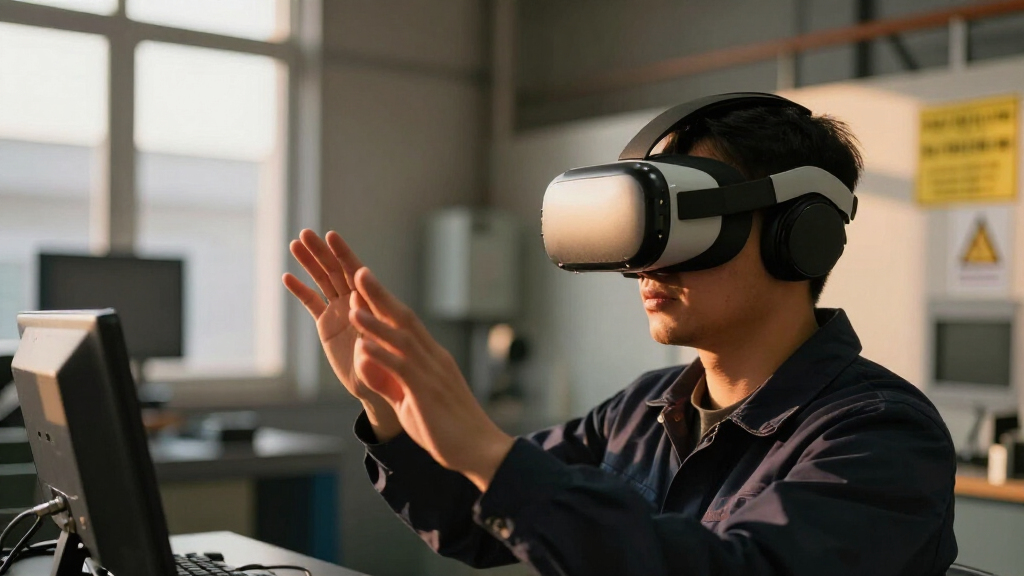
Manufacturing companies are piloting virtual reality training modules to enhance safety and accelerate onboarding. Early tests focus on high-risk procedures, aiming to improve hazard recognition and reduce incident rates. The approach leverages affordable hardware and cloud-based tracking, with potential to transform workforce development.
Manufacturing companies are actively testing virtual reality (VR) training platforms as a way to improve safety, accelerate onboarding, and address workforce shortages. These pilots focus on high-risk procedures, utilizing standalone VR headsets and cloud-based tracking to measure worker performance and hazard recognition. Early results could signal a shift in how industrial training is delivered across the sector.
The initiative targets mid-to-large manufacturers facing a critical labor shortage—estimated at approximately 409,000 unfilled positions in the U.S. as of August 2025—and a projected need for 3.8 million new workers by 2033. Traditional training methods, including classroom instruction and on-the-floor demonstrations, are proving inadequate due to their slow pace, safety risks, and inconsistent retention. VR training offers a scalable, standardized alternative that can be deployed rapidly across multiple plants.
The current pilot involves developing a focused VR module library centered on high-value, high-risk procedures such as lockout/tagout (LOTO) and forklift safety. The modules are delivered on affordable standalone headsets like Meta Quest and Pico, with a cloud dashboard that tracks completion rates, scores, and hazard recognition accuracy per worker. The initial test involves shipping five to ten headsets to a single plant, along with the core training scenario and a management dashboard, to measure improvements in time-to-competency and hazard detection compared to existing classroom training.
Manufacturers see this as a way to standardize training across facilities, reduce incident rates, and lower onboarding costs. The revenue model includes SaaS subscriptions based on per-seat or per-headset licensing, along with optional custom scenario development and hardware management services. The broader immersive enterprise training market, estimated at USD 14.55 billion in 2025, provides a growing opportunity for this technology.
Experts note that the affordability of standalone VR devices and the growth of cloud streaming make this approach more feasible than ever. However, it remains to be seen whether the pilot results will demonstrate statistically significant improvements in safety and efficiency, and how quickly manufacturers will scale these solutions across their operations.
Potential Impact on Manufacturing Safety and Workforce Development
If successful, VR training platforms could significantly reduce safety incidents by improving hazard recognition and procedural adherence among new workers. They also promise to streamline onboarding processes, enabling faster ramp-up times and lowering costs associated with training and employee turnover. As the manufacturing sector faces a mounting skills gap and labor shortages, such immersive solutions could become a critical component of workforce development strategies, helping companies maintain productivity and safety standards.
Popular right now

Samsung 48-Inch S90H OLED 4K Smart TV (2026)

De’Longhi Classic Matte Black Espresso Machine with Milk Frother

Ninja Flip Toaster Oven and Air Fryer, 8-in-1, Stainless Steel, SP151
As an affiliate, we earn on qualifying purchases.
Growing Need for Safer, Faster Workforce Training Solutions
The manufacturing industry has long struggled with safety risks associated with complex machinery and procedures. Traditional training methods—such as classroom instruction and on-the-floor demonstrations—are often inconsistent and slow, leaving new hires under-prepared and increasing the likelihood of incidents. The sector’s labor shortage, with millions of unfilled positions projected over the next decade, amplifies the urgency to onboard workers quickly and effectively.
Recent technological advances, including affordable standalone VR headsets and cloud streaming, have opened new possibilities for immersive training. Pilot programs are now testing whether these tools can deliver measurable improvements in safety and onboarding speed. The focus on high-risk procedures like lockout/tagout and forklift safety reflects the industry’s priority to reduce accidents and ensure compliance with safety standards.
While early results are promising, industry experts caution that broader validation is needed. Success depends on demonstrating that VR training can outperform traditional methods in key metrics such as time-to-competency, hazard recognition accuracy, and incident reduction.
Unclear Outcomes and Scaling Challenges for VR Training
It is not yet confirmed whether the pilot programs will produce statistically significant improvements in safety metrics or onboarding efficiency. The success of scaling these solutions across multiple plants remains uncertain, as broader validation and user adoption are still in progress. Additionally, questions remain about long-term engagement, content customization, and integration with existing training systems.
Next Steps for Pilot Validation and Industry Adoption
Manufacturers will continue their 60-90 day pilot programs, measuring key performance indicators such as time-to-competency and hazard detection scores. If results are favorable, companies are expected to expand VR training to additional procedures and facilities. Industry-wide, further research and development will focus on content diversification, user engagement, and integration with enterprise learning management systems. The outcome of these pilots could influence broader adoption of immersive training in manufacturing and other industrial sectors.
Key Questions
How cost-effective is VR training compared to traditional methods?
Initial estimates suggest that standalone VR headsets and cloud-based platforms can reduce training costs by decreasing the need for physical equipment, instructor time, and training duration. However, comprehensive cost-benefit analyses are still underway as pilots progress.
What procedures are being prioritized for VR training modules?
Early pilots focus on high-risk, high-value procedures such as lockout/tagout (LOTO) and forklift safety, which are critical for preventing accidents and ensuring compliance.
Will VR replace traditional safety training entirely?
It is unlikely that VR will completely replace classroom or on-the-floor training in the near term. Instead, it is expected to complement existing methods, especially for initial onboarding and hazard recognition exercises.
What are the main challenges to scaling VR training across manufacturing plants?
Challenges include content customization for different machinery and procedures, user engagement over time, integration with existing learning systems, and ensuring consistent hardware deployment and maintenance.
When can manufacturers expect wider adoption of VR training solutions?
If pilot results are positive, broader adoption could begin within the next 12-24 months, as companies expand pilot programs and validate ROI.
Source: IdeaNavigator AI