
📊 Full opportunity report: A New Era In Restaurant Food Safety: Computer Vision Inspections on IdeaNavigator AI — validation score, market gap, and execution plan.
TL;DR
A new computer vision-based system for restaurant food safety inspections is being tested, promising more accurate and verifiable checks. This development could improve compliance and reduce food safety violations.
A new computer vision system is being tested in restaurant kitchens to automate and verify food safety inspections, marking a significant shift from manual checklists to data-driven verification. The technology aims to improve compliance accuracy for multi-unit restaurant groups and reduce food safety violations, which are a persistent concern for the industry.
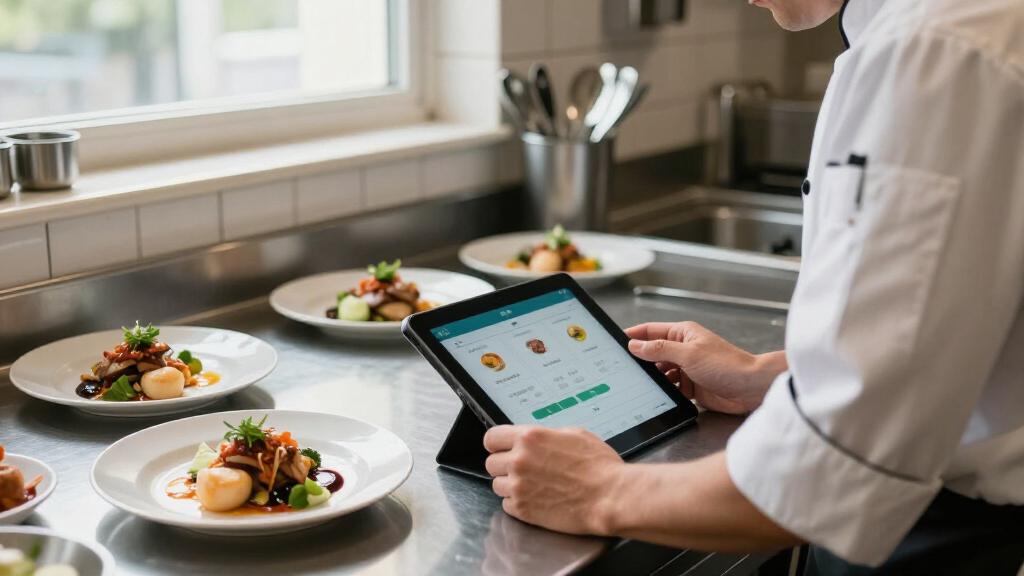
The system involves managers photographing key areas during morning walk-throughs—such as prep stations, storage areas, and sinks—using ordinary phone cameras. A trained vision model then analyzes these images to identify violations like uncovered containers, propped cooler doors, or missing date labels. Unlike traditional checklists, which record whether someone looked, this approach provides verifiable, timestamped evidence of the inspection.
According to sources familiar with the pilot, the technology is designed for deployment in multi-unit restaurant groups seeking to improve operational oversight and compliance. The initial MVP involves comparing flagged violations from two weeks of photos across five locations against findings from a hired health-inspection consultant, to validate accuracy and reliability.
A New Era in Restaurant Food Safety: Computer Vision Inspections
A smartphone-based vision system is being tested to turn morning kitchen walk-throughs into objective, timestamped evidence—helping multi-unit restaurant groups detect violations, verify corrective action and strengthen compliance.
From morning walk-through to verifiable action
The system does more than record whether a manager checked a box. It links a visible kitchen condition to an automated finding, a severity rating and a reviewable record.
Capture
A manager photographs designated kitchen zones using a standard phone camera.
Analyze
A trained vision model examines each image for known food-safety risks.
Flag
Potential violations receive a category and severity rating for review.
Correct
Teams address the issue and build a clearer trail of accountability.
Verify
Timestamped evidence supports oversight, training and trend analysis.
Visible risks become structured signals
The pilot targets common conditions that can be recognized in photographs, creating a repeatable layer of operational oversight across multiple restaurants.
Uncovered containers
The model can flag exposed ingredients or prepared food that should be covered during storage or holding.
Propped cooler doors
Open or obstructed doors can be surfaced as potential temperature-control and energy-management risks.
Missing date labels
Containers without visible date markings can be identified for staff review and immediate correction.
This system transforms subjective visual checks into objective, timestamped data, which can be invaluable for both operators and regulators.
Anonymous researcher · pilot commentary
Manual checklist vs. computer vision
Computer vision does not eliminate human judgment. Its near-term value is a stronger evidence layer: managers still inspect and correct, while the system makes findings easier to verify and compare.
| Inspection dimension | Manual checklist | Computer vision workflow | Current reality |
|---|---|---|---|
| Proof that an area was seen | ✗Often self-reported | ✓Image evidence | ✓Core pilot capability |
| Timestamped inspection trail | ~Varies by system | ✓Captured by design | ✓Available in workflow |
| Consistency across locations | ✗Depends on staff | ✓Shared model criteria | ~Still being validated |
| Performance in varied lighting | ✓Human adaptation | ~Model dependent | ✗Results pending |
| Automated trend reporting | ✗Manual aggregation | ✓Strong future potential | ~Planned development |
| Full replacement of inspectors | ✗Not applicable | ✗Not the current goal | ✗Human review remains essential |
The promise is clear. The accuracy is not yet proven.
The current minimum viable product is designed to test whether automated findings align with expert inspections across real kitchens—not controlled demonstrations.
Where the workflow could add leverage
Directional assessment based on the described system capabilities—not published performance results.
How the pilot seeks proof
The comparison establishes whether model alerts correspond with the observations of an experienced human consultant.
Restaurant locations
Multiple operating environments provide a first test of consistency.
Days of photo evidence
Morning walk-through images create a recurring inspection dataset.
Model-to-expert comparison
Flagged violations are checked against consultant findings.
One observation, connected end to end
The strategic advantage is not only detection. It is the chain linking a kitchen condition to evidence, remediation and organization-wide learning.
Kitchen condition
A visible food-safety issue exists at a specific location.
Photo record
The condition is captured with time and location context.
Structured alert
The model assigns a category and potential severity.
Corrective action
Staff resolve the issue and supervisors verify follow-through.
Operational insight
Recurring patterns can guide training, staffing and prevention.
Environmental reliability
Different lighting, camera angles, layouts, packaging and kitchen conditions may affect detection accuracy. These variables require broader testing.
Data governance
Restaurants will need secure image storage, clear retention policies, controlled access and safeguards for people unintentionally captured in photos.
System integration
The value increases if alerts connect cleanly with existing restaurant management, task, reporting and quality-assurance platforms.
Human oversight
False positives, missed violations and context-dependent judgments mean trained people remain responsible for review and intervention.
A staged path from pilot to scale
Commercial deployment depends on validation. If the pilot performs well, the likely sequence is refinement, expanded testing, platform integration and phased adoption by larger restaurant groups.
Collect evidence
Continue morning photo capture and compare automated flags with expert inspection findings.
Tune the model
Improve detection across kitchen layouts, lighting conditions and violation categories.
Test more locations
Evaluate reliability, staff adoption and operational impact across a broader restaurant network.
Integrate and scale
Add trend analysis, automated reports and connections to management platforms before rollout.
Potential Impact on Food Safety Compliance
This technology could significantly enhance the accuracy of food safety inspections by providing objective, verifiable data. It reduces reliance on manual checklists, which are often incomplete or inaccurate, and could lead to fewer violations and safer food handling practices. For restaurant operators, this represents an opportunity to streamline compliance processes and improve reputation with health authorities.
smartphone food safety inspection camera
As an affiliate, we earn on qualifying purchases.
As an affiliate, we earn on qualifying purchases.
Emergence of AI in Restaurant Safety Monitoring
While manual inspections and checklists have been industry standards for decades, they are prone to human error and often lack verifiable records. Recent advances in computer vision and AI enable automated analysis of images for safety violations. The current pilot builds on these technological developments, targeting practical implementation in real-world restaurant settings without requiring additional hardware beyond smartphones.
This approach aligns with broader trends toward digital transformation in restaurant operations and quality assurance, especially as multi-unit groups seek scalable, reliable compliance solutions amid increasing regulatory scrutiny.
“This system transforms subjective visual checks into objective, timestamped data, which can be invaluable for both operators and regulators.”
— an anonymous researcher
As an affiliate, we earn on qualifying purchases.
Validation and Reliability of the Technology
It is not yet confirmed how accurately the vision model detects violations across diverse restaurant environments or how it performs in different lighting and operational conditions. The current pilot involves comparison with human inspectors, but full validation results are pending.
Additionally, questions remain about integration with existing restaurant management systems and the scalability of the solution for larger chains.
computer vision food safety system
As an affiliate, we earn on qualifying purchases.
As an affiliate, we earn on qualifying purchases.
Next Steps for Deployment and Validation
The pilot project will continue for at least two more weeks, with results comparing flagged violations against expert inspections. If successful, the company plans to refine the model further and expand testing across more locations. Full commercial rollout could follow within the next year, pending validation outcomes.
Further development may include integrating the system into existing restaurant management platforms and adding features such as trend analysis and automated reporting.
restaurant compliance verification tools
As an affiliate, we earn on qualifying purchases.
As an affiliate, we earn on qualifying purchases.
Key Questions
How does the computer vision system work during inspections?
Managers photograph key areas during morning walk-throughs using their phones. The AI analyzes these images to identify violations like uncovered food, missing labels, or propped doors, and flags them with severity ratings.
Can this system replace human inspections entirely?
Currently, it is designed to augment human inspections by providing verifiable, objective data. Full replacement would require extensive validation and industry acceptance, which is still in progress.
What are the benefits for restaurant operators?
The system can improve compliance accuracy, reduce violations, streamline reporting, and provide a clear record of inspections that can be used for training and accountability.
Are there privacy or operational concerns with using phone photos?
As the system relies on standard phone cameras, privacy concerns are minimal. However, restaurants will need to ensure proper data handling and secure storage of images.
When might this technology be available for broader use?
If validation is successful, a commercial rollout could occur within the next 12 months, with initial adoption likely in large restaurant groups seeking compliance improvements.
Source: IdeaNavigator AI