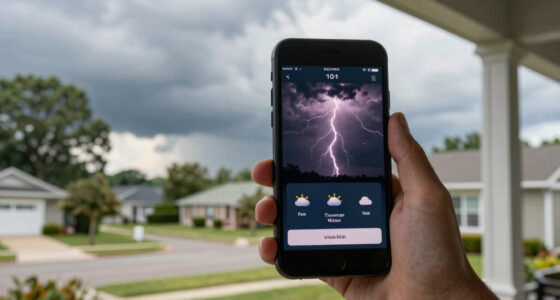
If you need to stay in active contact, send distress signals, or coordinate rescue efforts in remote areas, a satellite communicator is your best bet. It offers two-way messaging, GPS tracking, and emergency alerts, making it ideal for critical situations. On the other hand, if you’re mainly looking to stay updated on weather and safety alerts, an emergency radio will suffice. Choosing the right device depends on your adventure’s risks—there’s more to take into account if you keep exploring.
Key Takeaways
- Use a satellite communicator for active two-way communication and rescue coordination in remote or emergency situations.
- Choose an emergency radio to receive weather updates, alerts, and broadcast information during disasters.
- Satellite communicators are ideal for sending distress signals and tracking locations, solving communication gaps.
- Emergency radios focus on continuous alert reception, addressing safety awareness but not active rescue communication.
- The decision depends on whether your priority is communication and rescue or staying informed about emergencies.

When you’re steering through remote areas or planning outdoor adventures, choosing the right communication device can be a critical safety decision. Whether you’re hiking, camping, or exploring far from cell service, understanding the differences between a satellite communicator and an emergency radio helps you select the best tool for your needs. Each device has unique satellite features that define their capabilities, especially in emergency scenarios.
Satellite communicators are designed to provide reliable, two-way communication in even the most isolated locations. They connect directly to satellites orbiting the Earth, allowing you to send and receive messages regardless of cellular coverage. The satellite features typically include GPS tracking, weather updates, and the ability to alert trusted contacts or emergency services with a simple press of a button. These devices are built for emergencies, offering functions like SOS alerts that transmit your exact location to rescue teams. When you’re in a critical situation, a satellite communicator can be a lifeline, offering real-time communication that may mean the difference between rescue and being stranded.
Satellite communicators enable reliable two-way messages and SOS alerts in remote, isolated locations.
Emergency radios, on the other hand, primarily focus on receiving broadcasts from emergency services, weather alerts, and public safety channels. Their satellite features are minimal or non-existent because they’re designed to keep you informed rather than to communicate back. In emergency scenarios, these radios are invaluable for staying updated on weather conditions, natural disasters, or other hazards, providing continuous alerts that can help you make informed decisions. They’re simple, often powered by batteries or hand-crank mechanisms, and don’t rely on complex satellite networks. However, they don’t facilitate direct communication with rescue teams or loved ones, which limits their usefulness in actively summoning help.
Choosing between a satellite communicator and an emergency radio depends on what problem you’re solving. If your priority is to stay in touch, send distress signals, or coordinate rescue efforts, a satellite communicator is the superior choice thanks to its robust satellite features. But if your main concern is staying informed about weather updates and safety alerts during your outdoor activities, an emergency radio might suffice. Both devices improve safety but serve different roles in emergency scenarios. Knowing their capabilities helps you prepare better, ensuring you’re equipped with the right tool for every situation. Ultimately, your choice should align with your adventure’s risks and your specific safety needs, giving you peace of mind when venturing into the wild.

Garmin inReach Mini 2, Lightweight and Compact Satellite Communicator, Hiking Handheld, Orange – 010-02602-00
Compact, lightweight satellite communicator enables two-way messaging and interactive SOS globally (Active satellite subscription required. Some jurisdictions regulate…
As an affiliate, we earn on qualifying purchases.
As an affiliate, we earn on qualifying purchases.
Frequently Asked Questions
Can Satellite Communicators Work Without a Clear View of the Sky?
Satellite communicators generally need a clear view of the sky for ideal signal reliability. Without good sky visibility, signals can weaken or drop, making communication unreliable. Trees, buildings, or weather conditions can obstruct the view and impact performance. Consequently, it’s best to use a satellite communicator in open areas with a clear line of sight for the most dependable connection, especially during emergencies or remote adventures.
What Is the Battery Life Difference Between These Devices?
Your satellite communicator typically offers longer battery longevity than emergency radios due to better power efficiency, often lasting several days on a single charge with regular use. Emergency radios, especially those powered by batteries, may require frequent replacements or recharging. To maximize your device’s lifespan, choose one with optimized power efficiency, and consider portable, rechargeable options. This way, you stay connected longer during your adventures or emergencies.
Are Satellite Communicators More Expensive Than Emergency Radios?
When it comes to cost comparison, satellite communicators are generally more expensive than emergency radios. You’re paying for advanced features like global coverage and two-way messaging, which can stretch your budget. Affordability factors include your specific needs, usage frequency, and the level of reliability you want. While they may seem pricey, investing in a satellite communicator can be worth it for peace of mind in remote situations.
Which Device Offers Better Coverage in Remote Areas?
A satellite communicator offers better coverage in remote areas because it provides reliable satellite coverage and superior remote connectivity compared to emergency radios. You’ll stay connected even far from cell towers, ensuring continuous communication during your adventures. Emergency radios rely on local signals, which often don’t reach isolated locations. So, if staying connected in the most remote spots matters most, a satellite communicator is your best choice for dependable coverage.
Do These Devices Require Monthly Subscription Fees?
Both satellite communicators and emergency radios can have subscription costs, but it varies by device. Satellite communicators often require monthly fees for global coverage, which impacts device affordability. Emergency radios typically don’t have subscription fees, making them more budget-friendly. If you want reliable, ongoing communication in remote areas, be prepared for these costs. Consider your needs and budget to choose the device that offers the best balance of coverage and affordability.

Midland – WR120B – NOAA Emergency Weather Alert Radio – Localized Programming, Trilingual Display, 60+ Emergency Alerts, Alarm, Selectable Alert Tone
NOAA Weather Scan & Alert – This emergency weather alert radio features S.A.M.E localized programming and alert you…
As an affiliate, we earn on qualifying purchases.
As an affiliate, we earn on qualifying purchases.
Conclusion
Ultimately, choosing between a satellite communicator and an emergency radio is like deciding whether to carry a sleek, high-tech compass or a trusty, weathered map. The communicator offers instant connection across vast, silent wilderness, while the radio provides a steady, reassuring voice in the storm. Picture yourself standing at a fork in the trail—one path lit by the glow of technology, the other by the familiar glow of hope. Your adventure, your safety, your call.

Garmin inReach® Messenger Handheld Satellite Communicator, Global Two-Way Messaging
Small, rugged, lightweight satellite communicator enables two-way text messaging even in areas with no cell coverage (Active satellite…
As an affiliate, we earn on qualifying purchases.
As an affiliate, we earn on qualifying purchases.

Solar Radio Emergency Hand Crank 12000mAh with Clear Signal, AM FM NOAA Weather Radio Battery Operated with 2-Mode LED Flashlight Cell Phone Charger Dual Outputs SOS
【Reliable 𝗡𝗢𝗔𝗔/𝗔𝗠/𝗙𝗠 Reception with Clear Sound】With a high-sensitivity signal chip, noise-reduction circuitry, and an extended antenna, the radio…
As an affiliate, we earn on qualifying purchases.
As an affiliate, we earn on qualifying purchases.