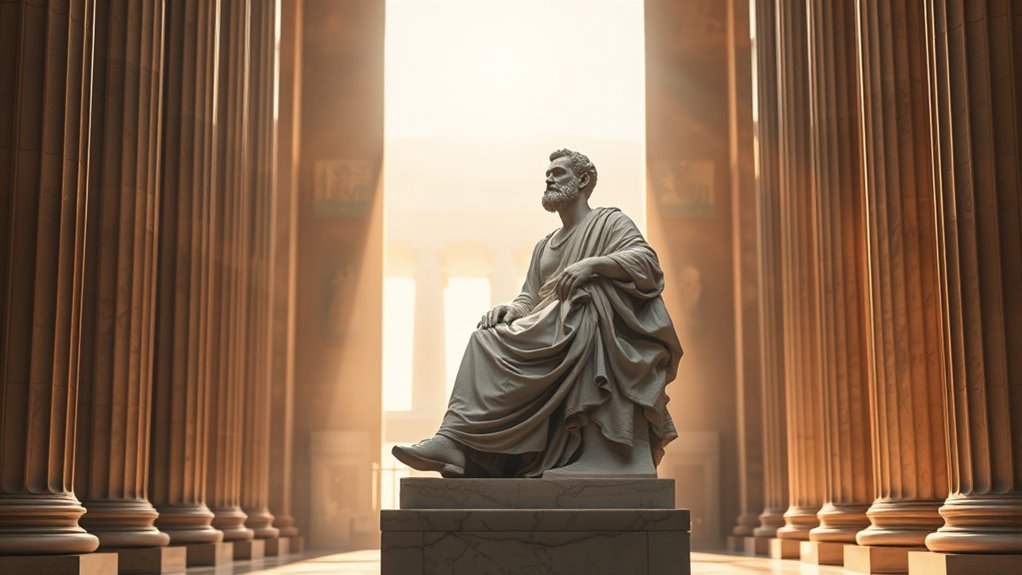

Plato’s idea of philosopher kings as wise, virtuous rulers still influences modern politics. These leaders prioritize the common good, govern with integrity, and base decisions on justice and wisdom. Today, ethical leadership calls for similar qualities, emphasizing accountability and moral authority. While true philosopher kings are rare, their ideals remain relevant in promoting trust and legitimacy. To discover how these ancient concepts shape current political thought, keep exploring this fascinating connection.
Key Takeaways
- Plato’s philosopher king embodies wisdom, virtue, and justice, serving the common good rather than personal interests.
- Ethical leadership remains vital today, emphasizing integrity, accountability, and legitimacy rooted in moral authority.
- Modern leaders aspire to emulate the philosopher king by prioritizing societal well-being and moral virtues.
- Challenges like corruption threaten the moral authority of leaders, highlighting the importance of virtuous governance.
- The enduring relevance of Plato’s concept underscores that true political legitimacy derives from wisdom and ethical principles.

Throughout history, the idea of philosopher kings—rulers guided by wisdom and virtue—has captured our imaginations, but their relevance in modern politics is often questioned. You might wonder if such ideal leaders could exist today or if they’re just a utopian concept from Plato’s time. The core of this idea rests on ethical leadership—leaders who prioritize the common good over personal gain—and how this shapes political legitimacy. When a leader embodies wisdom, moral integrity, and a genuine commitment to justice, they naturally command respect and trust from their constituents. This trust, in turn, bolsters their political legitimacy, making their authority more than just power—it becomes a moral authority rooted in their virtuous character.
Ethical leadership fosters genuine trust and moral legitimacy in political authority.
In modern politics, the notion of ethical leadership still resonates, especially in debates about integrity, accountability, and transparency. Leaders who demonstrate ethical behavior—by making decisions based on fairness and long-term societal well-being—are more likely to earn the trust of the public and institutions. Their legitimacy isn’t just derived from legal authority or popular vote but from their virtue and adherence to higher principles. When politicians act ethically, they reinforce the idea that true political legitimacy depends on moral credibility, not just the mechanics of election processes or political maneuvering. This echoes Plato’s view that rulers should possess knowledge of the Forms—an understanding of what is truly good—making their governance more just and effective.
However, modern democracies often face challenges in cultivating such ethical leadership. Power struggles, corruption, and short-term interests can undermine moral integrity, leaving citizens skeptical of their leaders’ legitimacy. Yet, the ideal persists: a leader who guides with wisdom and virtue can inspire confidence and foster stability. This is why many advocate for leaders who are not just skilled administrators but also moral exemplars. They believe that political legitimacy is strongest when it’s rooted in ethical leadership—leaders who prioritize justice, truth, and the well-being of their people. Such leaders help ensure that authority isn’t wielded for personal advantage but used to serve the common good, aligning closely with Plato’s vision of the philosopher king as the ultimate embodiment of just and virtuous rule.
Furthermore, the importance of ethical leadership in maintaining societal trust highlights the enduring relevance of Plato’s ideal of rulers guided by knowledge of the true and good.
In essence, the connection between ethical leadership and political legitimacy remains essential. It reminds you that power, when exercised with wisdom and virtue, can be a force for genuine good—something that modern politics continually strives to emulate, even if imperfectly.

Ethical Leadership (Jossey-Bass Leadership Library in Education)
Used Book in Good Condition
As an affiliate, we earn on qualifying purchases.
As an affiliate, we earn on qualifying purchases.
Frequently Asked Questions
How Feasible Is the Philosopher King Concept Today?
The philosopher king concept isn’t very feasible today because ethical governance relies on widespread accountability and transparency, which are hard to guarantee with a single enlightened ruler. You’d struggle to establish leadership legitimacy based solely on wisdom or virtue, as modern societies demand diverse representation and checks and balances. While the idea has ideals, implementing it practically would likely undermine the democratic principles that underpin contemporary political systems.
Are There Modern Leaders Seen as Philosopher Kings?
You may wonder if modern leaders are seen as philosopher kings. While few match the ancient ideal, some demonstrate ethical leadership driven by political idealism, aiming for the common good. These leaders often prioritize wisdom, integrity, and long-term vision, embodying the spirit of the philosopher king. Though perfect rulers are rare, their pursuit inspires others and keeps the concept alive in today’s political landscape.
What Are the Risks of Implementing Philosopher King Ideas?
Implementing philosopher king ideas risks concentrating moral authority too heavily in one leader, which can undermine checks and balances. You might achieve political stability temporarily, but it could come at the cost of democratic principles and individual freedoms. Relying on a single ruler’s wisdom may overlook diverse perspectives, leading to potential tyranny or corruption. Consequently, while the concept aims for enlightened governance, it’s essential to balance moral authority with accountability to prevent abuse.
How Do Different Political Systems View Philosopher Rulers?
Imagine a world where political systems either crown meritocratic geniuses or dismiss their legitimacy entirely. You see, in some systems like liberal democracies, philosopher rulers are viewed skeptically, questioning their legitimacy and fearing unchecked power. Others, like meritocracies, embrace them, believing true rulers are those with wisdom and merit. Your perspective depends on whether you see meritocracy as a path to legitimacy or a threat to democratic ideals.
Can Democracy Coexist With Philosopher King Principles?
Yes, democracy can coexist with philosopher king principles if you emphasize meritocracy and ethical governance. In your system, leaders should be chosen based on wisdom, knowledge, and moral integrity, aligning with the idea of philosopher rulers. This blend promotes informed decision-making and moral responsibility, fostering trust and legitimacy. By valuing merit and ethics within democratic structures, you can create a political environment that embodies both popular participation and enlightened leadership.

Moral Leadership: Integrity, Courage, Imagination
Introduction: About the Author
As an affiliate, we earn on qualifying purchases.
As an affiliate, we earn on qualifying purchases.
Conclusion
Just like a lighthouse guides sailors through storms, philosopher kings can illuminate the path of true leadership. While ideal rulers may seem distant, their wisdom still echoes in modern politics, reminding us to seek leaders who prioritize knowledge and virtue. By understanding Plato’s vision, you can better recognize the qualities that lead to just and enlightened governance today. Ultimately, aiming for such leaders is like chasing a star—challenging, but worth every effort.
wisdom and virtue leadership courses
As an affiliate, we earn on qualifying purchases.
As an affiliate, we earn on qualifying purchases.

Integrity: How Philosophy, Theology, History, and Law Illuminate Virtue and Ethics in American Political Culture
As an affiliate, we earn on qualifying purchases.
As an affiliate, we earn on qualifying purchases.