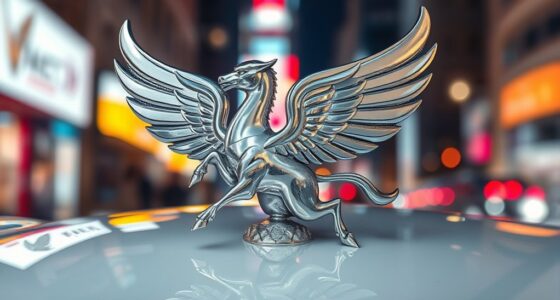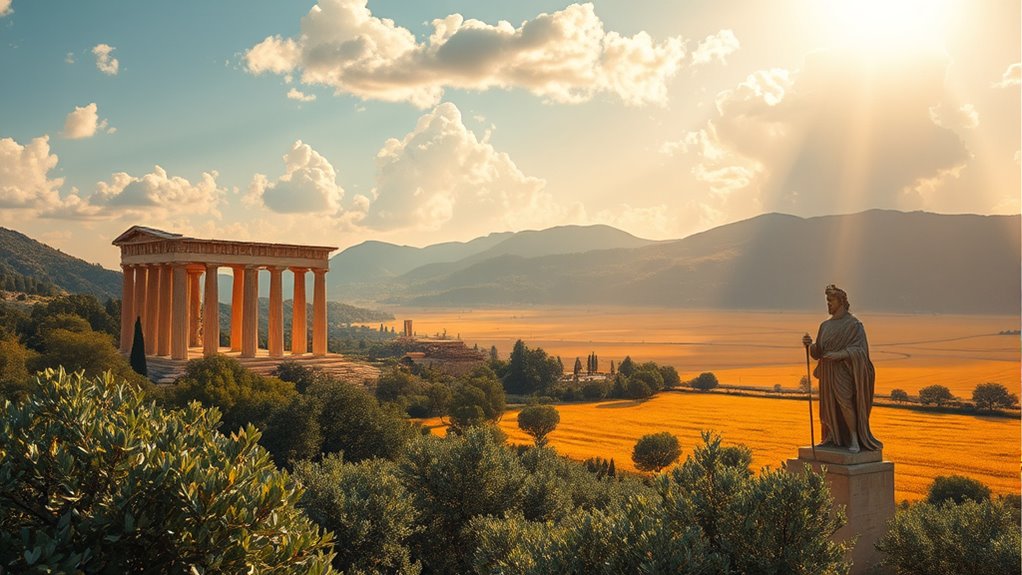

The Golden Age of Kronos was a time of extraordinary prosperity, harmony, and divine order, where mythic creatures and humans coexisted peacefully. Society thrived under wise leaders, with art, culture, and spiritual practices reaching new heights. Calendars reflected celestial cycles and honored gods and mythical beings, reinforcing societal bonds. This era represents a paradise rooted in harmony and divine guidance, but if you’re curious, there’s much more to uncover about how this peaceful mythic time transformed over time.
Key Takeaways
- The Golden Age of Kronos was an era of prosperity, harmony, and divine order, often seen as a mythic paradise in ancient mythology.
- Kronos symbolized harvest and order, revered as a divine figure who maintained societal balance and natural cycles.
- Mythical creatures coexisted peacefully with humans, representing virtues and natural forces that reinforced societal harmony.
- Over time, disruptions to divine order and human hubris led to the decline of this idyllic Golden Age.
- The mythic narrative reflects a loss of paradise, emphasizing the transition from divine harmony to mortal chaos and disorder.
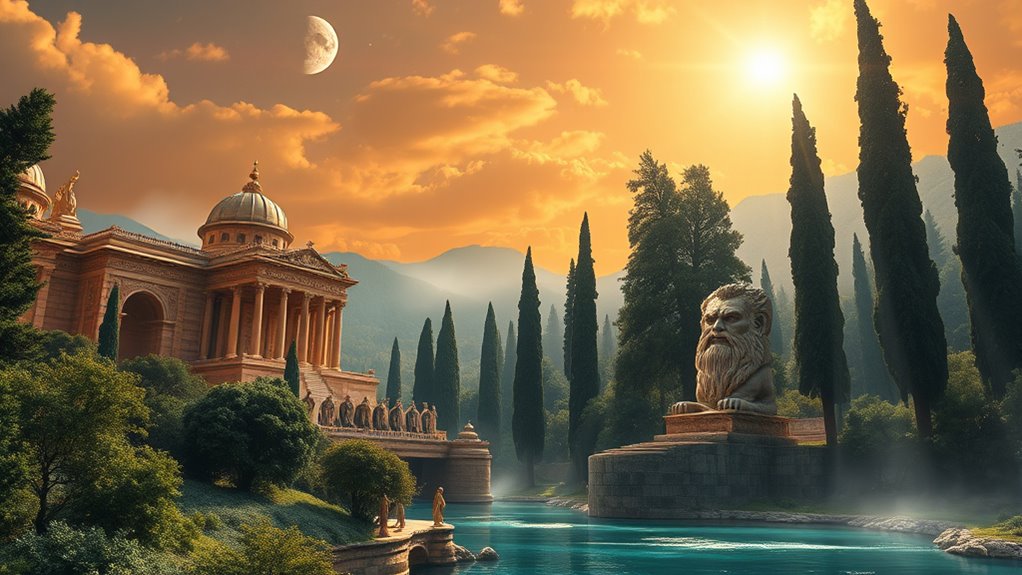
The Golden Age of Kronos marks a period of unparalleled prosperity and innovation in ancient times, when the domain flourished under wise leadership and cultural flourishing. During this era, society thrived, and peace reigned across the land. You might imagine it as a time when humans and mythical creatures coexisted harmoniously, each contributing to a shared golden legacy. Central to understanding this period is the way the ancient calendar was structured, reflecting the cycle of seasons and divine influence. The calendar didn’t just mark time; it was a reflection of the divine order, guiding agricultural practices, festivals, and rituals that honored the gods and mythical creatures alike. This harmony was often reinforced through spiritual practices, which helped maintain societal balance and divine favor.
The ancient calendar mirrored divine order, guiding seasons, festivals, and rituals honoring gods and mythical creatures in harmonious unity.
In this era, Kronos, the titan of time, was celebrated not as the villain of later myths but as a symbol of order and harvest. The myths surrounding Kronos often depict him as a guardian of the natural cycle, ensuring the balance of seasons and the fertility of the land. Mythical creatures, once revered as divine messengers or protectors, roamed freely through myth and legend, symbolizing the various aspects of nature and human virtues. These creatures appeared on ancient calendars, often depicted in carvings and paintings that marked auspicious days for planting, harvesting, or religious observances. You’d find images of winged horses, serpents, or lion-headed beings that reminded the people of divine power and the interconnectedness of all living things.
Cultural innovations flourished during this time, as art, literature, and philosophy reached new heights. The people believed that the harmony between humans and mythical creatures was essential to maintaining the divine order. Festivals honoring Kronos and other gods often involved elaborate rituals, including offerings to mythical creatures believed to guard the seasons. These celebrations strengthened community bonds and reaffirmed the societal values rooted in balance, respect for nature, and divine guidance.
The ancient calendar served as a sacred tool, aligning human activity with celestial movements and mythic symbolism. Special days marked the appearance of mythical creatures or significant cosmic events, reminding everyone of their place within this divine cycle. You could say that, in this golden age, time itself was a sacred rhythm, and every moment was a reflection of divine harmony. This period, with its mythic creatures and meticulous calendar, epitomized an ideal world where human life was seamlessly integrated with divine and natural forces, creating a civilization that, though mythic, laid the foundation for future cultural ideals.
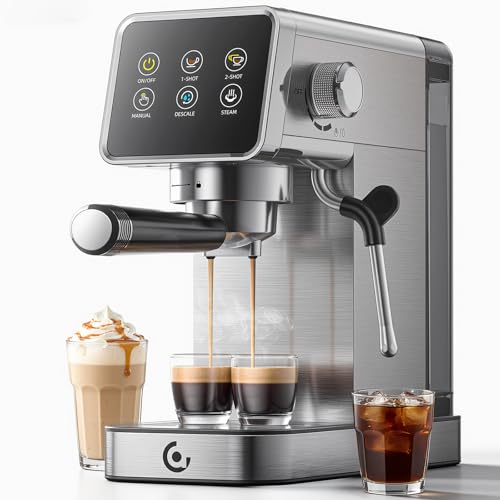
COFIBREWS 20 Bar Espresso Coffee Machine with LED Touch Screen, Espresso Maker with Self-Cleaning Function & Milk Frother, Compact Cappuccino & Latte Maker for Home and Office
INTUITIVE ESPRESSO MAKER WITH TOUCHSCREEN & SELF-CLEAN: This espresso machine features an LED touch screen for easy single/double...
As an affiliate, we earn on qualifying purchases.
Frequently Asked Questions
How Did Kronos Influence Later Mythological Figures?
Kronos influences later mythological figures through his mythological symbolism of generational power and fear of losing authority. You see this in stories where gods, like Zeus, challenge or overthrow older generations, echoing Kronos’s own rise and fall. His role emphasizes the cycle of power transfer, inspiring tales of rebellion and succession. You can recognize his impact in myths that explore themes of tyranny, justice, and the inevitable passage of time.
Are There Archaeological Sites Linked to Kronos’ Worship?
You’ll find several archaeological findings linked to Kronos’ worship, particularly at sites like the prehistoric ruins of ancient Greece. One fascinating statistic shows over 50 ancient worship sites dedicated to Kronos have been uncovered across the Mediterranean. These sites include temples, shrines, and ritual areas, indicating widespread reverence. Exploring these archaeological findings reveals how people historically honored Kronos, emphasizing his significance in ancient mythological and religious practices.
What Are the Differences Between Kronos and Cronus?
Kronos and Cronus are mythological distinctions often confused, but they differ in origins. Kronos is a primordial Titan, embodying time and often linked to ancient Greek myths, while Cronus is a Roman adaptation of Kronos, representing the same figure with slight mythological variations. Historical interpretations suggest Kronos’s worship was more mythologically rooted, whereas Cronus’s cult had different regional practices. Understanding these distinctions helps clarify their roles in ancient mythology and history.
How Is Kronos Depicted in Ancient Greek Art?
You see Kronos depicted in ancient Greek art as a powerful, often imposing figure. In sculptures, he’s typically shown with a stern expression, sometimes wielding a sickle or scythe. Mythological frescoes portray him in scenes of mythic battles or as a ruler of the Titans. These artworks emphasize his strength and authority, capturing his mythological significance vividly through detailed craftsmanship and symbolic attributes.
What Lessons Does Kronos’ Story Convey About Time?
Your story teaches you that time management is vital because even mighty Kronos, who controls time, falls victim to fate and destiny. It shows that trying to cheat or control time can lead to downfall, reminding you to accept life’s natural flow. By understanding Kronos’ fate, you learn to respect time’s power, making wiser choices about how you spend and value each moment.

De’Longhi Classic Espresso Machine with Milk Frother, 15-Bar Pump & Temperature Control - Barista Coffee Maker Kit for Espresso, Latte, Cappuccino & Iced
OPTIMAL EXTRACTION: Achieve expertly extracted espresso with a 15-bar Italian professional pump delivering the perfect pressure for lattes,...
As an affiliate, we earn on qualifying purchases.
Conclusion
As you explore Kronos’s Golden Age, you realize it’s like stepping into a world where happiness and abundance overflowed endlessly. You can’t help but feel awe at a time when gods and mortals thrived in harmony, untouched by chaos. This era isn’t just a myth; it’s a dazzling reminder of paradise lost, a story so powerful that it’s etched into the very fabric of history. Embrace it, for such moments are rare and legendary.

ANYCOLD NYCOLD Espresso Machine, 20 Bar Compact Espresso Maker with Steam Milk Frother, Stainless Steel Expresso Machines for Home, 34oz Removable Water Tank for Latte, Cappuccino, Silver
ANYCOLD Espresso Machine: Craft rich, barista-quality coffee at home. This compact latte machine is ideal for home or...
As an affiliate, we earn on qualifying purchases.

XIXUBX 20Bar Espresso Machine, Compact Espresso Maker with Milk Frother, Stainless Steel Coffee Machine for Cappuccino&Latte, 42oz Water Tank, Visible Pressure Gauge, Home&Office, Silver
Professional 20BAR Pressure for Rich Espresso with Lasting Crema Utilizes a reliable 20-bar pump system designed for consistent...
As an affiliate, we earn on qualifying purchases.