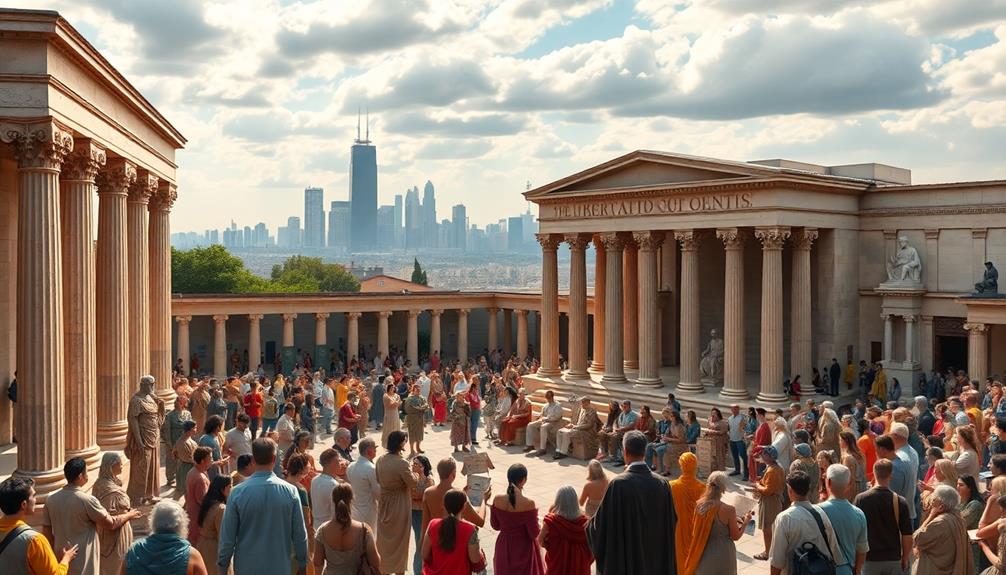
Healing temples and early hospitals each played key roles at a pivotal moment in medicine’s history. Temples focused on divine rituals, appealing to gods and spiritual beings, while hospitals adopted evidence-based methods like surgery and herbal remedies. This shift marked the move from myth-driven healing to scientific understanding. If you explore further, you’ll discover how this progression laid the groundwork for modern medicine’s blend of tradition and science.
Key Takeaways
- Healing temples relied on divine rituals and spiritual authority, while early hospitals employed empirical methods and scientific knowledge.
- Temples emphasized faith-based healing through prayers and offerings, contrasting with hospitals’ use of surgery, herbs, and diagnosis.
- Over time, hospitals integrated scientific discoveries like anatomy and pharmacology, blurring the myth-science boundary in medicine.
- Both institutions aimed to restore health but differed fundamentally in approach: spiritual intervention versus empirical treatment.
- The evolution from myth-based rituals to scientific medicine laid the foundation for modern healthcare practices.
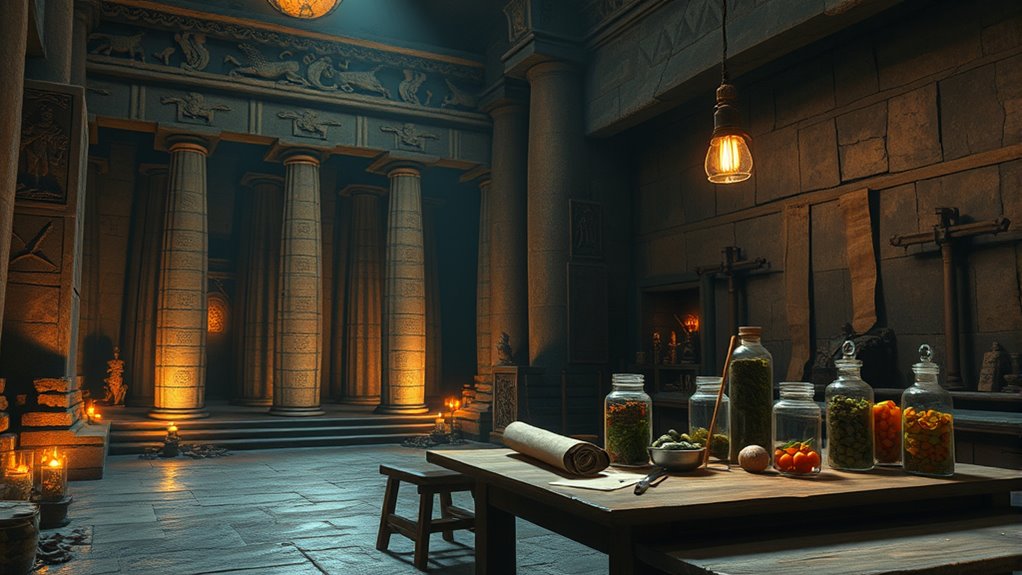
Throughout history, healing temples and early hospitals served as essential centers for treatment, but they operated very differently. In ancient times, healing temples were more than just medical facilities—they were spiritual sanctuaries where religious rituals and divine intervention played a central role. Here, healers used ancient rituals, combining prayers, offerings, and ceremonies believed to invoke gods’ aid in curing ailments. These temples often housed sacred relics, relied on spiritual healers, and integrated astrology or mystical practices. The focus was on appeasing deities, trusting that divine power would restore health. Medical advancements, as we comprehend them today, weren’t part of this approach; instead, healing was deeply intertwined with faith and tradition. You would see priests or shamans performing rituals, often with little scientific basis, yet they were trusted to heal the sick based on spiritual authority.
As civilizations evolved, so did their approach to healing. Early hospitals, emerging in Greek, Roman, and later medieval societies, marked a shift toward a more systematic, evidence-based form of medicine. These institutions aimed to treat physical ailments with increasingly scientific methods. Unlike healing temples, early hospitals prioritized practical medical advancements—such as surgical techniques, herbal remedies, and the development of medicinal substances. You would find physicians and trained practitioners working collaboratively, relying less on divine intervention and more on observation, diagnosis, and empirical knowledge. Hospitals began to serve as places of ongoing care, where patients stayed for treatment, recovery, and monitoring, reflecting a move toward rational medical practices. Over time, these institutions incorporated scientific discoveries—dissections, anatomy studies, and pharmacology—laying the groundwork for modern medicine.
Despite the shift, healing temples and early hospitals weren’t entirely separate in purpose. Both aimed to restore health, but their methods diverged sharply. Healing temples relied on spiritual explanations and rituals, often blending myth and tradition. Early hospitals, on the other hand, sought to understand the human body scientifically, applying medical advancements that pushed medicine closer to what we recognize today. As you trace this history, you see how the line between myth and science blurred over centuries, with early hospitals gradually adopting more rational practices. Yet, remnants of ancient rituals sometimes persisted, influencing how societies viewed health and healing. This crossroads reveals how early medicine was a complex dance between faith, tradition, and burgeoning scientific inquiry—shaping the foundation for modern healthcare.

Homeopathy First Aid Kit for Emergencies at Home, Office with 60 Essential Remedies in Zip Case. Follows Dr.Banerji protocols
- Number of Remedies: 60 essential homeopathic medicines
- Container Type: Sterile glass containers
- Protocol Used: Follows Dr. Banerji protocols
As an affiliate, we earn on qualifying purchases.
As an affiliate, we earn on qualifying purchases.
Frequently Asked Questions
How Did Healing Practices Influence Modern Medical Ethics?
You see that healing practices shaped modern medical ethics by emphasizing healer-patient relationships rooted in trust and compassion. These traditions fostered the evolution of medical ethics, highlighting the importance of respecting patient autonomy, confidentiality, and informed consent. By understanding ancient healer roles, you recognize how these practices laid the groundwork for today’s ethical standards, ensuring that healthcare remains patient-centered and morally responsible in balancing science with compassionate care.
Were There Significant Cultural Differences in Healing Approaches?
Yes, there were significant cultural differences in healing approaches. You notice that some cultures emphasized ritual purity, believing it essential for effective healing, while others relied on sacred artifacts believed to hold spiritual power. These practices reflect deep cultural values and religious beliefs, shaping how communities approached health and illness. By understanding these differences, you see how healing methods were intertwined with cultural identity and spiritual beliefs, influencing modern medicine’s diversity.
What Role Did Religion Play in Early Medical Treatment?
Religion played a central role in early medical treatment, as you relied on divine intervention and ritual healing to cure ailments. People believed that gods, spirits, or sacred rituals held the power to restore health, often visiting healing temples or performing ceremonies. These practices blended spirituality with medicine, emphasizing faith and divine favor over scientific understanding, shaping how communities approached health and healing in ancient times.
How Did Ancient Healers Acquire Their Knowledge?
You learn that ancient healers gained their knowledge through a mix of trial and error, herbal remedies, and ritual healing practices. They observed nature, experimented with plants, and passed down remedies through generations. Ritual healing often involved sacred ceremonies, which they believed connected them to spiritual powers. This combination of empirical knowledge and spiritual beliefs shaped early medicine, blending myth and science into a holistic approach to healing.
Are There Remnants of Healing Temples in Today’s Healthcare Facilities?
Did you know that about 70% of modern hospital architecture still reflects ancient healing rituals? Today’s healthcare facilities often incorporate elements inspired by ancient healing temples, like calming gardens and sacred spaces, blending myth with science. While remnants of healing temples aren’t obvious, the emphasis on holistic healing and spiritual well-being in modern hospitals echoes their legacy, creating spaces that nurture both body and mind.

Armory Replicas™ Medieval Medical Surgical Kit – 8-Piece Replica Set with Metal Tools – Historical Medical Equipment with Carrying Bag
- Historical Replica: 8-piece medieval medical tool set
- Durable Construction: Made from high-quality metal
- Complete Set: Includes essential tools and herbs
As an affiliate, we earn on qualifying purchases.
As an affiliate, we earn on qualifying purchases.
Conclusion
As you consider the clash between ancient healing temples and early hospitals, one thing becomes clear: the journey of medicine is far from over. Will we continue to blend myth with science, or finally forge a purely modern path? The answers lie ahead, waiting to unfold. What secrets will future healers uncover as they navigate this crossroads? Only time will tell, but one thing’s certain—you’re part of this fascinating story, and the next chapter is just around the corner.

As an affiliate, we earn on qualifying purchases.

Mingzhang Hand-Painted Second Temple of Jerusalem Resin Model -Tabernacle Model Museum-Quality Biblical Decor, Ancient Historical Architecture Replica for Home Display & Religious Gifts
- Handcrafted Holy Temple Model: Authentic Jerusalem Temple replica
- Premium Resin Material: Durable, matte finish, high-quality resin
- Ideal Religious Decor: Fits desktops, shelves, altars, and gifts
As an affiliate, we earn on qualifying purchases.
As an affiliate, we earn on qualifying purchases.