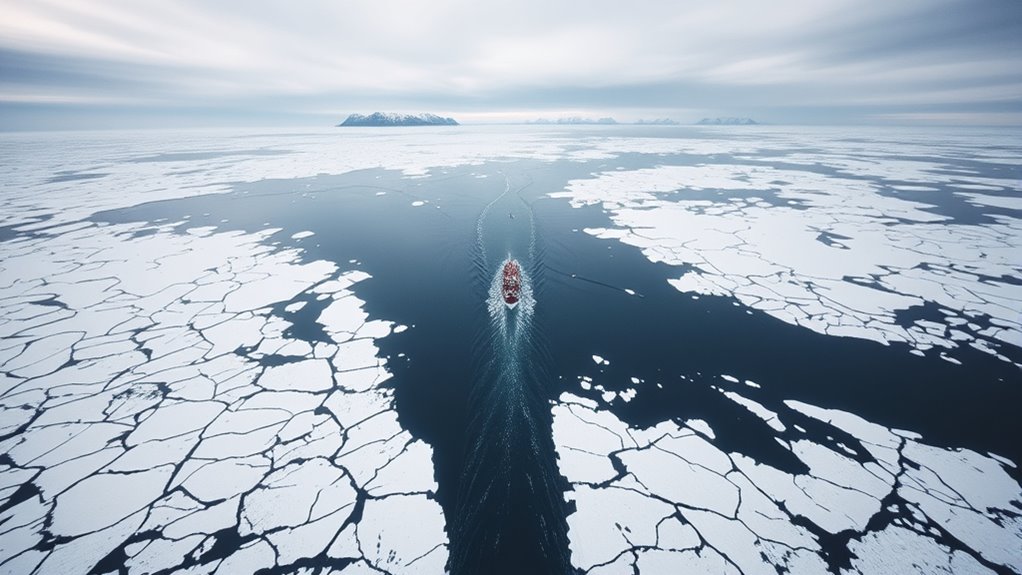

As Arctic ice melts, new shipping routes like the Northern Sea and Northwest Passage create quicker connections between major markets, offering economic advantages. However, these pathways also bring serious risks, including environmental damage to fragile ecosystems, oil spills, and pollution. Geopolitical tensions rise as nations stake claims and increase military presence. While these routes hold promising opportunities, balancing benefits with environmental and security concerns is vital—exploring these challenges further will reveal how this Arctic transformation could reshape global trade.
Key Takeaways
- Melting Arctic ice opens new shipping routes like the Northern Sea and Northwest Passage, reducing travel time and fuel costs.
- Increased shipping raises environmental risks, including oil spills, habitat disturbance, and challenges in remote Arctic conditions.
- Geopolitical tensions grow as Arctic nations invest in infrastructure and military presence to assert territorial claims.
- Competition for Arctic resources intensifies, complicating international relations and resource management efforts.
- Balancing economic opportunities with environmental protection and legal frameworks is crucial for sustainable Arctic development.

Have you ever wondered how melting ice is transforming global shipping? As Arctic ice continues to thaw due to climate change, new maritime routes are emerging that could revolutionize international trade. These routes, such as the Northwest Passage and the Northern Sea Route, offer shorter paths between major markets, potentially saving time and fuel. However, exploring these routes isn’t without significant challenges. One of the most pressing concerns revolves around environmental impacts. The Arctic ecosystem is fragile, home to unique wildlife like polar bears, seals, and migratory birds. Increased shipping traffic risks disturbing these habitats through oil spills, pollution, and noise. The potential for accidents in such a remote, harsh environment also raises questions about emergency response capabilities, which are still developing. As ships traverse icy waters, the risk of environmental disasters grows, threatening to undo years of conservation efforts. These environmental impacts are compounded by the fact that the Arctic’s natural processes are still poorly understood, making it difficult to predict and mitigate potential damage effectively. Additionally, the lack of comprehensive environmental data complicates efforts to monitor and respond to incidents promptly.
Simultaneously, the opening of Arctic routes is heightening geopolitical tensions among nations with territorial claims and strategic interests in the region. Countries like Russia, Canada, the United States, Norway, and Denmark are staking their claims to parts of the Arctic, aiming to secure access to resources and shipping lanes. Russia, for example, has invested heavily in Arctic infrastructure, establishing military bases and icebreaker fleets to assert control. This increased militarization raises concerns about security and stability, as nations watch each other’s moves closely. The competition over resources—such as oil, gas, and minerals—adds further complexity, with some countries enthusiastic to exploit these riches before others can claim them. This scramble can escalate tensions, making diplomatic negotiations more challenging. Furthermore, the legal framework governing Arctic navigation remains ambiguous, with existing treaties like the United Nations Convention on the Law of the Sea (UNCLOS) providing some guidance but not resolving all disputes. As more ships venture into these waters, the risk of conflicts—whether over territorial sovereignty or resource rights—becomes more imminent.
In essence, the Arctic’s melting ice presents a paradox: it offers new economic opportunities but also introduces serious environmental and geopolitical risks. You’ll need to stay informed about how nations balance economic benefits with environmental stewardship and international cooperation. While these routes could reshape global shipping, they demand cautious, responsible management to prevent irreversible damage and avoid escalating regional tensions. As climate change accelerates, the choices made now will determine whether the Arctic becomes a bridge for progress or a flashpoint for conflict.
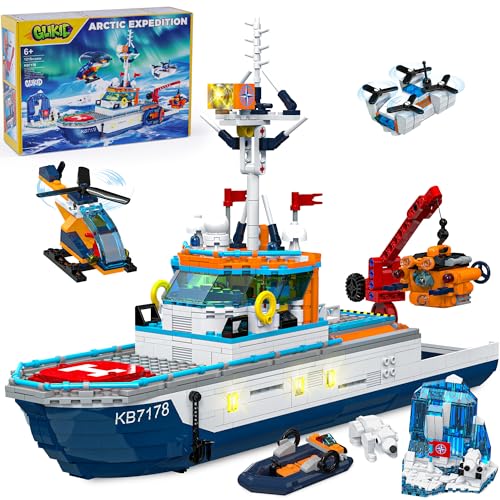
Glikid City Boat Building Set with LED Lights, Arctic Explorer Ship Toy Gift for 8 Year Old Boys and Girls, with Helicopter, Drone, Speedboat, Submersible, Iceberg, and Polar Bears
WARM LED-LIT ARCTIC EXPLORER SHIP – Set sail on icy adventures with this realistic Icebreaker ship, featuring searchlights…
As an affiliate, we earn on qualifying purchases.
As an affiliate, we earn on qualifying purchases.
Frequently Asked Questions
How Will Climate Change Affect Arctic Ecosystems Long-Term?
Climate change will substantially impact Arctic ecosystems long-term by accelerating ice melt, which disrupts habitats and alters food chains. You’ll see species migrating to cooler areas, trying to survive the changing environment. These shifts threaten native species and ecological balance. As ice melts, new opportunities for some organisms arise, but overall, the ecosystem faces instability, risking long-term damage that could take decades or centuries to recover from.
What Indigenous Communities Are Impacted by New Shipping Routes?
You’ll find that indigenous communities, like the Inupiat and Sámi, are directly impacted by new shipping routes. These routes threaten indigenous rights by risking environmental damage and disrupting traditional lifestyles. You might also see some communities face community relocation as their lands become less habitable. It’s vital to involve these communities in decision-making processes to protect their cultural heritage and guarantee their voices are heard in this shifting landscape.
How Will Arctic Shipping Influence Global Maritime Insurance Rates?
You’ll see Arctic shipping influence global maritime insurance rates through increased insurance premiums, as insurers adjust for higher risks. The risk assessment becomes more complex with unpredictable weather, ice conditions, and potential environmental hazards. As shipping routes expand, insurers will scrutinize vessel safety and route viability more closely, leading to higher premiums overall. This shift reflects the need to cover the elevated dangers posed by the changing Arctic environment.
Are There International Agreements Regulating Arctic Shipping Safety?
Yes, international treaties and shipping regulations do govern arctic shipping safety. You’ll find agreements like the Polar Code, which sets standards for environmental protection and safety, and the International Maritime Organization (IMO) oversees these regulations. These treaties aim to minimize risks, improve safety measures, and ensure responsible navigation. As you plan Arctic voyages, staying updated on these international agreements helps you comply with safety standards and avoid legal issues.
What Technological Innovations Are Needed for Arctic Navigation?
You’ll need advanced icebreaker technology to safely navigate the icy Arctic waters, helping ships break through thick ice. Satellite navigation is crucial for precise positioning amid limited visibility and harsh conditions. Combining these innovations ensures safer, more efficient routes, reducing risks and enabling year-round shipping. Investing in stronger icebreakers and improved satellite systems is essential for overcoming Arctic navigation challenges and opening new shipping opportunities.

Embracing the Cold: A Guide to Solo Winter Travel and Backcountry Expedition
As an affiliate, we earn on qualifying purchases.
As an affiliate, we earn on qualifying purchases.
Conclusion
As you consider Arctic shipping routes, remember they’re like double-edged swords—offering new opportunities but also presenting significant risks. The warming climate opens faster, shorter passages, yet unpredictable weather and fragile ecosystems demand caution. Steering this icy frontier requires careful planning and respect for nature’s power. Embrace the potential for growth, but stay vigilant—like walking a tightrope, the balance between opportunity and danger is delicate and must be handled with care.

YSI 6051020 Pro1020 Field Dissolved Oxygen/pH/ORP Instrument
User-replaceable cables and sensors provide versatility, reduce down time and reduce overall cost of ownership
As an affiliate, we earn on qualifying purchases.
As an affiliate, we earn on qualifying purchases.

Garmin Drive™ 53 GPS Navigator, High-Resolution Touchscreen, Simple On-Screen Menus and Easy-to-See Maps, Driver Alerts
Bright, high-resolution 5” glass capacitive touchscreen display lets you easily view your route
As an affiliate, we earn on qualifying purchases.
As an affiliate, we earn on qualifying purchases.