Choose a science experiment kit that matches a child’s age, interests, and available adult help, then check its contents and set up a safe place to use it. This guide is for caregivers, teachers, and other adults choosing a kit for a beginner. Comparing options and preparing takes about 30–60 minutes; each experiment may take longer depending on the instructions.

Prime made for students and young adults
- Fast, free delivery for dorm and study essentials
- Prime Video and Amazon Music included
- Member-only deals
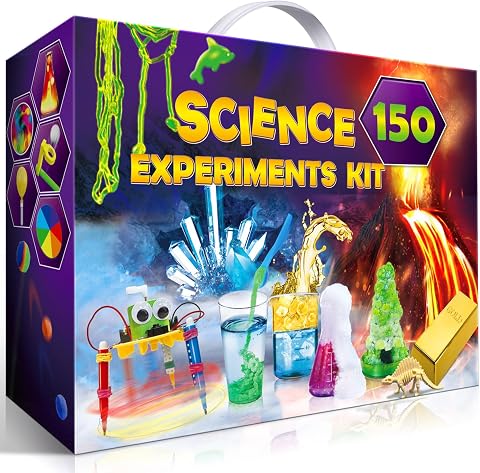
UNGLINGA 150 Experiments Science Kit for Kids
- ✔ Brand: UNGLINGA
- ✔ Age range: 8 years and up
- ✔ Number of experiments: 150
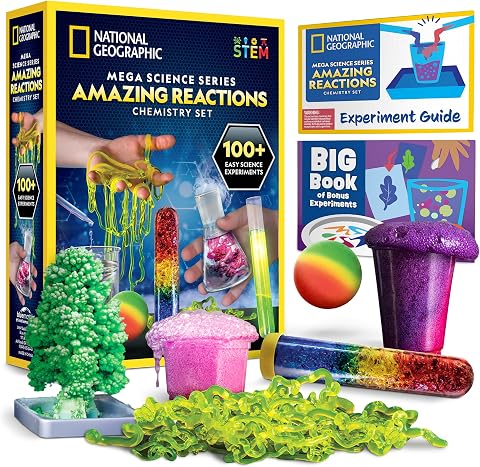
National Geographic Amazing Chemistry Set with 100+ Experiments for Ages 8–12
- ✔ Brand: Blue Marble
- ✔ Sub-brand: National Geographic
- ✔ Age range: 8 years and up

National Geographic Science Magic Kit for Kids, 8 Years and Up
- ✔ Brand: Blue Marble
- ✔ Sub-brand: National Geographic
- ✔ Age range: 8 years and up
Difficulty: Beginner | Time: 30–60 minutes to compare kits and prepare; experiment time varies by kit
What You’ll Need
Tools & Materials:
- A device or store access for comparing kits
- The child’s age and interests
- A clear, washable work surface
- Basic household supplies listed by the kit, such as water, paper towels, or a spoon
Knowledge:
- Basic ability to read and follow the kit’s instructions
- Willingness to supervise the child at the level specified by the manufacturer
Read the product label and instructions before purchase or use. Check age guidance, safety warnings, required household items, and whether any components need adult handling. Do not substitute materials unless the manufacturer says substitutions are suitable.
UNGLINGA 150 Experiments Science Kit for Kids
For families who want one kit to range beyond a single subject, UNGLINGA’s 150 experiments give this set the broadest stated scope in our comparison. Its activities cover chemistry, physics, and earth science, so a child can move between different kinds of questions instead of spending the whole set on reactions or demonstrations. That variety is why we place it ahead of the chemistry-focused National Geographic set for general exploration.The included tools, safety goggles, and illustrated step-by-step manual support a more traditional home-lab feel. The instructions are described as suitable for independent learning, which may help older children follow a project with less hands-on direction. Still, the 150 figure does not mean every activity is ready from the box: some require common household items. Compared with the Science Magic Kit, UNGLINGA is less centered on presentation and more useful for children who want to try different branches of science. Its plastic construction also calls for reasonable care, especially around younger siblings or rough handling.
Pros:
- 150 experiments spanning chemistry, physics, and earth science
- Includes science tools and safety goggles
- Illustrated step-by-step manual supports guided learning
- Broad subject mix offers more variety than the chemistry-only alternative
Cons:
- Some activities require additional household items
- Plastic tools may not hold up to rough handling
Best for: Children aged 8 and up who want to explore several science subjects and enjoy following illustrated instructions.
Not ideal for: Families seeking a kit where every listed experiment has its materials included, or children who mainly want performance-style activities.
Bottom line: We recommend UNGLINGA as the most versatile starting point for a child who wants to explore more than one area of science.
“We recommend UNGLINGA as the most versatile starting point for a child who wants to explore more than one area of science.”
National Geographic Amazing Chemistry Set with 100+ Experiments for Ages 8–12
When a child is drawn specifically to reactions, mixtures, and materials, this chemistry-focused set has a clearer purpose than UNGLINGA’s multi-subject assortment. It includes materials for 15 hands-on experiments, with examples such as growing a crystal tree, making color-changing solutions, and creating a bouncy ball. Test tubes, beakers, and pipettes add familiar lab tools that help frame the activities as chemistry investigations.The headline total of 100-plus activities includes a guide to 85 additional experiments that use common household items. That gives curious children ideas to continue exploring, but those bonus activities are not supplied with their materials. In practical terms, this is a smaller ready-to-start set than the count might first suggest. Compared with the UNGLINGA kit, it trades subject breadth for a more focused chemistry experience; compared with the Science Magic Kit, it puts the experiments themselves ahead of performance. Choose it when chemistry is the point and you are comfortable sourcing supplies for the extra activities.
Pros:
- Materials provided for 15 chemistry experiments
- Includes test tubes, beakers, and pipettes
- Examples include crystals and color-changing solutions
- Bonus guide offers additional activities using household items
Cons:
- Materials for the 85 bonus experiments are not included
- Narrower subject range than the UNGLINGA kit
Best for: Ages 8–12 who are particularly interested in chemistry and want lab-style tools for guided activities.
Not ideal for: Children looking for a broad mix of science subjects or families expecting materials for all 100-plus activities.
Bottom line: We’d choose this set over the broader UNGLINGA kit when chemistry interest matters more than variety across scientific fields.
“We’d choose this set over the broader UNGLINGA kit when chemistry interest matters more than variety across scientific fields.”
National Geographic Science Magic Kit for Kids, 8 Years and Up
This kit gives science a social hook: children perform 20 experiments as magic tricks, using a wand and white gloves alongside the activity materials. The illustrated guide explains the science behind each trick, so the performance has a learning purpose as well as a reveal. For children who like showing family what they have discovered, that format may be more inviting than the chemistry set’s lab-tool approach.The tradeoff is that its included experiment set is smaller than either rival’s stated total, and the 85-plus bonus activities rely on common household items. Those activities extend the booklet, but do not provide the same ready-to-go experience as experiments with supplied materials. Compared with UNGLINGA, this is a more specialized pick with less subject breadth; compared with the Amazing Chemistry Set, it offers a stronger presentation angle but fewer included experiments. We’d choose it for a child who enjoys an audience, and skip it if the main goal is a large collection of varied, self-directed lab projects.
Pros:
- Combines science activities with magic-trick presentation
- Includes a wand and white gloves for performances
- Illustrated guide explains the science behind the tricks
- Bonus booklet adds household-item activities
Cons:
- Only 20 magic experiments are included with the kit
- Bonus activities require household supplies
- More specialized than the broad UNGLINGA kit
Best for: Children aged 8 and up who enjoy performing demonstrations and explaining how a trick works.
Not ideal for: Families prioritizing the largest included experiment set or children who prefer quiet, open-ended exploration.
Bottom line: We recommend this set when the performance format is the reason a child will want to keep experimenting.
“We recommend this set when the performance format is the reason a child will want to keep experimenting.”
As an Amazon Associate we earn from qualifying purchases.
Before You Start
Decide who will supervise and where experiments can be done. Keep food and drinks away from the work area, and plan how to store small parts or chemicals out of reach when they are not in use. Follow the kit’s specific safety directions; they take priority over general advice.
Step-by-Step Instructions
Step 1: Set a budget and choose a science interest
Set a price range and choose a subject likely to hold the child’s attention, such as plants, weather, magnets, simple machines, chemistry, or the human body. If the child is unsure, select a kit with several different activities rather than one built around a single experiment.
Tip:Check how many experiments are included and whether the kit provides enough material to repeat them. A large experiment count may depend on supplying common items from home.
Check: You have a price range and one or two subjects to use when comparing kits.
Step 2: Match the age guidance to the child
Read the manufacturer’s recommended age range and compare it with the child’s reading, measuring, and handling skills. Choose a kit at or slightly below the child’s current ability if they are new to experiments or will have limited help. Treat age labels as guidance, not a substitute for checking the actual activities.
Tip:Look for small parts, sharp tools, heat, glass, or substances requiring protective equipment. Confirm that an adult can supervise any activity the child cannot safely perform alone.
Check: The child can take part in the activities with the level of help available, and you understand which tasks require adult handling.
Step 3: Check safety information and contents
Read the package description, warnings, and available instructions before buying. Check for required goggles, gloves, batteries, ingredients, or other supplies, and see whether they are included. If the kit contains chemicals or biological materials, read the handling and disposal directions and confirm that they fit your household or classroom rules.
Tip:Do not buy a kit if its safety directions are missing or unclear, or if you cannot provide the listed protective equipment and supervision.
Check: You know what comes in the box, what you must supply, and how the kit expects materials to be handled and discarded.
Step 4: Compare the instructions and experiment format
Review the directions for clear, sequential steps, diagrams, and explanations suited to the child’s reading level. Check whether an experiment can be completed in one sitting or needs waiting time, such as days for a plant to grow or crystals to form. Choose a format that fits the time and attention available.
Tip:If possible, view a sample instruction page or the manufacturer’s activity list. A child-friendly kit should make the next action clear without requiring you to invent missing steps.
Check: You can identify what the child will do, how long activities may take, and where adult help will be needed.
Step 5: Review reviews and product details
Compare the manufacturer’s product details with recent buyer feedback. Look for specific comments about whether parts were present, directions were understandable, and materials lasted for the advertised number of experiments. Check the seller’s return policy in case the box arrives damaged or incomplete.
Tip:Give more weight to repeated, detailed comments than to ratings without explanations. Verify safety and age details against the manufacturer’s information.
Check: You have selected a kit whose contents, activity level, and support match your needs.
Step 6: Inspect the kit before the first activity
After purchase, open the kit with the instructions nearby and compare the contents with the parts list. Check containers for leaks or damage and set aside any pieces that appear broken. Contact the seller or manufacturer about missing or damaged components before starting an experiment that depends on them.
Tip:Keep small parts in labeled bags or the original compartments, and store any materials according to the package directions.
Check: The kit is complete, intact, and ready to use with the household supplies and protective items identified earlier.
Step 7: Prepare the work area and supervise the activity
Read the full experiment instructions before inviting the child to begin. Clear a stable, washable surface, gather only the materials needed for that activity, and put on any specified protective equipment. Have the child follow the instructions one action at a time while you handle any task marked for adults.
Tip:Pause if the child is unsure, if an unexpected reaction occurs, or if directions are unclear. Do not taste materials or mix substances beyond the steps given by the kit.
Check: The child completes the activity according to the kit’s directions, and the work area remains controlled and safe.
Step 8: Clean up and store materials
Follow the kit’s disposal directions, clean tools and the work surface as instructed, and return reusable components to their labeled places. Store remaining materials securely, away from children who are not using the kit, and note any supplies that need replacement before the next experiment.
Check: Used materials are disposed of as directed, reusable pieces are accounted for, and the kit is stored safely.
Common Mistakes to Avoid
- Choosing a kit based only on its age label or number of experiments. — Check the actual activities, small parts, required skills, supervision level, and whether experiments can be repeated with the included supplies.
- Assuming every listed material is included. — Read the contents and supply list before buying, then gather required household items before starting.
- Letting the child begin before the adult reads the full directions. — Review the complete activity first so you can spot adult-only steps, safety requirements, and waiting periods.
- Throwing away instructions or mixing up small components after an activity. — Keep the manual with the kit and return parts to labeled bags or compartments after cleanup.
Troubleshooting
Problem: A required item is missing from the box.
Solution: Compare the contents with the parts list and check packaging inserts. Do not improvise a replacement for a safety-related or experiment-critical component; contact the seller or manufacturer.
Problem: The child cannot follow the written directions independently.
Solution: Read one step at a time together, point to the matching diagram, and have the child describe the next action before doing it. Stay close for steps that need adult help.
Problem: The result looks different from the example.
Solution: Check measurements, timing, temperature, and order of actions against the instructions. Repeat only if the directions allow it, and note what changed; natural variation may affect some results.
Problem: The activity takes longer than expected.
Solution: Check whether the instructions include a waiting or drying period. Pause at a safe stopping point, store materials as directed, and resume only if the manufacturer’s instructions permit it.
What Success Looks Like
The chosen kit fits the child’s interests and abilities, its safety and supply requirements are understood, and all parts are present and intact. During use, the child can follow the activity with appropriate adult supervision. The experiment follows the kit’s procedure, cleanup and storage follow its directions, and any result is interpreted using the kit’s explanation rather than judged only by whether it matches a picture exactly.
Next Steps
After the first activity, ask the child what they observed and what they would change in a repeat experiment. Replace consumed household supplies before the next session, check remaining kit materials, and store the instructions with the components. If the child wants a greater challenge, compare the skills required by the next kit before choosing one.
Frequently Asked Questions
Should I choose a kit for the child’s exact age?
Use the age range as a starting point, then check reading level, fine motor skills, small parts, and adult supervision needs. Choose activities the child can participate in safely with the help available.
Do science kits usually include everything needed?
Not always. Many kits require household items such as water, paper towels, or a spoon. Check the product’s contents and supply list before purchase and gather all required items before starting.
Can a child use a science kit without an adult?
Follow the manufacturer’s age and supervision guidance. Stay present for any steps involving chemicals, heat, sharp tools, small parts, or protective equipment, and provide the level of help specified by the kit.
What should I do if an experiment does not work?
Review the measurements, sequence, and timing, then compare the result with the kit’s explanation. Repeat only when the directions permit it. Do not add substances or change the procedure without manufacturer guidance.