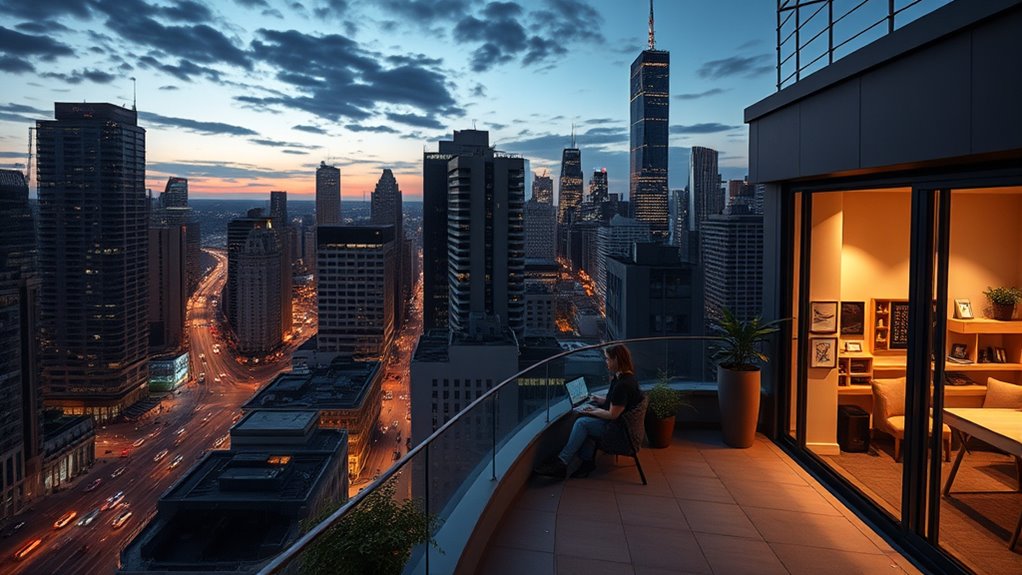

The rise of remote work is dramatically changing cities and office spaces worldwide. You’ll notice fewer commuters, less congestion, and declining demand for traditional offices, which impacts property values and local businesses. Cities are shifting investments toward digital infrastructure and affordable housing to support decentralized communities. This transformation encourages flexible spaces and resilient neighborhoods, shaping the future of urban life. Continue exploring to discover how these changes could influence your city’s evolution.
Key Takeaways
- Remote work reduces demand for traditional office spaces, leading to increased vacancies and lower property values.
- Urban infrastructure shifts focus from commuting support to digital connectivity and local amenities.
- Cities experience decreased congestion and public transportation ridership, altering transportation planning and revenue.
- Local businesses near business districts see declines in foot traffic, prompting adaptation to neighborhood-focused services.
- Urban development trends favor decentralization, flexible spaces, and resilient, livable neighborhoods for remote workers.
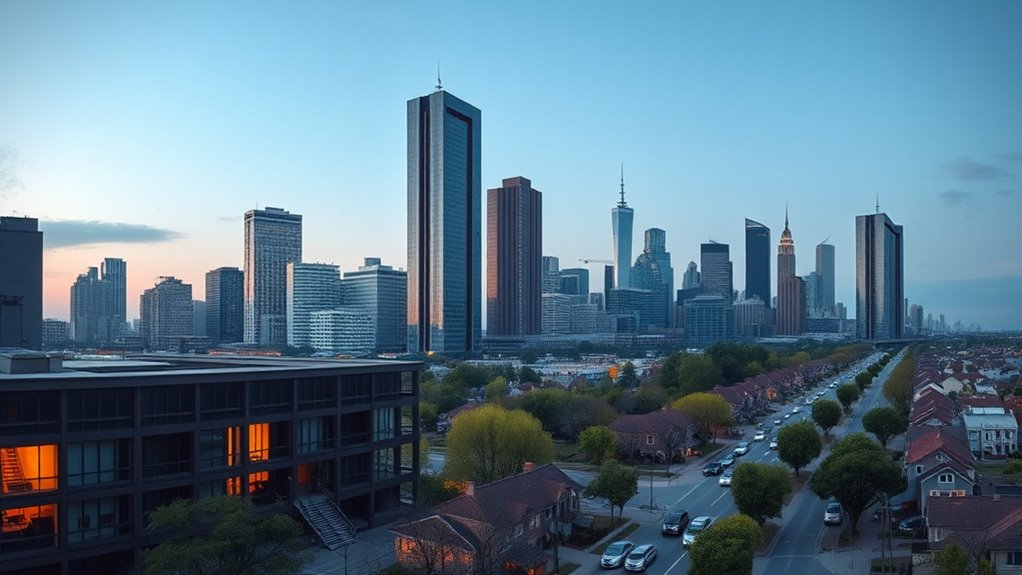
The rise of remote work has fundamentally changed how cities and offices operate, reshaping daily routines and economic patterns. As more people work from home or alternative locations, the traditional reliance on dense urban centers is shifting. You’ll notice that urban infrastructure, once built primarily to support daily commutes and office-based activities, now faces new demands. Public transportation systems see decreased ridership, prompting cities to rethink transit funding and capacity. Roads experience less congestion during peak hours, but this shift also means fewer revenue streams from tolls and parking fees. Cities must adapt their infrastructure to accommodate a more dispersed population, investing in digital connectivity and local amenities that serve residents who no longer commute daily to downtown cores.
Remote work shifts urban infrastructure needs, reducing transit ridership and congestion while boosting digital and local amenities.
Commercial real estate is another area profoundly affected. Office spaces that once dominated city skylines are seeing reduced demand as companies downsize or adopt hybrid work models. You might notice vacant office buildings or less leasing activity, which impacts property values and city tax revenues. This shift prompts landlords and investors to reconsider their strategies, repurposing office spaces into residential units, co-working hubs, or mixed-use developments. Cities, in turn, need to create incentives for these conversions, balancing economic vitality with changing needs. Commercial real estate developers are increasingly focusing on flexibility and adaptability, designing spaces that can easily transition between uses as demand fluctuates. Additionally, the integration of natural materials such as wood and stone in renovations and new developments can help preserve the rustic charm that appeals to the evolving preferences of residents and investors alike.
Local businesses that relied heavily on office workers, such as cafes, restaurants, and retail shops near business districts, are also experiencing significant changes. With fewer employees commuting into downtown areas, these establishments face lower foot traffic and revenue. You may see more focus on neighborhood-based services, with businesses adapting their offerings to cater to local residents rather than office workers. This shift influences the economic landscape of cities, pushing them toward more diversified, resilient local economies that aren’t as dependent on traditional office-centered activity.
Furthermore, city planners and policymakers are reevaluating infrastructure investments, emphasizing digital connectivity, affordable housing, and local services. The goal is to create more livable neighborhoods that attract residents and support remote workers, reducing the need for long commutes. As remote work continues to grow, you’ll see cities become more decentralized and less reliant on dense commercial districts. This transformation impacts urban infrastructure, commercial real estate, and the overall economic fabric of cities, requiring proactive planning and innovative solutions to thrive in this new era of work.
Frequently Asked Questions
How Does Remote Work Influence Urban Transportation Systems?
Remote work reduces your reliance on public transport, leading to fewer trips during peak hours. This shift causes changes in congestion patterns, often easing rush hour traffic but potentially increasing off-peak congestion. You might notice less crowded buses and trains, but cities could see altered traffic flows overall. These changes impact transportation planning, prompting adjustments in public transport schedules and infrastructure to better accommodate the new travel behaviors.
What Are the Long-Term Effects on Commercial Real Estate Values?
Remote work is a storm that’s shaking the foundations of commercial real estate. You’ll see office vacancy rates rise, turning once-thriving spaces into ghost towns. Property depreciation accelerates as demand dips, causing long-term value declines. This shift leaves investors and owners with a sinking feeling, forcing them to adapt quickly or face the financial wreckage. The future of commercial real estate hangs in the balance, fragile as glass.
How Are Local Governments Adapting to Increased Remote Work?
Local governments are adapting by investing in remote infrastructure, like expanding high-speed internet and digital hubs, to support remote work. They’re also implementing digital governance initiatives to streamline services and engage residents online. This helps attract businesses and residents who value connectivity and convenience. By modernizing their digital systems, local governments create a more flexible, resilient community that thrives in the remote work era, ensuring they stay competitive and connected.
What Impact Does Remote Work Have on City Economies?
Remote work boosts your city’s digital economy by shifting spending from local businesses to online platforms. As more people work remotely, you might see decreased patronage at cafes, retail stores, and office services, impacting local revenue. However, new opportunities emerge for local businesses to adapt through virtual services and digital marketing, helping your city stay resilient and vibrant despite the changing landscape.
How Does Remote Work Affect Community and Neighborhood Development?
Remote work can weaken community and neighborhood development by reducing foot traffic, which impacts local businesses. When you work remotely, you might miss out on neighborhood events and casual interactions that foster cohesion. This shift can lead to less vibrant communities, making it harder for local businesses to thrive. To maintain neighborhood cohesion, consider supporting local businesses and engaging in community activities, even if you’re working from home.
Conclusion
If remote work keeps growing at this unstoppable pace, cities might become ghost towns overnight, with offices transforming into deserted relics of the past. Your daily commute could vanish completely, replaced by a world where everyone works in pajamas from their living rooms. The future isn’t just changing — it’s exploding into a new universe where traditional offices are nothing more than distant memories. Get ready, because the transformation is happening faster than you ever imagined!